





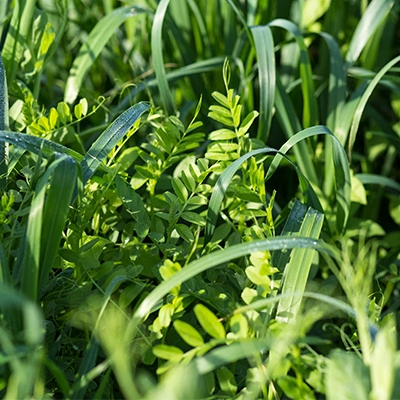
Researchers at the University of Minnesota are studying how certain cover crops could play a role in pest management.
Extension entomologist Bob Koch says cover crop adoption has been largely attributed to reducing erosion, minimizing leaching, and helping pollinators.


“But what we’re trying to do is to see if incorporating these cover crops into our current corn and soybean production systems can provide benefits through pest suppression.”
He tells Brownfield the study involves winter camelina and pennycress seeded in the fall, with soybeans relay planted the following spring.
“Kind of the interesting angle here from the pest perspective is that oftentimes when a crop plant is growing among some other kind of plant, the pest pressure can be lower.”
Koch says soybeans cooccurring in the field with the cover crop can make it more difficult for pests like aphids, stink bugs, and Japanese beetles to find or stay on the soybean or create natural control with favorable habitat for pest predators.