




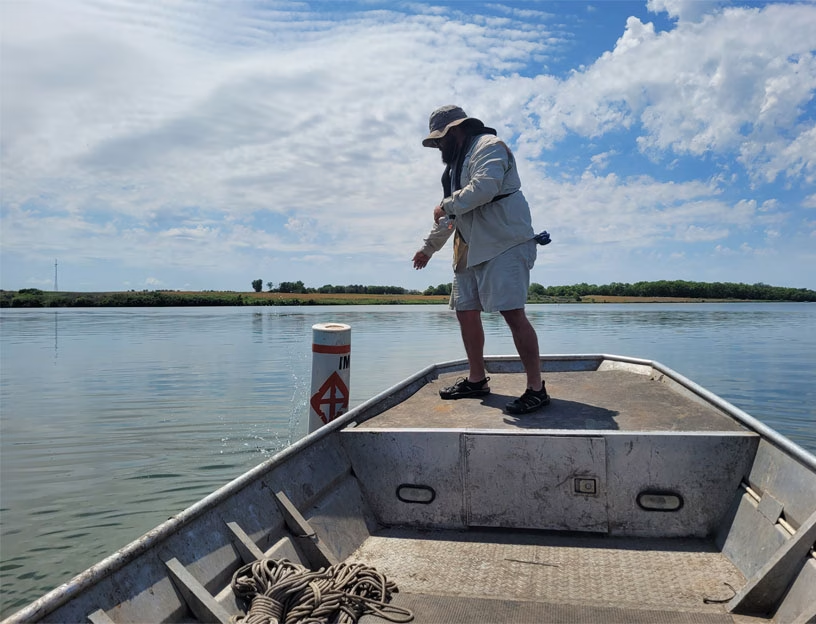
The Department of Natural Resources is collecting information from several buoys placed in reservoirs around the central Iowa area.
DNR fisheries biologist Seth Fopma says they affectionately call it the “Oxythermal Dynamics Project.” “What it’s really looking at is how temperature and oxygen vary in several of our reservoirs throughout the course of an entire year,” he says.


Fopma says they hope to learn more about how temperatures in the water impact water quality and fish populations. “Most of our lakes in Iowa, they’ll stratify at some point during the summer, meaning that the surface will get really warm and then we’ll kind of have a very thin middle layer. And below that, we have some pretty cool water. And we’re looking to see how those levels shift throughout a year,” Fopma says.
He says the shifting layers can lead to problems in the lake. “That allows nutrients to cycle every time those layers break down and mix throughout the summer, which can cause algal blooms,” Fopma says. “And using this information and being able to understand what’s driving that and what size of lakes, what watershed ratios, things like that impact those cycles will help us better design lakes in the future to hopefully try to prevent some of those algal blooms long term.”
They are also tracking fish in one lake to see how they move in the water levels. “Using the fish as a bio indicator not only allows us to look at the physical characteristics of the reservoir, but also how those fish are using those areas of the reservoir. So the data may say the lake stratifies at eight feet, but if the fish are only using the top six feet biologically, that has a different impact on how we would look to restore a lake in the future,” he says.
He says in small ponds you can take steps like aerators to mix the oxygen to help fish, but he says that’s not possible in larger lakes, butifferent lake designs may help. “And this research is helping us to understand maybe what depth profiles could be used to keep that stratification from getting set or from getting that stratification broken if we don’t want that lake mixing multiple times a year,” Fopma says.
This is a two-year project that started this year and will collect the data through 2027.