





It’s a cool April morning in rural Iowa. The sun is just starting to burn through the haze, and the scent of freshly turned soil lingers in the air. On a quiet gravel road, a farmer eases his tractor forward, the large planter trailing behind him as he makes his way to the next field. He’s done this drive a thousand times—but every spring, it feels just a little riskier.
A car approaches from behind, moving much faster than the farmer. The driver is late for work, frustrated by the slow-moving machinery ahead. Just as the road begins to slope upward, the driver considers passing. But the hill ahead hides what’s on the other side.


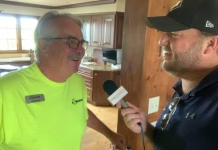
It’s a familiar scene—one that Marion County Sheriff Jason Sandholdt says plays out too often across Iowa this time of year.
“Obviously right now we are just starting to see those tractors and planters in the field,” Sandholdt says. “People need to be aware of that on highways and especially those gravel roads. When a farmer is pulling a planter, they’re going at a slower speed. And when they’re going over the crest of a hill, you need to be aware of that and take more time.”
Farmers are out working long hours, often before the sun rises and well after it sets. Their equipment is large, slow, and sometimes difficult to see—especially when turning into hidden field entrances or crossing over narrow country roads.
That’s why Sandholdt urges drivers to stay alert and respectful.
“When you’re behind a tractor, slow down. Be patient. These farmers are just trying to do their jobs, and they’re part of what keeps this state running.”
He adds that it’s safest to pass only on long, straight stretches of road where visibility is clear and passing is legal. And always be cautious approaching hills—what you can’t see could hurt you.
So next time you’re driving through Iowa’s countryside and you come up behind a tractor, take a deep breath. Slow down. And remember: planting season may be temporary, but a moment of impatience could change a life forever.