




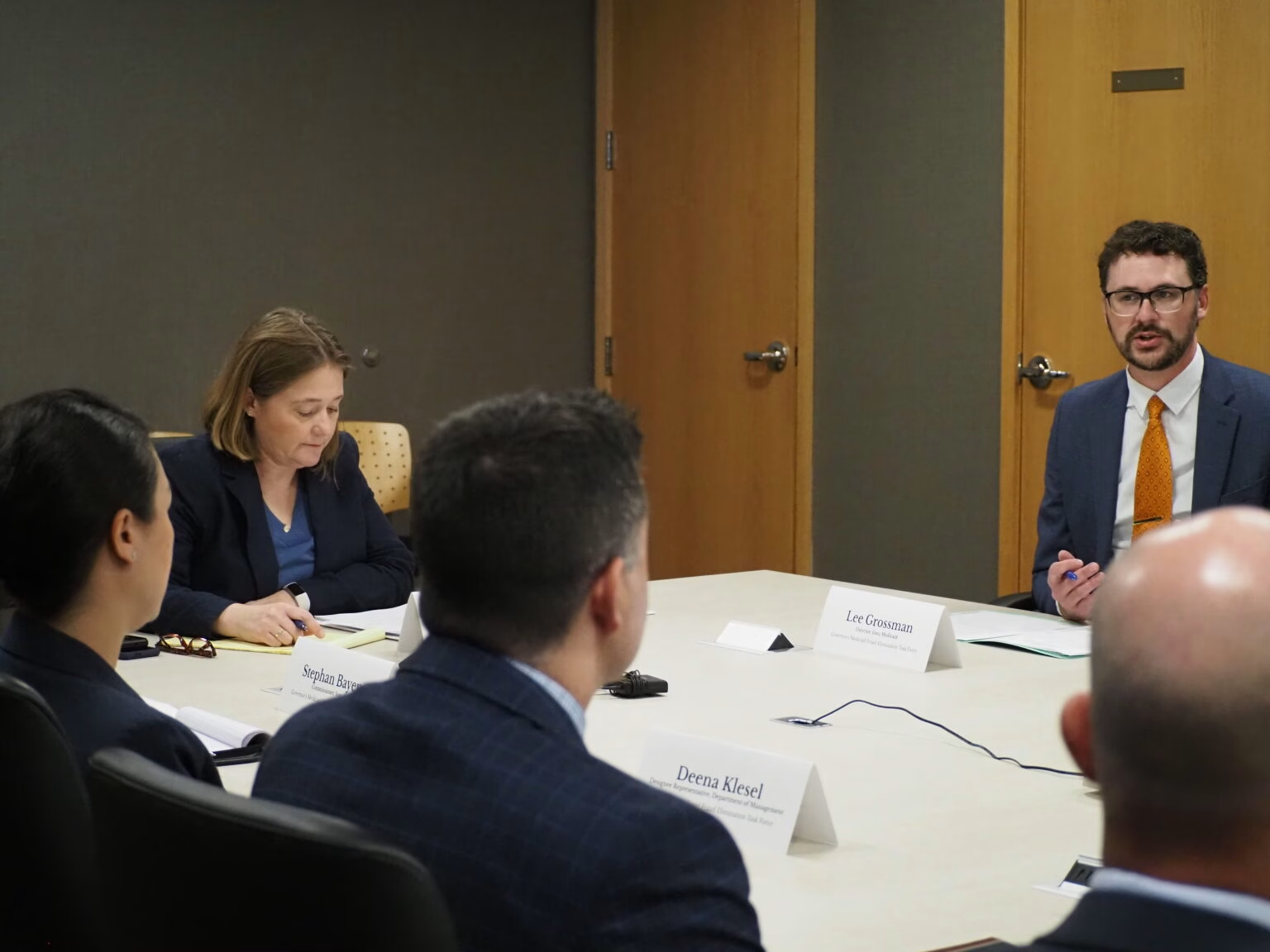
Iowa Attorney General Brenna Bird said Iowa can find ways to be more “proactive” in collecting and responding to Medicaid fraud tips as the Iowa Medicaid Fraud Elimination Task Force held its second meeting Wednesday.
The task force was convened by Gov. Kim Reynolds in July. The 11-member group will draft recommendations for the state Legislature on how to stop instances of fraud within Medicaid. It was created in response to an executive order from President Donald Trump creating a federal task force with a similar goal, headed by Vice President JD Vance, that came with an announcement that each state’s Medicaid Fraud Control Units (MFCU) would undergo a new evaluation before being recertified to receive federal funding.


The state task force was given the directive of crafting a “comprehensive statewide strategy to eliminate Medicaid fraud, waste, abuse” and finding ways to leverage federal funding resources to assist Iowa’s existing MFCU.
State leaders overseeing the departments of Public Safety, of Management and of Inspections, Appeals and Licensing, as well as Iowa Medicaid and the Iowa Medicaid Fraud Control Unit within DIAL, shared updates at the Wednesday task force meeting about work being done by their groups to find ways to better identify and address instances of waste, fraud and abuse within the state’s Medicaid system. When the task force met for the first time, members said they planned to create a website where individuals can submit concerns about suspected Medicaid fraud alongside finding ways to make the state’s MFCU more efficient.
These discussions continued at the second meeting, as leaders talked about ways different state entities can collaborate and more efficiently tackle issues related to fraud and abuse. Bird told reporters after the meeting that currently, Iowa’s Medicaid Fraud Control Unit works through a “referral-based system” — and that system could be expanded to draw from more sources.
“What can we do to be more proactive, to make sure that we are getting those those fraud tips, and we’re not (just) eliminating Medicaid fraud, not letting it happen — either preventing it, or when it does happen, holding those wrongdoers accountable?” Bird said.
While members of the task force spoke on new areas to expand efficiency, critics — including Dean Lerner and Kevin Techau, who served as directors of the Iowa Department of Inspections and Appeals under Democratic governors Tom Vilsack and Chet Culver — have called the task force “political theater” because the state is not fully funding the state’s existing MFCUs.
Bird said the task force has also found the state’s MFCU is doing well and has “detected more fraud” and taken on more complaints in recent years.
“I think we see that our Medicaid Fraud Control Unit that we have here in Iowa is doing well, it is very efficient,” Bird said. “I think that is very encouraging. Also, we believe that you can take something that’s good and still make it better. And so, one of the great things about today is how the work group members and the task force members were bringing up ways that, even though we are very efficient and we are doing a good job, what can we do to make that better in Iowa? What can we do to eliminate Medicaid fraud?”
Larry Johnson, the principal deputy director for the Iowa Department of Health and Human Services, suggested Iowa can look to other states that have made changes to their MFCU and programs in recent months that can better help connect residents with resources to address instances of fraud.
“I would say, looking across the nation, probably six months ago, I would have said Iowa has some of the best resources available,” Johnson said. “But due to the Vice President Vance’s emphasis and focus on this, that other states have really improved some of their resources. So while we have FAQs that are good, I would say other states have FAQs now that are more specific, more interactive and engaging, so that way people know exactly what to look for. And so, there are some of those that the group has identified that I think implementing and adopting those would be of great benefit to the state.”
The discussion on Medicaid fraud also comes as Iowa and many other states are seeing deficits in state Medicaid budgets. Earlier this year, Reynolds signed into law a retroactive increase on premium taxes for HMOs, a type of Medicaid Advantage plan offered by private companies, from a rate of 0.925% to 3.5% between Jan. 1 and Sept. 30, 2026 to help fill the expected funding gap.
The task force plans to hold meetings in September and October before eventually finalizing recommendations for state lawmakers to consider. Bird said in the coming months, work groups within the task force will continue to look into ways to improve Iowa’s Medicaid fraud units.