




The chair of the Iowa House Higher Education Committee is urging public and private universities in the state to release their responses to a national call to action from the U.S. Secretary of Education.
Secretary Linda McMahon released “A National Call to Action to University Presidents and Governing Boards” Aug. 3. It asks university leadership and those who govern them to “reaffirm their commitment to serving the American people” through public declarations.


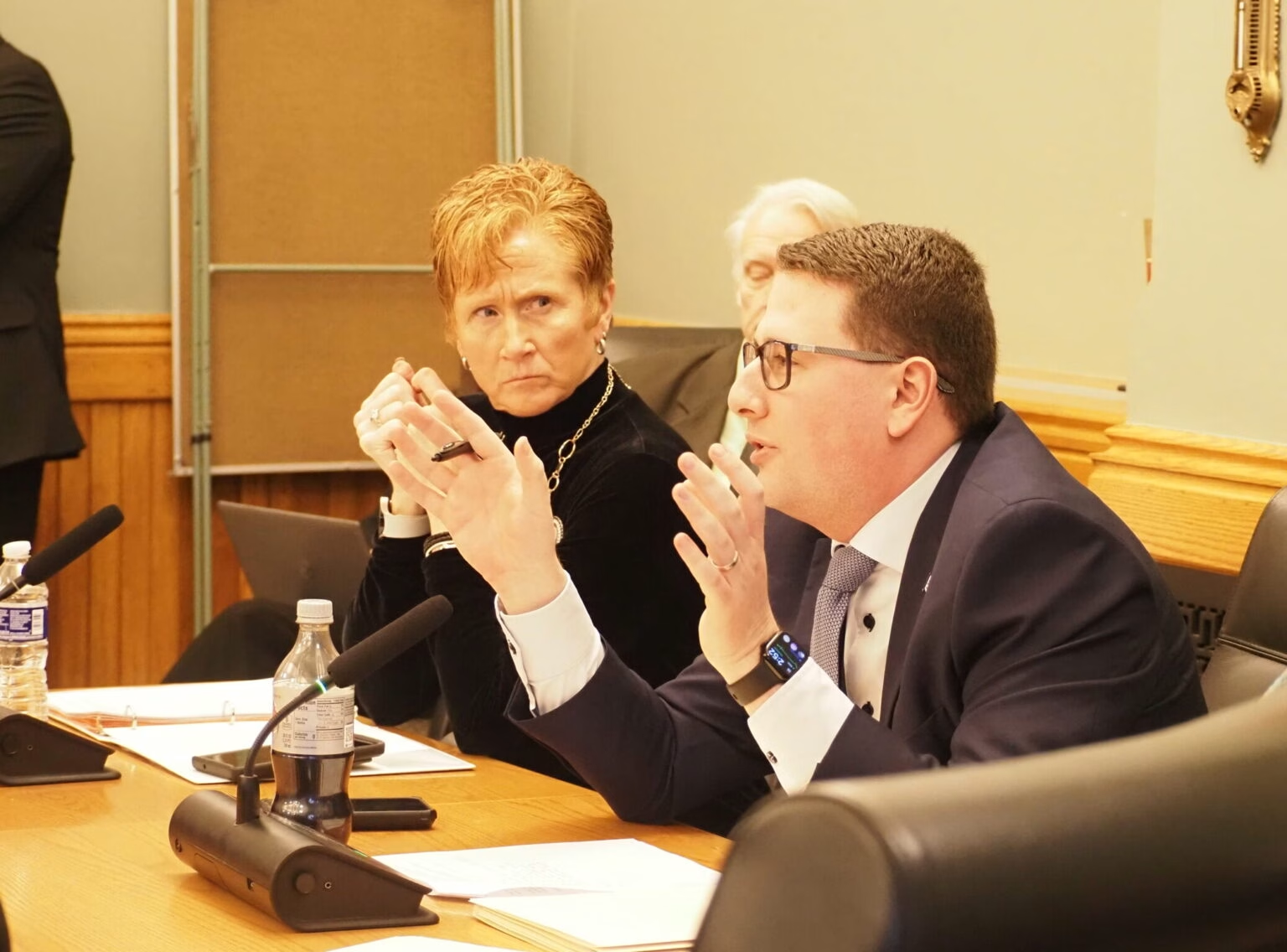
Rep. Taylor Collins, R-Mediapolis, chair of the Higher Education Committee, sent a letter Aug. 19 to the Iowa Board of Regents and Iowa Association of Independent Colleges and Universities to “strongly urge” the colleges and universities under their purview to heed this call and address questions of transparency in admissions, free speech, affordability, protection of research and more.
“Secretary McMahon’s letter offers Iowa’s public universities and private colleges an opportunity to demonstrate that the reforms we have enacted are not merely statutory compliance, but a genuine recommitment to the core mission of higher education,” Collins said in the letter.
In McMahon’s call to action, she asks higher education leaders to answer seven questions through “statements of principle” and have them posted on institutional websites before the end of the year. Trust in higher education is lower than ever, she said, and this work can help publicize or launch reforms to build that trust back up.
Universities must answer questions about ensuring transparent admissions policies and merit-based admissions, protecting free debate without allowing “unruly and violent protestors” to disrupt campus, encouraging academic pluralism, offering affordable degrees with a return on student investment, incentivizing “rigor” among artificial intelligence and other factors, prioritizing “excellence in teaching and learning,” and protecting programs and research from “foreign influence.”
Iowa universities can “lead by example” in answering these questions and showcasing how they’re working to restore trust in higher education, Collins said, as legislation passed in the Statehouse has already put them down the right path.
In the past two years, Iowa’s state government has passed laws to bar offices of diversity, equity and inclusion at public universities, establish the Center for Intellectual Freedom at the University of Iowa, make civic education a general education requirement in public higher education and require universities to post syllabi and financial materials online, all and more of which Collins said has helped grow trust and keep enrollment high.
In a 2026 free speech survey conducted by the Iowa Board of Regents, more than 80% of participating students reported agreeing that their university provides an environment for free speech. However, the faculty and staff response to the same question dropped nearly 10 percentage points from the previous survey to just over 67%.
The higher education committee has also focused on reduced-credit degrees and other ways of ensuring students can earn credentials faster to join the workforce in high-demand fields, Collins said in the letter. McMahon’s call to action provides an opportunity for Iowa institutions to show “the reforms we have enacted are not merely statutory compliance, but a genuine recommitment to the core mission of higher education,” he said.
“The House Committee on Higher Education Committee stands ready to support institutions to embrace this moment of renewal and to hold accountable those that do not,” Collins said.