




The USDA is expanding disaster assistance coverage to help producers recover from losses.
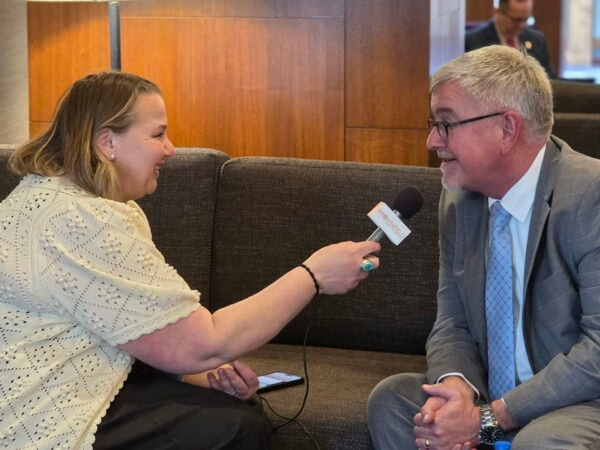
Undersecretary Richard Fordyce says improvements have been made across the board, including the removal of the pay limit for several programs. “Previously, there were payment limitations,” he says. “And so if you lost a number of cattle, especially in today’s cattle values, you probably were not going to be indemnified near the value of your loss.”


He tells Brownfield there were several changes made to the Livestock Indemnity Program to provide better coverage. “We used to have a national value,” he says. “A gestating female had a national value. With the new provisions, there is an opportunity to use a regional price.”
Which Fordyce says could be greater than the national average. For example, if a producer lost cows due to a qualifying weather event, like a snowstorm. “That producer could actually go to the livestock market the next week, see what cows, like his cows, were, what they sold for, and that’s the price that we can reimburse on a percentage,” he says. “So it’s 75% of that value if the death of the animal happened because of a qualifying weather event.”
However, LIP rates increase to 100 percent if livestock were killed by animals listed as endangered or protected species (like wolves).
And, for the first time ever, he says unborn livestock can also be covered under LIP, with coverage retroactive to January 1, 2024.
The Livestock Indemnity Program helps livestock producers who suffer livestock losses beyond normal mortality levels due to eligible adverse events.
Under the Emergency Assistance for Livestock, Honeybees, and Farm Raised Fish Program (ELAP), the USDA is providing benefits to farm-raised fish losses due to birds that feed on fish and has established a payment rate of $600 per acre of farm raised fish. Also, effective for 2026 losses, FSA will use a normal mortality rate of 15% for eligible honeybee colony losses.
Retroactive to January 1 of 2026, the Livestock Forage Disaster Program (LFP) has lowered the threshold for producers to qualify for a one-month payment with payments now triggering after four consecutive weeks of qualifying severe drought (D2 or greater) conditions instead of eight weeks. Producers may also receive a two-month payment if D2 conditions are noted for seven out of eight consecutive weeks during the normal grazing period.
Fordyce says there were also improvements made to Marketing Assistance Loans to help producers better manage cash flow needs and marketing flexibility until prices improve.