





Some areas of Iowa received more than two month’s worth of rain in a 36-hour period, leaving fields and basements flooded, according to the latest Iowa weather summary and crop progress and condition report.
Justin Glisan, the state climatologist, wrote in the weekly weather summary that storms formed in a “ring of fire” pattern around the heat dome that hit much of the country during the first week of July. The statewide average temperature for the week was 79 degrees Fahrenheit, which was 6 degrees above the climatological normal.


Storms with shower totals in excess of one inch developed throughout the June 28 through July 5 reporting period, but the heaviest showers occurred Thursday and Saturday. The weather summary shows that nearly 200 weather stations recorded at least 2 inches of rain, 42 stations recorded more than 3 inches of precipitation and a Polk City station reported 9.41 inches of rain from the storm.
On July 4, storms concentrated over central Iowa and stations recorded between 1 and 6.36 inches of rain. The highest total precipitation for the week, at just under 11 inches, was recorded in Polk City. The statewide, weekly average for the week was 2.53 inches, which is more than double the normal for this reporting period.

Iowa Secretary of Agriculture Mike Naig said there were widespread reports of flooding and swollen streams across the state.
“Our hearts go out to the Iowans and communities affected by the flooding as recovery efforts continue,” Naig said in a statement. “At the same time, other areas of the state, including drought-affected portions of northwest and north-central Iowa, received much-needed rainfall.”
According to crop progress and condition report data from the U.S. Department of Agriculture, topsoil moisture conditions for the reporting period rated 71% adequate, and 18% surplus.
The USDA report shows that corn development continues to be behind the five year pace and that of the previous crop year. Corn silking reached 8% during the reporting period, while the average is 10% and last year 13% of corn acres were silking around the July 4th holiday.
It is also typical for some amount of corn crops to have reached the dough stage by now, though the USDA report did not note any corn acres at that stage in Iowa.
Some, about 3%, of soybean acres started setting pods, according to the report. Last year 8% of soybean crops in Iowa had set pods by this week. The five-year average for soybeans setting pods is 5%. The percent of soybean acres that are blooming, at 37%, is ahead of the five-year and 2025 pace. It’s also nearly double the acreage USDA reported blooming the week prior.
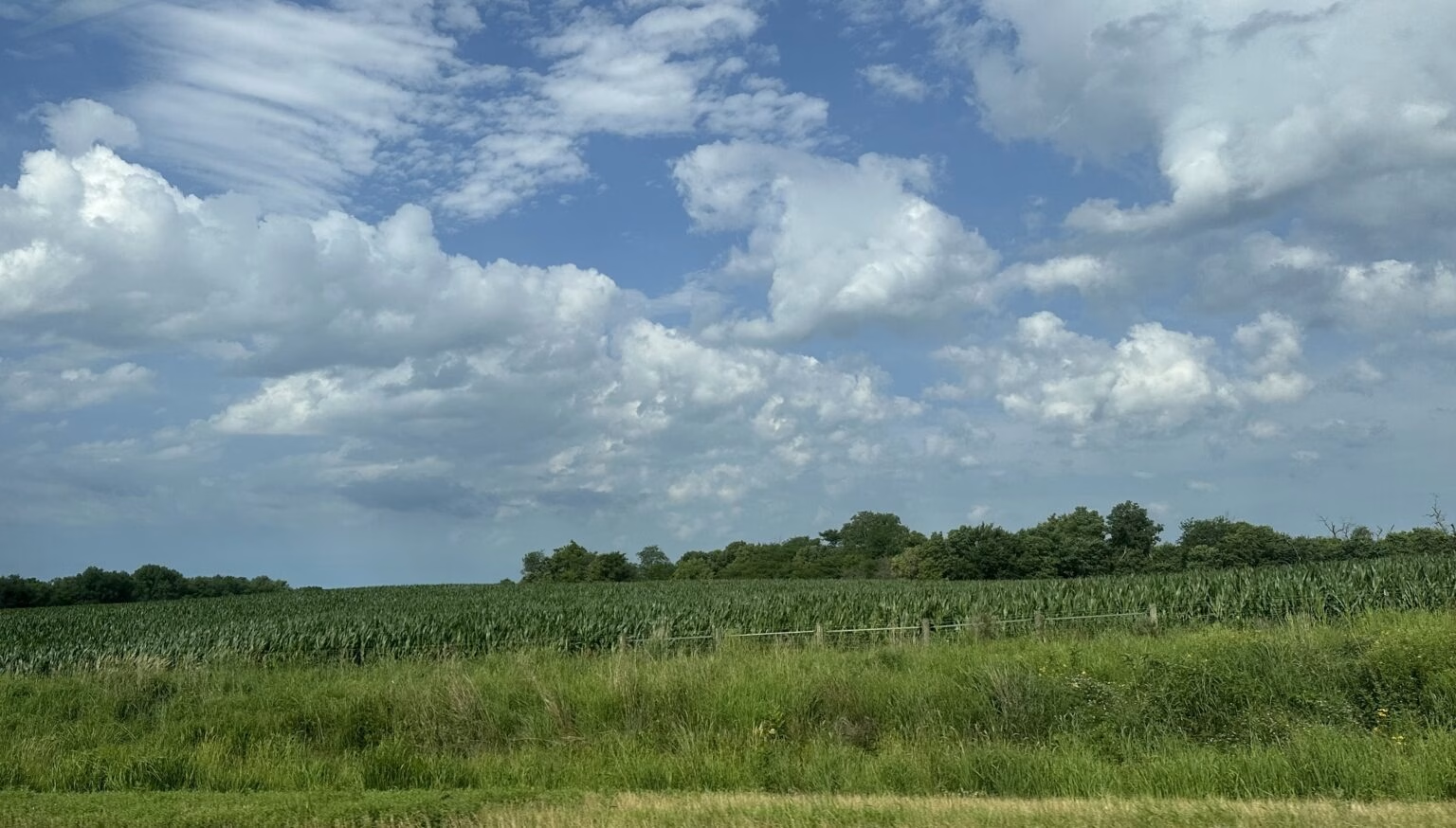
Aaron Lehman, a farmer in Polk County and president of Iowa Farmers Union, said the corn in his fields was “really showing the impact of the heat” from the past couple of weeks.
“The leaves start curling, that healthy corn plant starts to look more like the top of a pineapple plant,” Lehman said in a phone call with Iowa Capital Dispatch July 1. “So we’re really concerned how it will come out of all this heat.”
USDA reported corn crops rated 78% good to excellent and soybeans rated 74% good to excellent for the reporting period.
Oats continue to be ahead of last year and the five year average by several percentage points, with 96% of the acreage headed in Iowa.
More beans
The latest acreage report from USDA, released June 30, signaled an increased estimate of soybean crops across the U.S. The report estimated 95.3 million acres of corn were planted in the U.S. this year, which is 3% less than what was planted last year. Harvest expectations for corn are 4% below 2025 levels, which was a record high.
Soybeans on the other hand, are estimated to be planted on 5% more acres than the previous year and have a harvest 5% higher than the 2025 crop.
The recent report estimates a greater number of planted soybean acres than USDA projected in March, though the department’s projected corn planting decline stayed the same. Some wheat farmers may have instead planted soybeans this spring, as USDA’s most recent projections show a 6% decline in estimated acreage planted with wheat for the year, while the March report anticipated just a 3% decline in planted wheat.