





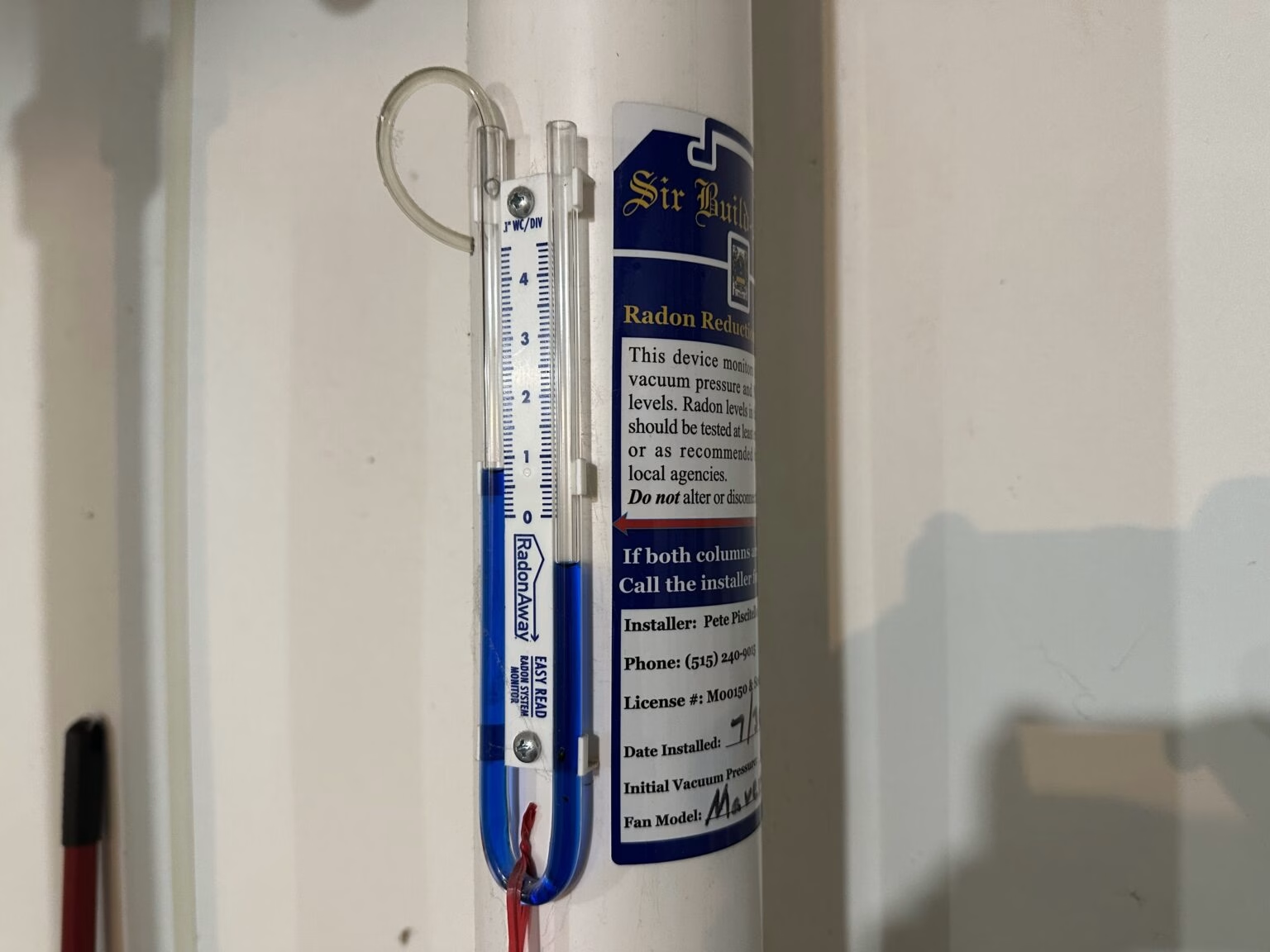
A bill to require radon mitigation in new Iowa homes saw Senate approval Wednesday, a move that advocates for the legislation say is a good first step toward further safety measures in the future.
Members of the Iowa Senate unanimously voted to amend and pass House File 2297, which would require all newly constructed single- or two-family residences to have passive radon mitigation installed. The amendment, introduced by Sen. Scott Webster, R-Bettendorf, would require local governments to adopt this new policy as well as the state building code commissioner.


Many home builders include radon mitigation in new home construction, Webster said, but adding this requirement in state and local code will ensure equal access to methods of keeping radon, a carcinogenic gas, at safe levels in Iowa homes.
“As we know, radon is a cause of lung cancer and (with) the cancer rates in Iowa, I think this is a step forward to help (in) making sure that we’re lowering those rates in Iowa,” Webster said.
Cody Smith, director of climate initiatives in the Iowa Environmental Council, said this bill was one of the group’s priorities this session, alongside advocating for reinstated and increased funding for water quality monitoring.
Radon was a main focus of Iowans who participated in listening sessions put on by the council and the Harkin Institute for Public Policy and Citizen Engagement, which Smith said contributed to the report on impacts of environmental factors on cancer rates in the state.
“The EPA action level for radon is four picocuries per liter of air, and it’s thought that about half of Iowa homes are above that standard,” Smith said. “And that is one of the highest, if not the highest in the country for radon exposure.”
Lung, stomach and skin cancers have all been connected with radon exposure, according to the cancer report, and the gas is in second place for the leading cause of lung cancer in the U.S. behind smoking. In Iowa, lung cancer is the third-most common cancer and causes a majority of cancer deaths in the state.
As the bill was amended, it will head back to the Iowa House for consideration before hitting Iowa Gov. Kim Reynolds’ desk. Smith said the amendment “strengthened” the bill and anticipates the legislation will pass through the legislative process to become law due to its bipartisan support.
However, Smith said there is more the Legislature could and should be doing to mitigate cancer risks, including with radon. Since the legislation only applies to new homes, the Iowa Environmental Council has advocated for legislation creating a refundable $1,500 tax credit for homeowners to use to install their own mitigation system.
Other environmental factors studied in the report include forever chemicals, nitrates and other carcinogens, each of which there are practices to address, but Smith said there are “gaps in our regulations and policies” that seek to protect Iowans’ health from pollutants.
“We’ll be laser focused on this issue in the future,” Smith said. “We expect to hopefully have a Legislature next year that is even more informed and more ready to act on these things, and we’re going to continue to push them down that path as much and as hard as we can.”