




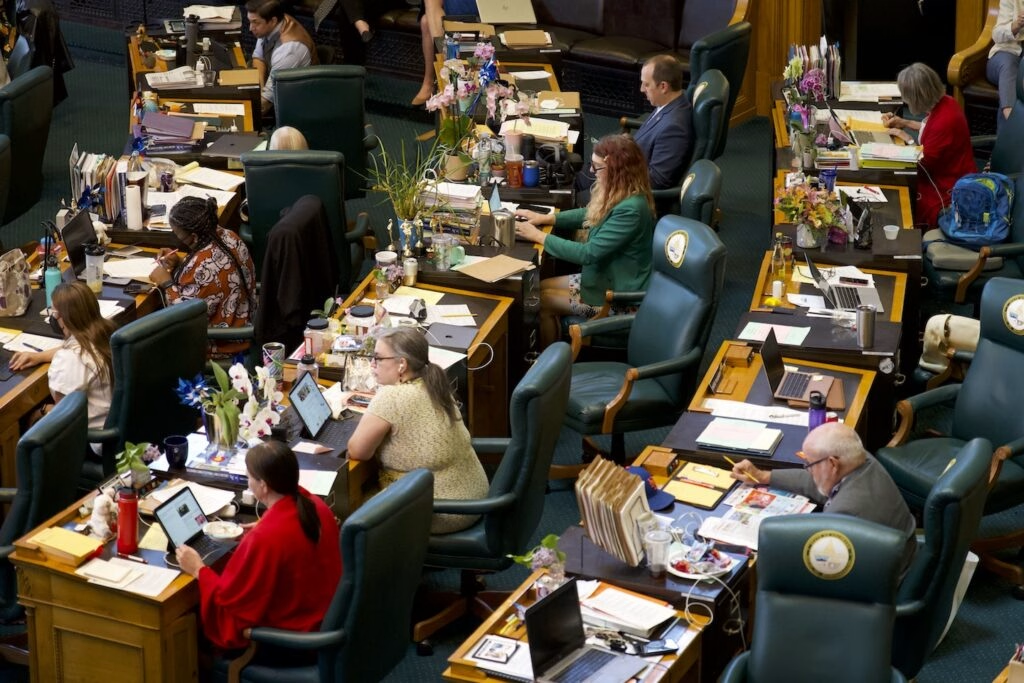
A record number of women are running for state legislative seats in the November 2026 elections, continuing a trend toward greater female representation in state government.
According to the Center for American Women and Politics at Rutgers University, 3,824 women are running for state legislative seats across 46 states with legislative races on the ballot. That surpasses the previous record of 3,621 women candidates set in 2022. Women account for 35.5% of all state legislative candidates this election cycle.


Despite the increase in candidates, women currently hold approximately one-third of state legislative seats nationwide. Representation varies significantly by state, with women holding majorities in some legislatures while accounting for fewer than 15% of seats in others.
Democratic women make up approximately 68% of women nominated for state legislative races this year. The remaining candidates include Republican women and those affiliated with other parties. Researchers say increasing women’s representation across the political spectrum remains a challenge.
Debbie Walsh, director of the Center for American Women and Politics, said progress toward equal representation has generally been gradual rather than occurring in a single election cycle. She also emphasized that achieving gender balance requires participation from both major political parties.
Several factors can influence whether women decide to run for office, including recruitment, campaign funding, family responsibilities and perceptions of their qualifications. Researchers have found that women, on average, report lower levels of political ambition than men and are often less likely to consider running without encouragement from others.
The cost of living has also emerged as an important campaign issue. Some political analysts say candidates who focus on household expenses, grocery prices and family budgets may connect with voters concerned about rising costs. However, election outcomes will depend on individual races, candidates, party dynamics and voter priorities.
Abortion policy has been another factor motivating some women to enter politics following the U.S. Supreme Court’s 2022 decision overturning Roe v. Wade. Candidates across the country have cited a range of concerns and policy priorities as reasons for seeking public office.
Both major parties have efforts aimed at recruiting and supporting women candidates. Republican organizations have established training and leadership programs, while Democratic-aligned political groups have invested in candidates and campaign infrastructure. The extent to which these efforts translate into election victories will become clearer after the November results.
Although the number of women running for office has reached a new high, the increase in candidates does not necessarily mean women will gain an equivalent number of seats. Election results will determine whether the record number of candidates leads to a significant change in representation.