




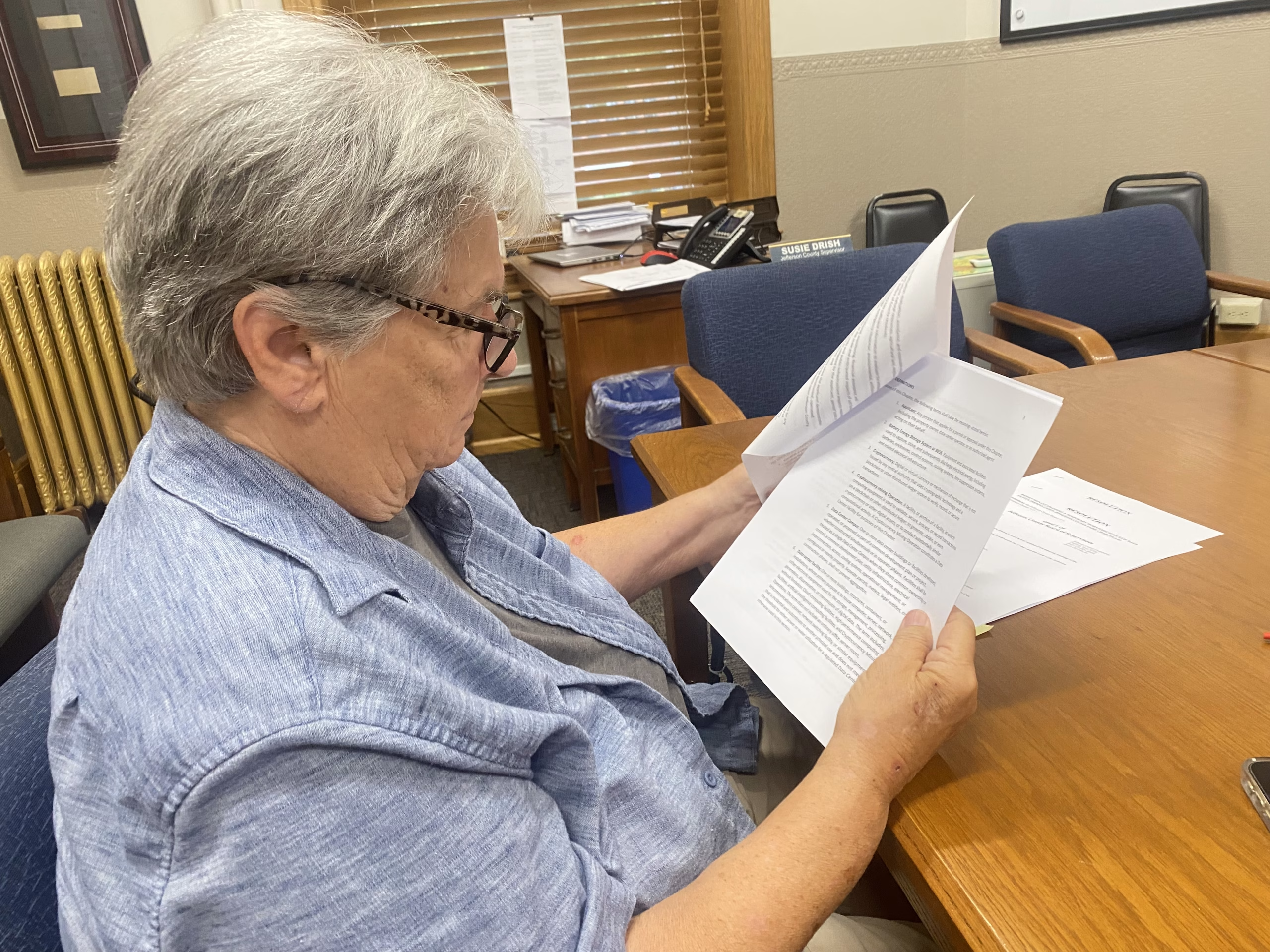
The Jefferson County Board of Supervisors voted unanimously Tuesday morning, August 11th, to adopt a data center ordinance and immediately impose a 12-month moratorium on data center development under that ordinance, marking a landmark moment in a months-long community-driven effort to regulate large-scale data center development in Jefferson County. The vote came one day after the board held a public hearing Monday evening at the Jefferson County Courthouse, where community members packed the courtroom to voice their support for the ordinance and moratorium before the board took action Tuesday.
The board — Supervisors Susie Drish, Joe Ledger, and Lee Dimmitt — voted unanimously on all three actions: suspending the second and third readings of the ordinance, adopting the ordinance, and approving the moratorium resolution.


The moratorium imposes a temporary halt on the issuance of any permits or authorizations under the newly adopted ordinance — known as Jefferson County Code of Ordinances Chapter 5-45 — for the construction or material expansion of any new data center project. No county officer, employee, or agent may accept, process, approve, or issue any application or authorization prohibited by the resolution during the moratorium period. The moratorium takes effect immediately and will remain in effect for 12 months unless rescinded, modified, or extended by the board.
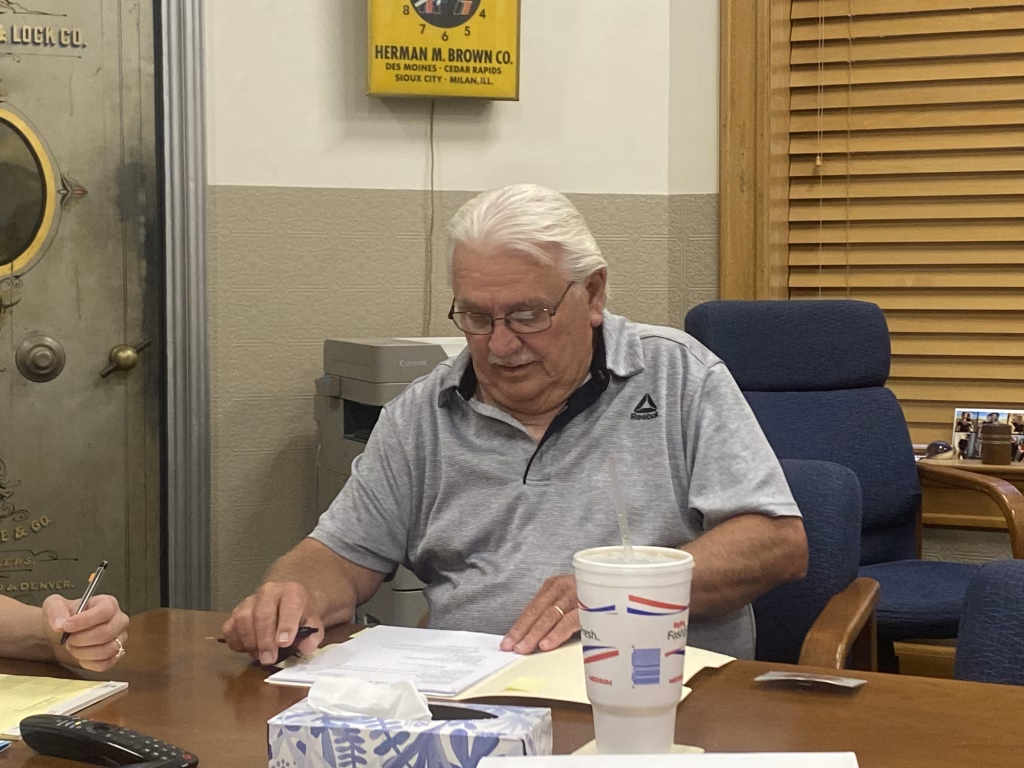
County Attorney Chauncey Moulding explained in detail why the board chose a 12-month moratorium rather than the 24-month period many community members had requested. “At the public hearing yesterday, a lot of people were talking about some fear of, like, powerful corporations coming in and pushing around a small county and hiring expensive lawyers to affect their will against the will of the voters and the board,” Moulding said. “One of the ways that that can happen is if we do things fast instead of right or sloppily. The intention of this resolution, as read, is not to just put a halt to all data center production. It’s to put a moratorium on the ordinance in order to study the process and what the impacts would be on the county. The reason that it’s 12 months with the option to extend it if necessary is because it’s not intended to be a blanket ban, but simply a temporary hiatus while the issue is studied. The longer that is, the more it appears like the supervisors are simply trying to put a blanket stop on this process as opposed to legitimately studying it. That’s why I entered 12 months instead of 24. If the study isn’t completed after 12 months, there’s always the option to reconsider that. If the study’s done in two months, obviously there’s the option to get rid of the moratorium at that time.”
Public Hearing — Monday, August 10th
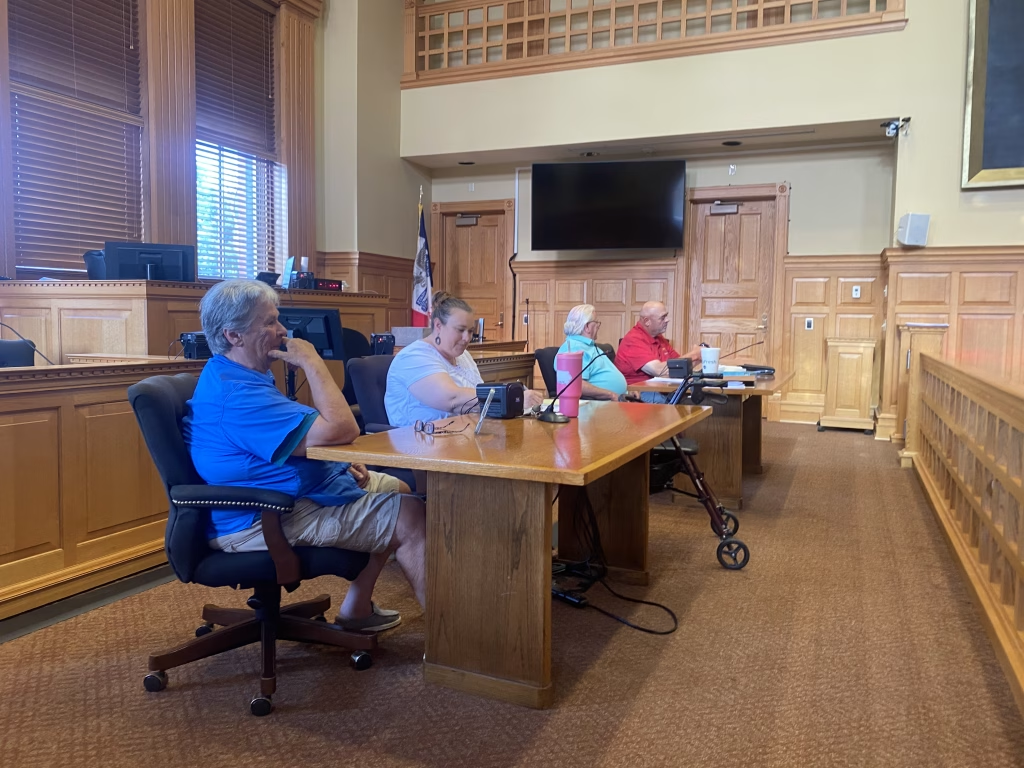
Before Tuesday’s vote, the board held a public hearing Monday evening at the Jefferson County Courthouse, where community members packed the courtroom to voice their support for the ordinance and moratorium and offer suggestions for strengthening the document.
Jeff Shipley told the board he had spoken directly with representatives from tech companies who confirmed that data center development in Fairfield and the surrounding area is a realistic possibility. “I did have a conversation with some representatives from some of the tech companies and asked them straight out — is this something that could realistically come to a town like Fairfield?” Shipley said. “And they said yes. If there’s power available, they want to be here and they want to take advantage of that.” Shipley said the community is to be commended for getting ahead of the issue. “I think it is very refreshing to see the community on the leading edge addressing this before it becomes an issue,” he said. He also called on the state legislature to establish clear parameters at the state level and argued the data centers need rural communities more than rural communities need data centers. “From my perspective, it’s clear that the data centers need us a lot more than we need them,” he said. He added that he personally would have preferred a 24-month moratorium to give the General Assembly adequate time to act at the state level.
Tom O’Donnell, a candidate for the Iowa House of Representatives representing the area, spoke in support of the ordinance and called data center regulation a bipartisan issue. He said rural communities across the country — regardless of political affiliation — are united in wanting controls on data centers, which he described as corporations strip-mining rural areas for wealth and exporting it elsewhere. He suggested that any data center built in Jefferson County should be required to cover its roof with solar panels to power both the facility and the surrounding community and called for closed-loop cooling systems as a minimum requirement.
Taylor Ross, who has been the driving force behind the community effort since the spring, offered notes for future revisions to the ordinance. Ross flagged the absence of a water use threshold in the latest draft, a clarification on language in the definition of a regulated data center, the addition of a low-frequency decibel limit, moving the noise requirements from the application study section to the enforcement section, and a reorganization of the setbacks language. “I, as a constituent, would like for there to be a 24-month moratorium,” Ross said. “I’m not sure if there’s a really good reason for the 12 and then potential for extension, but just on the record, I’m for 24 months, and I’m really grateful to everyone who has worked on this, and I would love to see this passed and have a moratorium put in place.”
Other residents brought forward a wide range of additional concerns and suggestions throughout the evening. Several speakers echoed the call for a 24-month moratorium rather than 12 months, with some noting there is no good reason to fast-track the moratorium given the gravity of the issue and the need to protect resources for future generations. Others raised the issue of the Jordan Aquifer — which supports all of southeast Iowa — and asked for specific data on drawdown already occurring in the aquifer before any data center development is permitted. One resident who works in manufacturing raised the issue of brownouts and the extra strain large-scale data center electrical usage could put on local businesses and paychecks.
Several residents also called for strengthening specific provisions of the ordinance, including revising the Community Investment Commitment requirement, extending testing and monitoring authority beyond the application phase to ongoing operations, strengthening the noise standard, and significantly increasing the penalty for ordinance violations — which one resident noted was set at $750 to $1,000 per day, calling it peanuts for a large corporation. “We hear all the time about corporations making judgments around, well, there’s a class action lawsuit, we could just settle it — I think that’s a good indicator for us to make the penalties as compelling as possible,” the resident said.
One community member also raised concerns about the broader implications of data center development, including the relationship between data centers and artificial intelligence, surveillance, and data collection, arguing that data centers pose risks to personal freedoms that go beyond environmental impacts. The board noted that while all public comments were welcomed, the hearing was focused on the ordinance specifically.
Community Survey Results
Patrick Bosold shared results from a community survey conducted by the City of Fairfield related to data center development, which drew more than 600 responses. When asked whether they support or oppose potential data center development in Jefferson County, 84.8 percent of the 600 respondents said they strongly oppose it, with an additional 6.3 percent saying they somewhat oppose it — meaning more than 91 percent of respondents expressed opposition. When asked what impact they believe data centers would have on Jefferson County’s economy, 70.8 percent of 599 respondents said the impact would be very negative, with another 14.7 percent saying somewhat negative — meaning more than 85 percent of respondents anticipated a negative economic impact. Bosold emailed the first 11 pages of the 188-page survey document to all three supervisors the morning of Tuesday’s vote.
What Comes Next
With the ordinance now adopted and the moratorium in effect, Jefferson County will spend the next 12 months, unless changed, studying the impacts of data center development on the county’s electrical power systems, water supplies, land and agricultural resources, emergency response services, public infrastructure, and county finances. The board intends to present recommendations concerning any appropriate amendments to the ordinance or related county policies during that period. If additional time is needed, the moratorium can be extended. If the study is completed sooner, the moratorium can be lifted early.