




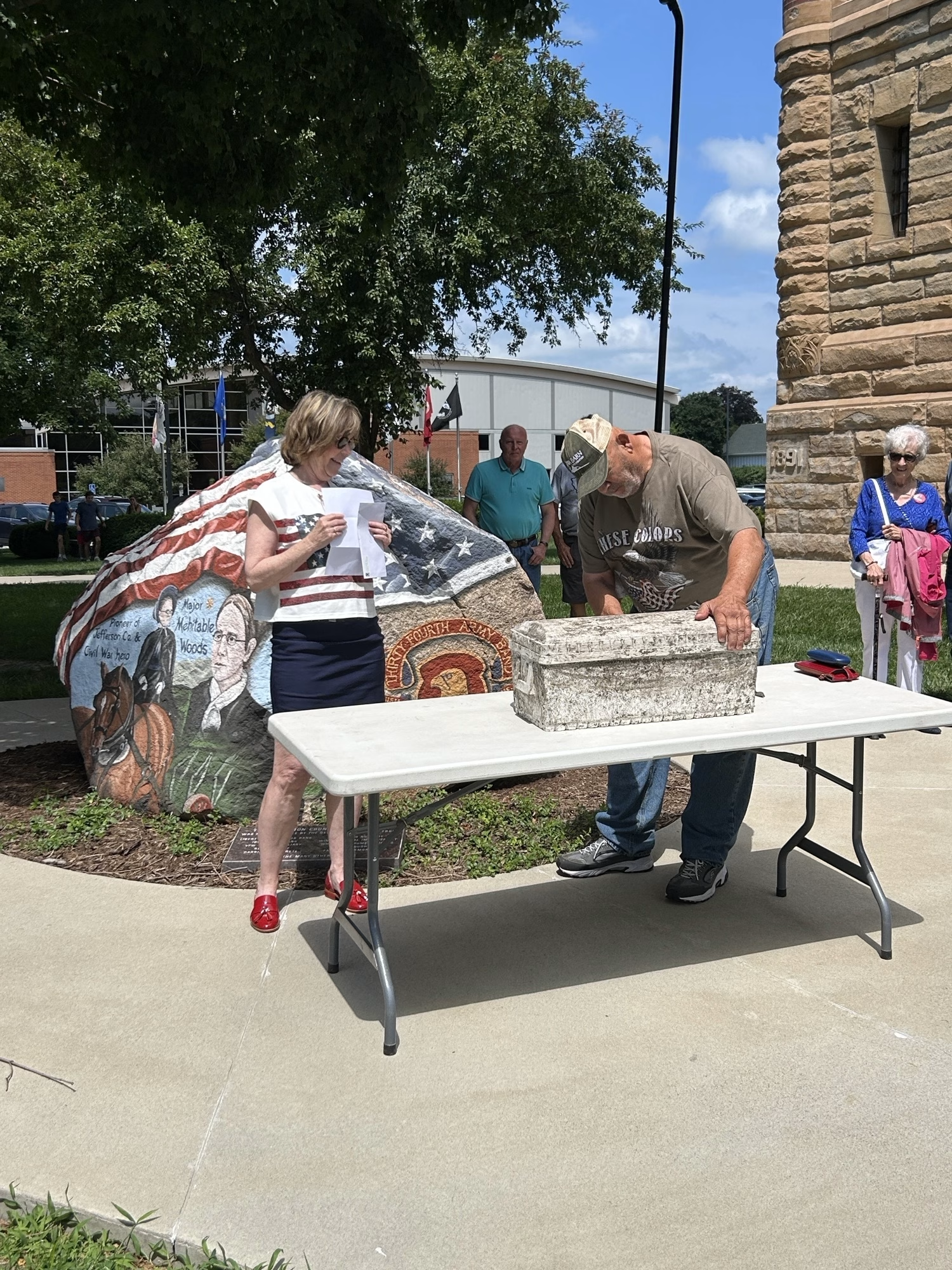
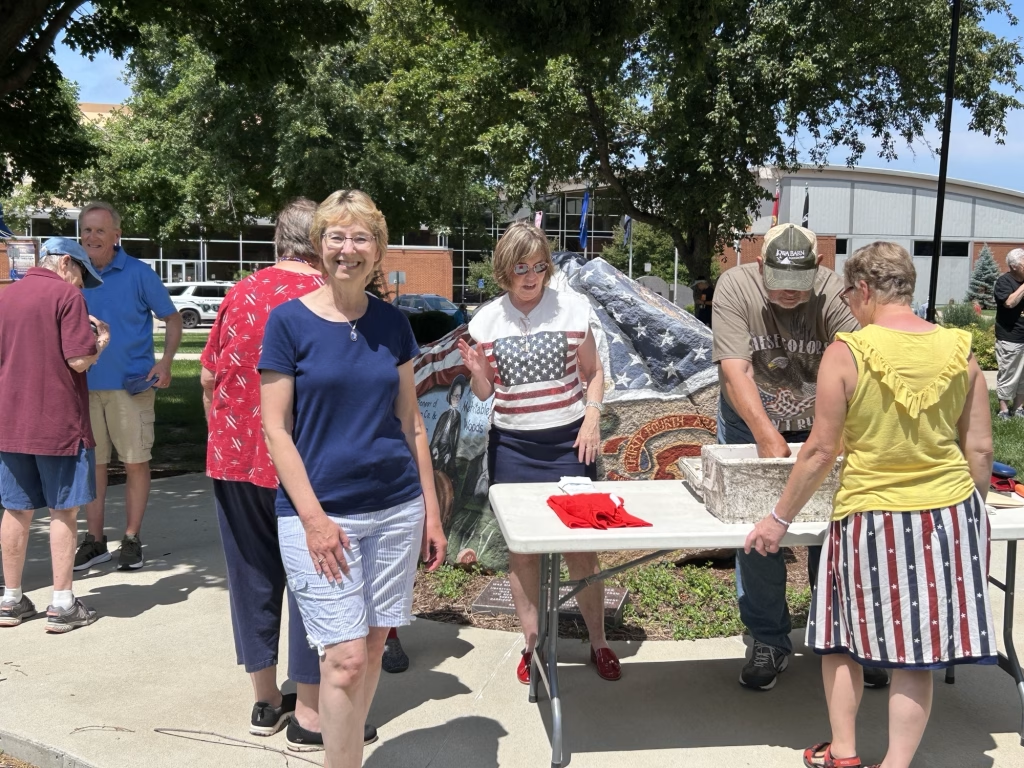
A time capsule buried outside the Jefferson County Courthouse in November 1976 was unearthed on the morning of July 4th, 2026 — America’s 250th birthday — offering a fascinating glimpse into daily life, hopes, fears, and predictions from Jefferson County residents half a century ago.
Fairfield Mayor Connie Boyer and Jefferson County Supervisor Joe Ledger headed the event, which took place on the courthouse lawn following a free concert by the 34th Army National Guard Band at the Fairfield Arts and Convention Center. The capsule was organized by the Jefferson County American Revolution Bicentennial Commission to celebrate America’s 200th anniversary in 1976, and its contents are now being prepared for public display at the Carnegie Museum in Fairfield beginning July 13th.


The Capsule and Its Condition
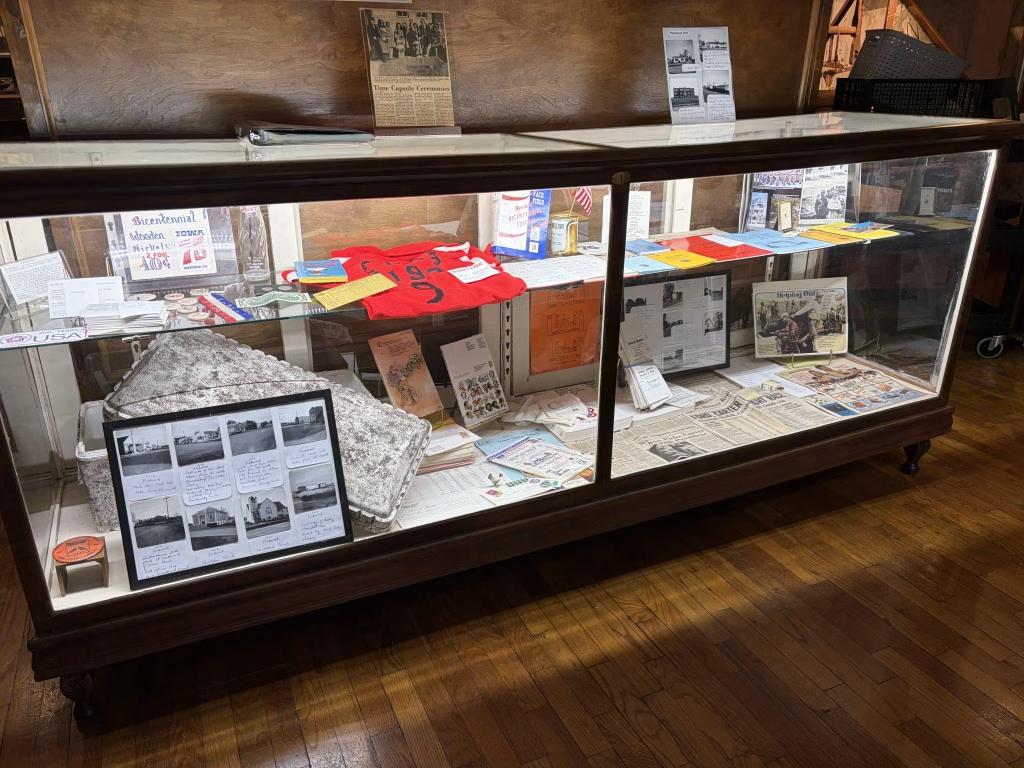
The capsule itself was donated by Raymond Funeral Home and is a burial vault made of hard plastic, sealed with butyl tape. Despite spending 50 years underground, the contents were remarkably well-preserved, according to Carnegie Museum Administrative and Research Assistant Alisha Brinkschroeder. The only exception was a newspaper that had stuck to the bottom of the capsule and could not be salvaged. Metal paper clips and staples had rusted and discolored some papers slightly, but Brinkschroeder said all have since been removed for preservation purposes.
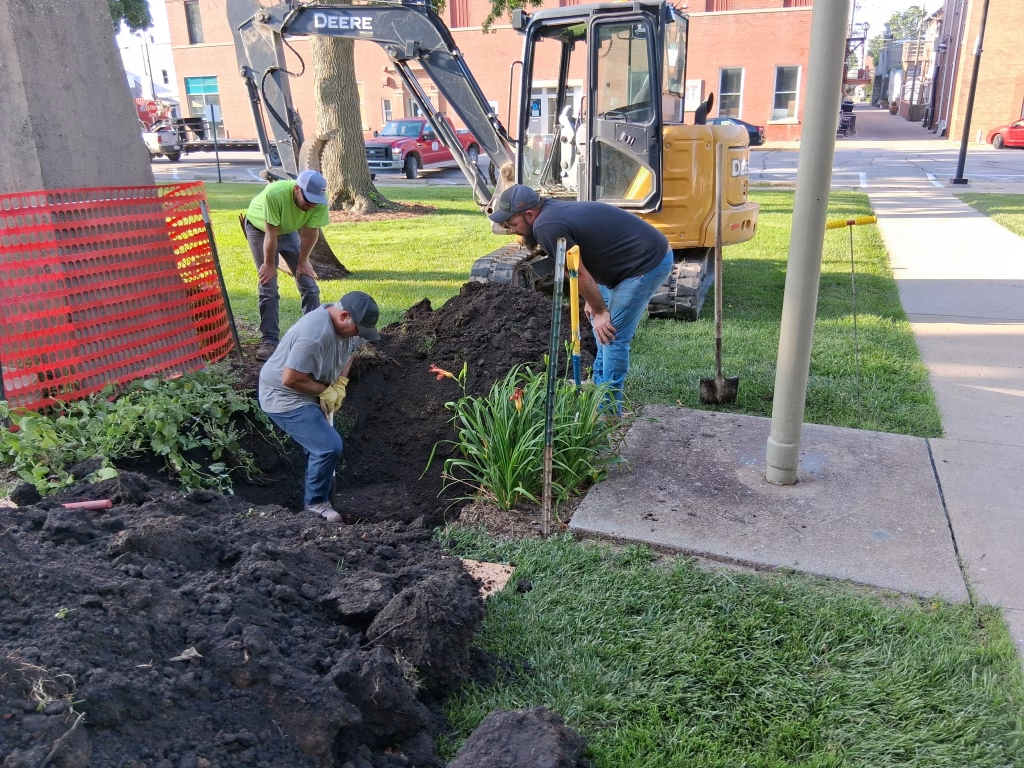
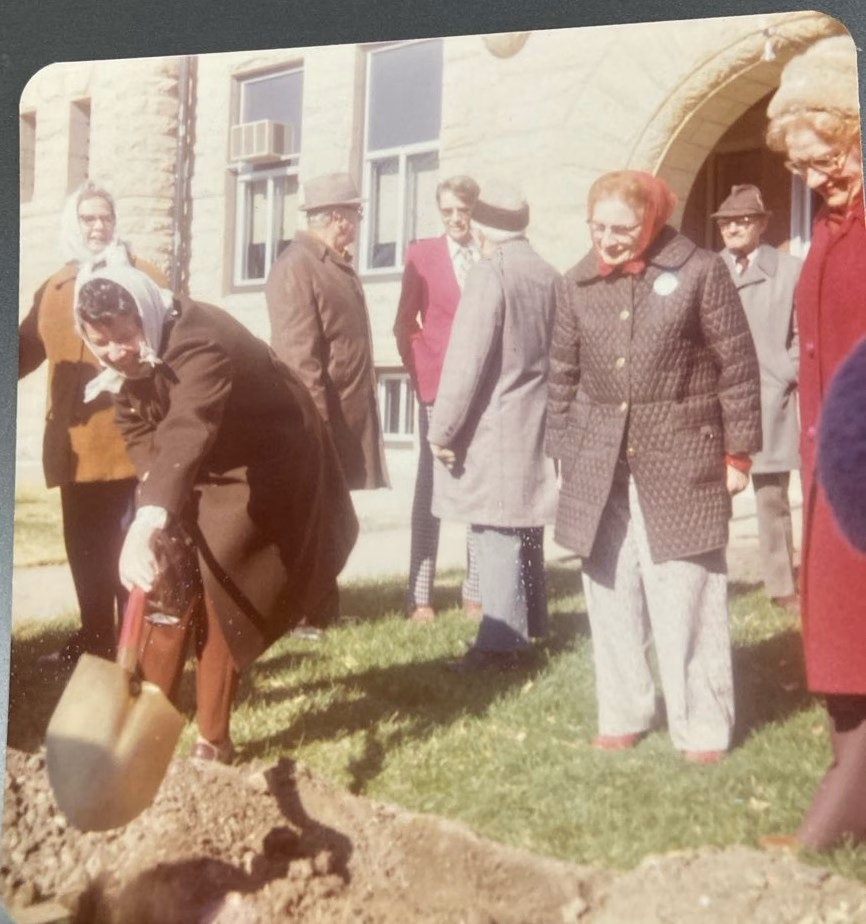
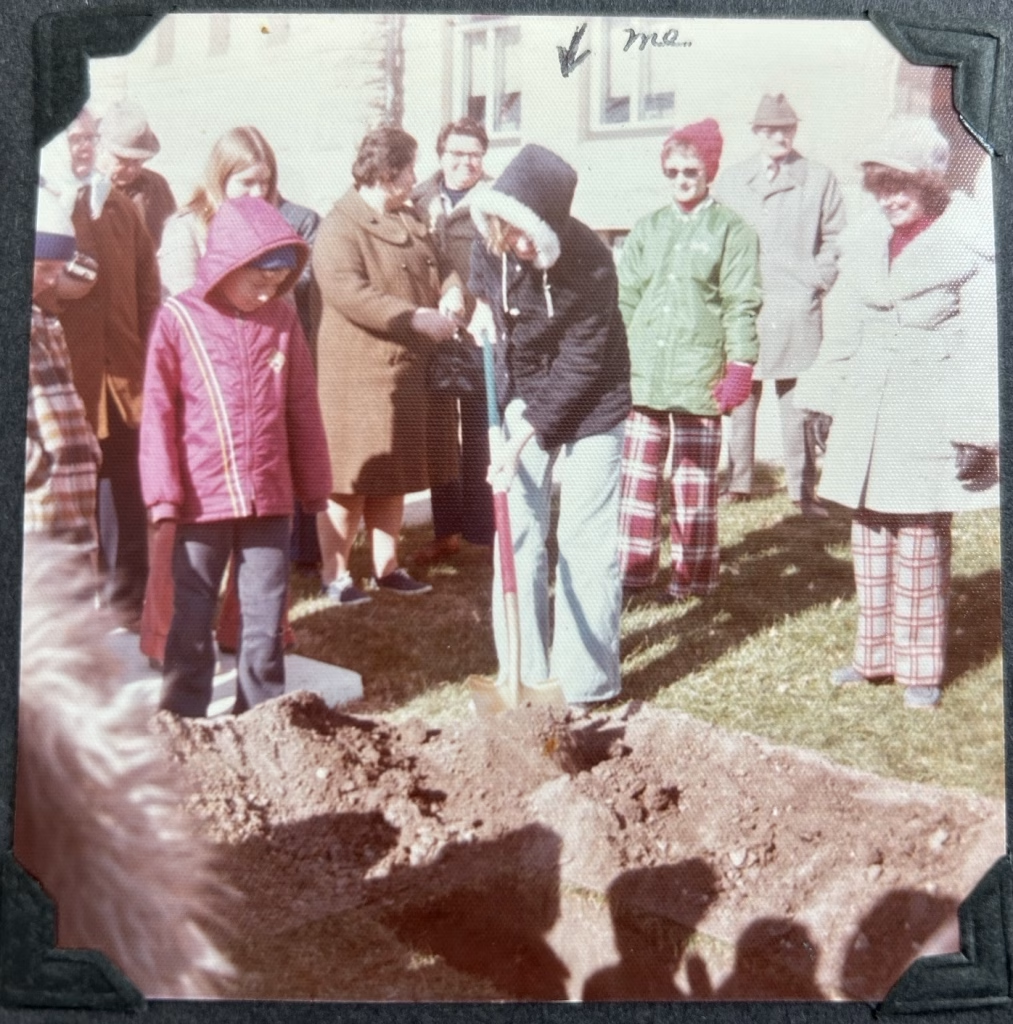
Brinkschroeder noted that the exact location of the capsule had not been perfectly documented over the decades, but researchers at the Carnegie Museum uncovered photographs of the original 1976 burial ceremony that helped county workers narrow down where to look.
What Was Inside
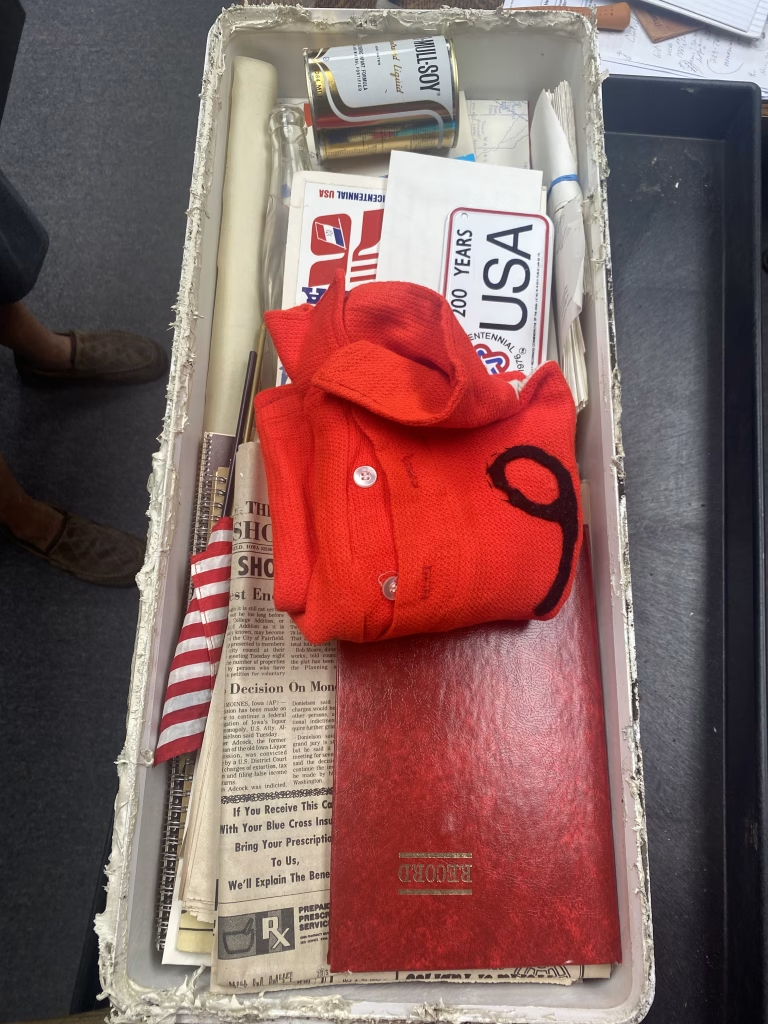
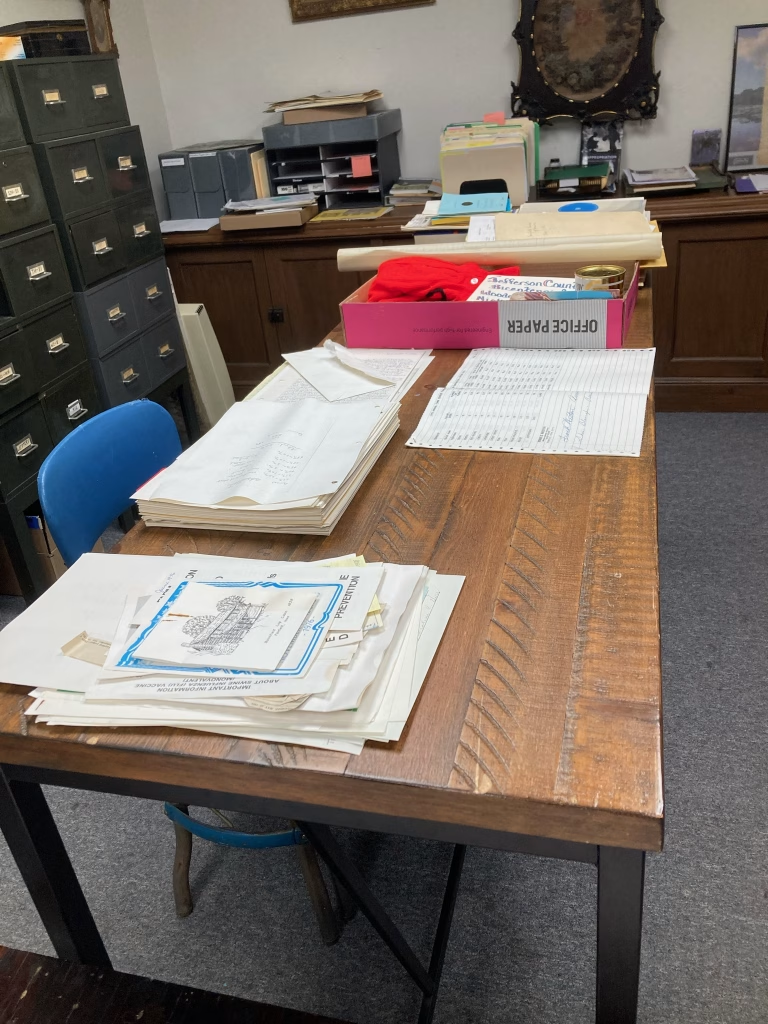
The capsule contained a wide variety of items reflecting life in Jefferson County and the nation in 1976, with a heavy focus on the Bicentennial celebration. Among the contents, according to Brinkschroeder and Museum Research Assistant Charlotte Wright, were wooden nickels, flags, local newspapers, sales inserts, black and white photographs of downtown Libertyville and Packwood, a hand-drawn map of Packwood’s downtown area showing the names and locations of every business, two newspapers from towns that no longer have their own papers — Packwood’s The Clarion and Batavia’s Beacon — and a red notebook containing the signatures of people who attended the original burial ceremony, many of whom were descendants of Jefferson County’s earliest settlers.

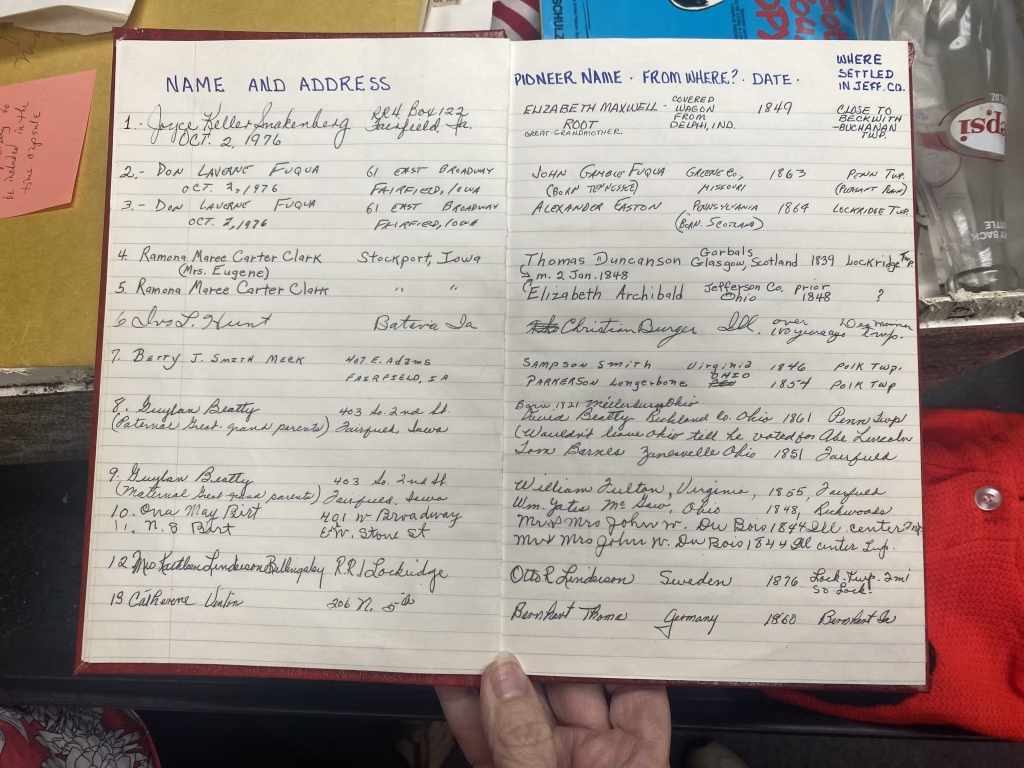
Perhaps the most eyebrow-raising items were feminine products — including birth control, a tampon, and women’s underwear. Brinkschroeder noted that while humorous now, birth control had only been legalized for single women in 1972 following the Supreme Court case Eisenstadt v. Baird, making those items a meaningful reflection of a significant shift in women’s rights and society at the time. The capsule also contained a hand-knitted women’s basketball jersey with a felt number hand-stitched onto it — a far cry from today’s professionally designed, digitally ordered uniforms, Brinkschroeder said.
Letters from 1976
Among the most historically significant contents were approximately six personal letters written by Jefferson County residents in 1976, offering an intimate look at everyday life and predictions for the future. Wright said the personal letters are among the most significant items in the capsule. “The time capsule items have more focus on the political and financial structures of the small towns and the county,” she said.
Verda Baird, who lived on a family farm near Fairfield, wrote what Brinkschroeder described as the most detailed account of daily life in the capsule. Rather than predicting the future, Baird focused on painting a picture of what everyday life looked like in 1976 — and she even predicted her letter would be the only one to do so. She was right, Brinkschroeder said.
Baird described a world where gas cost 58 cents a gallon, a doctor’s office visit cost $10 and lasted 15 minutes, and her average monthly electric bill ran about $50. That bill powered the feeding of 1,000 pigs and 80 cattle, pumped water, and kept five heated livestock waterers running through the winter. Her family had purchased their farm 13 years earlier for $190 per acre — a figure that put in perspective just how much land values had climbed, as Batavia Mayor Harold Shipler noted in his own letter that farmland was already selling for $500 an acre by 1976.
Baird also captured the cultural shifts of the era. She noted that children had recently begun wearing jeans to school, a trend she said had hit about five years earlier, with prices jumping from $9 in 1971 to $18 or even $25. She also observed that both men and women were wearing their hair long and straight, making it difficult to tell them apart from behind. The national highway speed limit, she added, was 55 miles per hour.

Don L. Fuqua, Treasurer of the Jefferson County American Revolution Bicentennial Commission, made a series of remarkably accurate predictions. He foresaw that televisions would be flat and hang on walls like landscape portraits, that telephones would be wireless, small, and portable, and that communication devices would become so miniaturized and automated as to be completely unrepairable and disposable. He also predicted that the world would need to find a new source of energy for vehicles as petroleum dwindled, writing that first would come rechargeable batteries and then an electric motor using the earth’s magnetic field. His letter closed with a message to future readers: “You, as you read this letter, are indeed blessed on the occasion of our nation’s 250th Anniversary. You will have witnessed technological advances undreamed of by those who have preceded you. True, we have been startled at times by the advances we have seen in our days, yet we all know that we have seen only the meager beginnings. The torch is now in yours — hold it high, and give some small thought to the same sentiments, hopes, and dreams which were echoed here from fifty years in the past.”
Thomas Wayne Smith wrote of his fears for the future, predicting there would be computers for everything and homes heated by the sun. He also predicted that housing and food would remain major issues — which proved accurate, Brinkschroeder noted — though he also expected people would be eating liquid food and pills rather than traditional meals, which did not come to pass.
Joyce Snakenburg of Fairfield, who worked at the Fairfield Clinic, wondered what medicine would look like in 2026 and expressed hope for the cure of cancer and upper respiratory infections. She noted she was only 40 when she wrote the letter and felt only 25, meaning she would be 90 at the time of the opening. She also expressed hope that future generations would have solved many of the problems of 1976, but predicted they would still be “disgusted with us for some others, like soil erosion, that we allowed for so long.”
Cynthia Worley of Pleasant Plain predicted that by 2026, there might be a man on Mars, a moon base, and a space station circling the earth, and guessed that nuclear energy would be the new power source.
A Connection Across 50 Years
One of the most meaningful moments surrounding the time capsule came from Diane Klosterman of Cedar Rapids, the daughter of Verda and Barney Baird. Klosterman’s mother had helped gather and put together items for the 1976 time capsule, and Diane, who was only 12 years old at the time, attended the opening ceremony on July 4th — nearly 50 years after she and her mother participated in burying it.
“It was fun watching the mayor of Fairfield share with the crowd all of the articles and items that are in great condition after being buried for 50 years,” Klosterman said. She described the Carnegie Museum as an invaluable resource for Jefferson County history and encouraged the community to visit. “Previous and current employees and volunteers work so very hard in recording all the items and organizing and displaying what they can in their current space,” she said. “I highly recommend the museum as a place to visit and tour to appreciate the county’s history.”
Klosterman expressed hope that the community will organize a new time capsule to be buried this year — America’s 250th birthday — to be opened in another 50 years.
What the Museum Says
When asked what message she would send back to those who buried the capsule, Wright’s answer was simple: “Include more objects and less paper.”
Brinkschroeder reflected on the broader meaning of the discovery. “As the world becomes more digital and archives are learning to adjust to a new means of preservation, the time capsule is a spotlight on the very beginning of this technological era,” she said. “Each letter reveals how people felt both hopeful and fearful for what advancements might bring.” When asked what she hoped people would take away from learning about the capsule’s contents, Brinkschroeder said: “How quickly things change, but also, what always remains the same. While technology will always advance, and what might sound normal now will seem crazy in the future, we as humans are always looking both backwards and forwards, and dreaming of what exciting things will come next.”
Brinkschroeder said she wishes a calculator had been included among the capsule’s contents. “Many of the letters discussed how they were new and exciting,” she said. “Joyce wrote that it was all she could master in this fairly early age of computers.”
All items have been inventoried and photographed, and paper clips and staples have been removed to preserve the documents, Brinkschroeder said. After the display is taken down, papers will be returned to their original envelopes and stored in an archival acid-free box, with all items accessioned into the museum’s online database for future researchers.
What Comes Next
The contents of the time capsule will be on public display at the Carnegie Museum beginning July 13th. Jefferson County is also tentatively planning to bury a new time capsule, potentially in the fall. Supervisor Joe Ledger mentioned that a box or tub may be placed in the Supervisor’s office to collect items and memorabilia representing life in Jefferson County in 2026 — and the community is being asked for ideas on what to include.