





AUDIO: Adam Baumann – Wisconsin farmer
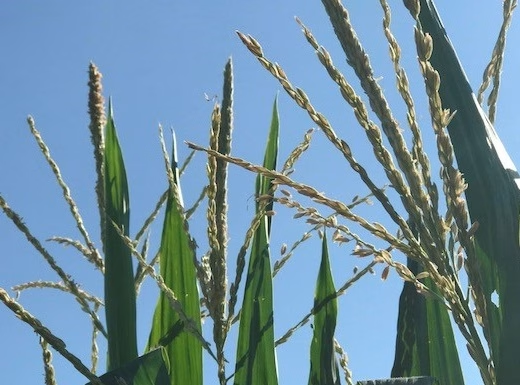
The chief atmospheric scientist with Nutrien Ag Solutions says most of the U.S. corn crop is pollinating in less-than-ideal conditions.


Eric Snodgrass says much of the Corn Belt saw high heat throughout the month of July.
“Did the heat during pollination do anything to cause some issues?” He says, “I’d expect to see some tip back and maybe some smaller ears.”
North central Wisconsin farmer Adam Baumann says he’s concerned.
“Through this really critical time of flowering here, we’re really lacking some moisture.” He says, “And it’s been extremely, extremely hot for this part of the country.”
Snodgrass tells Brownfield areas of the western Corn Belt, like western Iowa, the Dakotas, and parts of Nebraska, have been the hardest hit.
“It was too hot.” He says, “They had days well over 100 degrees, an extremely dry flash drought situation. The crop is in trouble in places out in the western Corn Belt.”
In addition to record setting daytime temps, Snodgrass says many areas have seen warm overnight temperatures.
“Research shows that if you string together too many nights above 74 degrees, it really starts to peel back on yield,” he says.
He says some areas of the Eastern Corn Belt have a more optimistic outlook.
“We’re wondering if the East is going to make up for some of the deficits in the West,” he says.
Snodgrass says forecasts for August show the extreme heat is likely to stay out west, while the eastern Corn Belt’s stormy pattern is expected to continue.
As of Sunday, the USDA says 63% of U.S. corn is in good to excellent shape, down 4% on the week.
AUDIO: Eric Snodgrass – Nutrien Ag Solutions