





AUDIO: Dr. Alan Young, Medgene
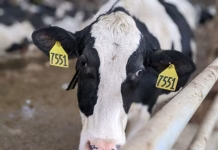
The first-ever cattle vaccine to address Theileria is now available.


Dr. Alan Young, the founder and Chief Technology Officer for Medgene, says it is administered in two doses. “We recommend using this in animals prior to infection,” he says. “Ideally you would use this in a herd before it shows up or to try and limit it in animals that may be susceptible to infection.”
Theileria orientalis is typically transmitted to cattle through bites from infected Asian longhorned ticks. Theileria causes bovine infectious anemia, which can cause fever, jaundice, lethargy, reduced milk production, abortion, and death. According to the USDA, Theileria can cause up to a 50 percent mortality rate in infected cattle.
He says Theileria is difficult to control. “Because this thing changes its spots,” he says. “It looks different when it comes in from the Asian longhorned tick, than it does when it spreads between animals and when it matures in the animal.”
Dr. Young tells Brownfield there are multiple opportunities for a vaccinated animal to affect the lifecycle of the parasite. “So it targets the expression that is on the form that comes out of the tick,” he says. “As well as the form that can be transmitted from animals to animals through blood from biting flies, needles, etc.”
As Asian longhorned ticks continue to spread throughout the U.S., he says the vaccine offers animal health practitioners a new tool to address the growing problem.
The vaccine is available now, and must be administered by a veterinarian.