





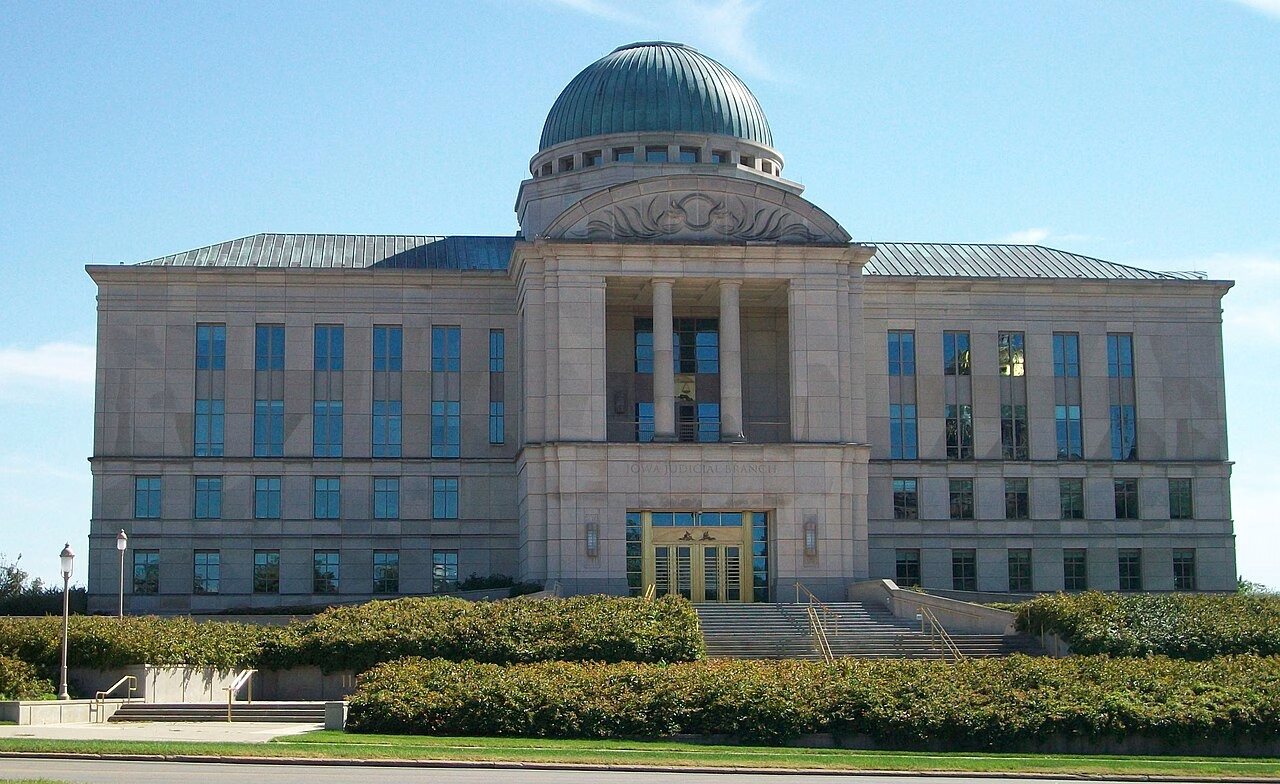
A long-running legal dispute between Jefferson County Sheriff Bart Richmond and Jefferson County Attorney Chauncey Moulding is now headed to the Iowa Supreme Court, with oral arguments officially scheduled for February 11th, 2026, at 7 p.m.
According to a notice electronically filed by the Clerk of the Iowa Supreme Court, the case has passed its initial screening and has been approved for oral argument. The case is styled Bart Richmond, Plaintiff–Appellee, v. Jefferson County Attorney, Defendant–Appellant and will be heard in the Iowa Supreme Court courtroom. The notice was signed by Chief Justice Susan Larson Christensen.


Each side will be allotted 15 minutes to present arguments, with the appellant receiving an additional five minutes for rebuttal. If any out-of-state attorneys participate in oral arguments, Iowa court rules require that in-state counsel be present.
Background of the Dispute
The case stems from Jefferson County Attorney Chauncey Moulding’s decision in the summer of 2024 to place Sheriff Richmond on a Brady-Giglio list, which identifies law enforcement officers whose credibility could be challenged in court. The placement followed a use-of-force incident earlier that year. Richmond contested the decision and filed suit, arguing that his inclusion on the list was improper.
In February 2025, District Court Judge Jeffrey Farrell ruled in Richmond’s favor, ordering that his name be removed from the Brady-Giglio list. In his ruling, Farrell stated there was no evidence Richmond had been dishonest or untruthful and rejected claims that the sheriff obstructed the underlying investigation.
Moulding appealed that decision, setting the stage for the case now before the Iowa Supreme Court.
Constitutional Question at the Center
At the heart of the appeal is a relatively new provision of Iowa law — Iowa Code Chapter 80F.1(25) — which went into effect July 1st, 2024. The statute grants peace officers the right to petition a district court when a prosecutor places them on a Brady-Giglio list.
Moulding argues that the provision is unconstitutional, asserting that it interferes with prosecutorial discretion and intrudes on ethical obligations prosecutors owe to criminal defendants. In filings to the Supreme Court, Moulding contends the statute violates separation-of-powers principles and could limit a defendant’s access to impeachment evidence.
Richmond’s attorney, Charles Gribble, disputes that claim. He argues that the statute meets constitutional standards under rational-basis review and does not interfere with fundamental rights or prosecutorial duties. Gribble maintains that the law actually reinforces checks and balances by preventing prosecutors from having unchecked, permanent authority to place officers on Brady-Giglio lists without judicial review.
Gribble also argues that removing an officer from a Brady-Giglio list does not relieve prosecutors of their obligation to disclose exculpatory evidence under Brady v. Maryland, emphasizing that disclosure requirements remain intact regardless of list placement.
Senate Lawmakers File Support Brief
The case has drawn attention beyond Jefferson County. In July 2025, an amicus curiae brief was filed on behalf of 28 Iowa State Senators supporting the constitutionality of Chapter 80F.1(25). The brief was submitted by attorney W. Charles Smithson and argues that the statute is neither vague nor unconstitutional.
According to the brief, the law establishes a clear civil and administrative process for judicial review and provides sufficient guidance to prevent arbitrary or discriminatory enforcement. The senators argue that Iowa Supreme Court precedent supports the statute’s validity and that it does not implicate criminal prosecution, making vagueness challenges less stringent.
Among the senators signing the brief are Senate Majority Leader Jack Whitver, Senate President Amy Sinclair, Senate President Pro Tempore Ken Rozenboom, and numerous other members of the Iowa Senate Republican caucus.
What Comes Next
The Iowa Supreme Court’s decision could have statewide implications, particularly regarding the balance of authority between prosecutors and law enforcement officers and the future application of Iowa’s “Peace Officer’s Bill of Rights.”
Oral arguments are scheduled for February 11th, 2026. A ruling is expected following deliberation by the court.