





Click the Introduction below:
In the sweltering early morning hours of July 24, 1933, the sleepy rural outskirts of Dexter, Iowa, became the unlikely scene of one of the century’s most dramatic confrontations between outlaws and law enforcement.


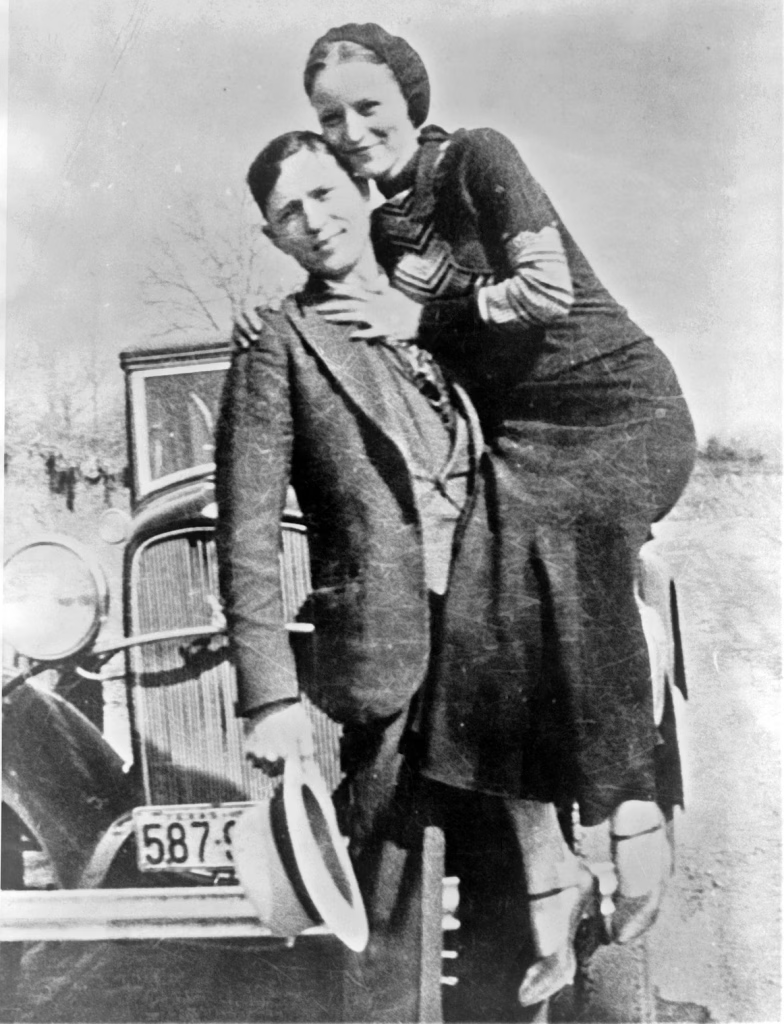
For days, the notorious Barrow Gang — led by Clyde Barrow and his partner Bonnie Parker — had been lying low at the overgrown campground of the old Dexfield Park amusement grounds, about three miles north of town. The gang, which also included Clyde’s wounded older brother Buck Barrow, Buck’s wife Blanche, and young accomplice W.D. Jones, was trying to recover from a gun battle in Platte City, Missouri when they slipped into Dallas County.
Local residents, unaware at first of who their visitors really were, noticed something amiss: bloody bandages strewn near the campsite after Clyde made repeated trips into Dexter for supplies such as food, medicine, and even clothing. Word spread that these campers weren’t ordinary travelers, and soon someone tipped off Dexter’s marshal, John Love, who called in Dallas County Sheriff Clint Knee. Together with police from Des Moines and about fifty volunteers — including townspeople and even a dentist with his own submachine gun — they quietly surrounded the Barrow camp just before sunrise.
At around 5 a.m., the posse’s presence startled the gang. What started as a quiet morning around the campfire quickly erupted into a ferocious exchange of gunfire. The Barrow Gang, well armed with stolen military-grade Browning Automatic Rifles, answered with fierce resistance. The posse suffered heavy recoil from the gang’s rapid bursts, and the first assault forced the officers to temporarily fall back.
In the chaos, the outlaws scrambled to escape. Clyde’s first attempt to flee in a bullet-riddled Ford was thwarted when he was shot in the shoulder and the car became stuck against a tree. The gang briefly retreated into the brush, but ultimately Bonnie, Clyde, and Jones broke away on foot, retreating across fields, behind Spiller Cemetery, and toward the South Raccoon River. Desperate and bleeding, they managed to steal another car from a local farm and disappear northeastward, evading capture once again.
Left behind were Buck and Blanche Barrow. Buck, already grievously wounded in Missouri and weakened by blood loss, was hit again during the firefight and captured. He was taken to King’s Daughters Hospital in Perry, Iowa, where he died five days later from his injuries and complications. Blanche was also taken into custody, severely battered and later convicted for her role in the gang’s violent run.
Though no one was killed outright that morning, the shootout marked a turning point in the Barrow Gang’s decline. Bonnie and Clyde themselves left Iowa wounded but determined — their legend as Depression-era outlaws only growing in the months that followed. They would continue their crime spree until their deaths in Louisiana on May 23, 1934.