




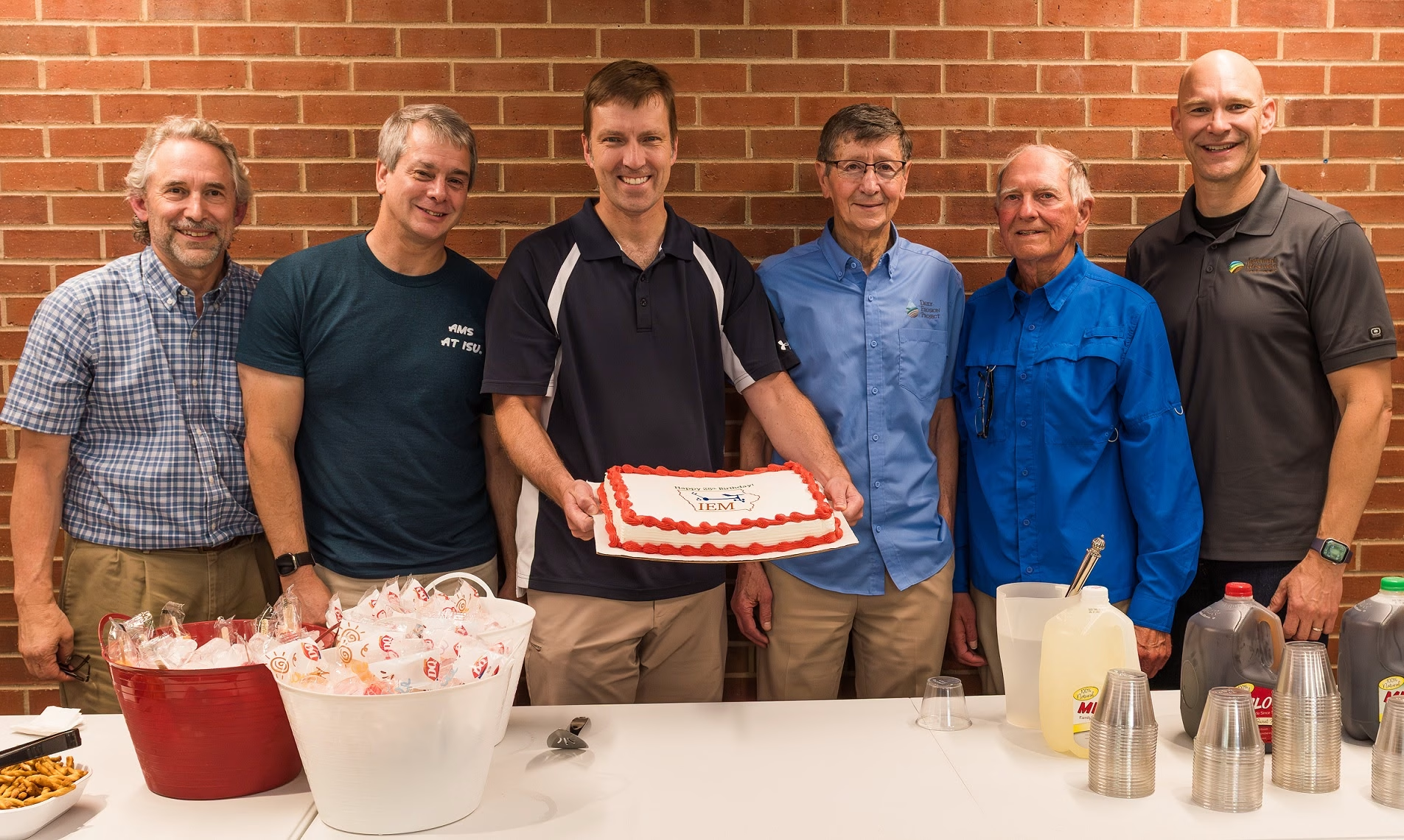
Twenty-five years ago, Iowa State University rolled out the Iowa Environmental Mesonet website. Since then, it has become the central hub for all things weather-related in Iowa with a reach far beyond the state.
What is a mesonet?
Mesonets are networks of weather stations that collect and provide “meso-scale,” generally at the scale of a county, data on temperature, precipitation and soil moisture, according to Dennis Todey, a physical scientist at the Agricultural Research Service’s National Laboratory for Agriculture and the Environment. When the IEM was created, he worked at Iowa State and helped develop it.


“The state needed more comprehensive and accessible weather data for all kinds of reasons,” Todey said. “Eventually a group of stakeholders got involved to make it happen. Today it is recognized as one of the best in the nation.”
Iowa’s mesonet collects and integrates information from eight weather-observing networks, including the National Weather Service, the Federal Aviation Administration, Iowa Department of Transportation weather stations, Iowa State soil moisture data stations on research farms, and volunteers who report readings from special thermometers and rain gauges. The mesonet also uses specialized data from research projects and other sources.
The most-frequented website at Iowa State, the IEM averages 230 million daily website requests from individuals, business and other weather platforms that use its datasets for everything from precision farming apps to local TV weather forecasts.
Daryl Herzmann, a technical project specialist with Iowa State’s Department of Agronomy, runs the site. He started working for the IEM project as an undergraduate research assistant in 2001 and, over the years, has become the IEM’s managing guru.
The Daily Feature
Herzmann’s Daily Feature web column is a popular feature for weather-curious Iowans. It has recently highlighted topics such as “About Those 90°F Dew Points,” which discusses corn sweat, and the “Northern Polk, Southern Story Deluge” of early July. In the winter, readers could track snowfall comparisons and read about the first thunderstorm of the year (Jan. 9, 2026).