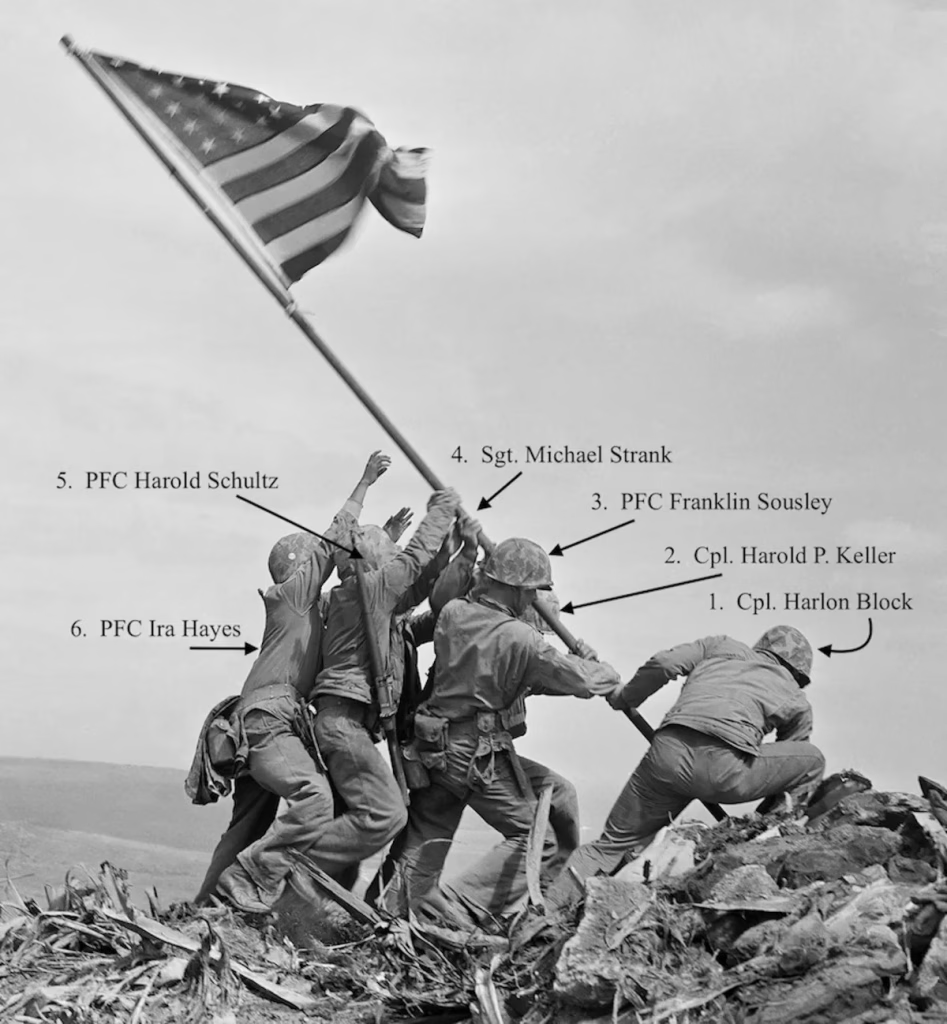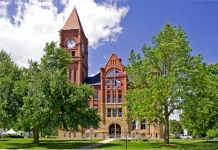





On February 23, 1945, during the fierce fighting of the Battle of Iwo Jima in World War II, an American flag was raised atop Mount Suribachi. Among the six Marines who took part in that historic moment was Harold Keller, who grew up in the small town of Brooklyn, Iowa.
Keller enlisted in the United States Marine Corps in January 1942 as the country mobilized for the war. Early in his service he joined the 2nd Marine Raider Battalion, serving under Lieutenant Colonel Evans Carlson. During that time he fought in key Pacific campaigns, including the Battle of Midway and the Guadalcanal Campaign.


In 1943, Keller was wounded during the Bougainville Campaign when a gunshot passed through his right shoulder, temporarily sidelining him from combat. After recovering, he returned to duty with Easy Company, 2nd Battalion, 28th Marine Regiment, 5th Marine Division.
By early 1945, Keller was again in the Pacific as U.S. forces launched the assault on Iwo Jima. During the brutal battle, Keller and about 40 Marines climbed Mount Suribachi, the island’s highest point. After reaching the summit, they raised a flag belonging to the 2nd Battalion, marking a symbolic victory for the troops fighting below.
However, that first flag was too small to be seen by many of the Marines battling on the far side of the island. Later that same day, a larger flag was brought up the mountain and raised again. As the second flag went up, photographers and a film crew captured the moment on camera. The image would go on to become one of the most famous photographs of the war.
For decades, Keller was not publicly recognized as one of the Marines involved in the historic moment. After years of research and review, the Marine Corps conducted a formal investigation. On October 15, 2019, officials confirmed that Keller was indeed one of the six Marines who raised the second flag over Mount Suribachi.
Today, the moment remains one of the most enduring symbols of sacrifice and determination during World War II—and a reminder that one of the men behind that iconic image came from rural Iowa.