




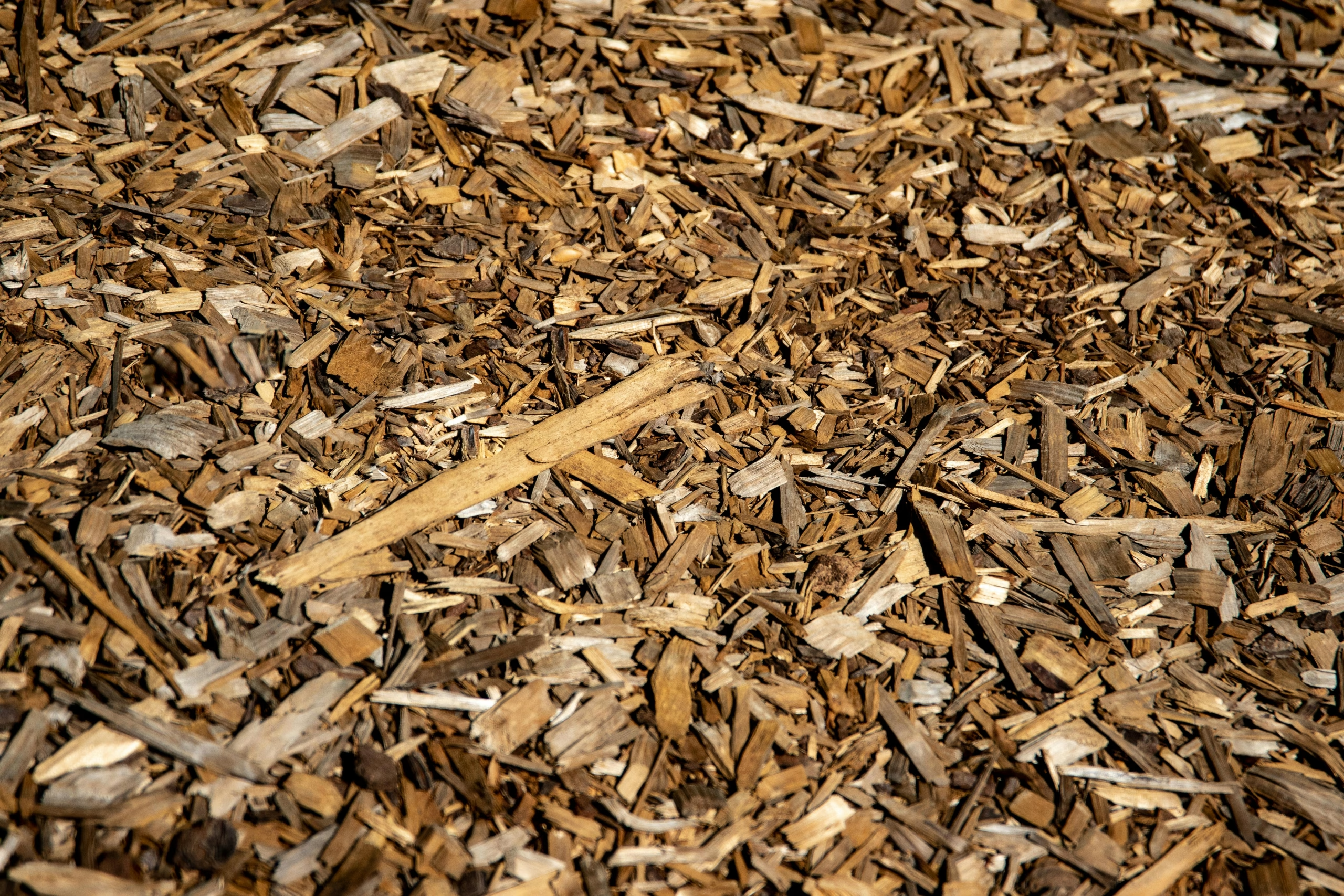
The Fairfield City Council unanimously approved first reading of an ordinance Monday, February 23rd, that would charge residents for wood chips previously available at no cost, though the proposal sparked debate about timing and tax complications.
From Free to Fee-Based


Fairfield previously offered free wood chips at its compost site on South 20th Street. After closing that facility in 2024, the city continued providing complimentary mulch at a lot south of Hy-Vee.
Under the proposed ordinance, residents would pay $25 plus tax for a full pickup truck load (defined as 4 feet by 4 feet by 8 feet) or $12.50 plus tax for half that amount. These charges roughly match what the city already collects for yard waste drop-off at the maintenance garage at 1002 W. Jefferson Avenue.
Waste Management stickers—which residents place on yard waste bags for curbside pickup—would remain $2.50.
Sales Tax Complication
Staff discovered during preparation that mulch qualifies as taxable at 7% sales tax because it’s classified as a “good” rather than a “service,” which the city typically provides. The determination will be verified with the city’s auditing firm before the ordinance’s third reading.
Council members requested adjusting prices to include tax in the final amounts, creating round numbers for cash-paying customers.
“Bait and Switch” Debate
Estey expressed skepticism about the timing, suggesting the move appears contradictory after the council recently established yard waste drop-off fees specifically intended to cover mulching costs.
“It still seems like a bait and switch, since we just established all of those fees for people disposing of their yard waste, which was supposed to offset the cost of the mulching,” Estey said. “We just addressed this issue, and maybe we didn’t fully address it, but at the time, it was like ‘we have so much mulch we don’t know what to do with it, we’ll be giving it away for the rest of our lives.'”
Councilman Tom Twohill defended the proposal, emphasizing the fees aren’t designed to generate profit.
“We’re not creating a profit center out of this,” Twohill said. “We’re not making money at all. It’s not a money-grab or anything.”
Councilman Paul Gandy acknowledged Estey’s concerns but suggested the matter wasn’t fully addressed when the council previously discussed it.
Grinding Costs Drive Decision
Carlson explained the fees primarily offset the expense of grinding yard waste into usable wood chips—a process costing between $12,000 and $14,000 annually. The city grinds yard waste once per year and must balance those costs against disposal expenses for unprocessed material.
The fees also account for staff time, as a street crew member must operate the loader when residents collect mulch, though that employee is already present for drop-off operations.
“In the past we ground everything, which is why we had more mulch than we knew what to do with,” Carlson said. “Now it’s balancing the cost of grinding versus how much mulch are we going to give away, how much do people actually need?”
Mayor Connie Boyer noted the grinding expense appears to justify the charges.
“I think he said something like it cost $12 or $14,000 just to grind the mulch,” Boyer said. “I don’t know how often there’s a grinder available, but it seems like that sort of necessitates this more than anything.”
Carlson reminded the council that the city continues offering free yard waste curbside pickup days throughout the year.
Joe Hird, the city’s Streets Superintendent, will attend the second reading to provide detailed cost breakdowns and explain the grinding process.
Administrative Cleanup
The ordinance includes administrative changes that affect how the city manages waste-related fees going forward.
Currently, some fees—like yard waste drop-off tickets and Waste Management stickers—exist in practice but aren’t formally written into the city code. The ordinance would officially add these existing fees to the municipal code while also adding the new wood chip charges.
The ordinance establishes that all these fees will be set by “resolution” rather than written directly into the ordinance text itself. This distinction matters because of how city government works: ordinances require three separate readings at council meetings before they can be changed, while resolutions require only one reading at a single meeting.
By setting fees through resolution, the council can adjust prices much more quickly and efficiently when costs change. For example, if grinding costs increase significantly next year, the council could approve higher mulch prices at a single meeting rather than waiting through three separate readings spread across multiple weeks.
This approach keeps all city waste fees—from mulch to yard waste tickets to Waste Management stickers—on one master schedule that can be updated with one vote rather than going through the lengthy three-reading process each time adjustments become necessary.
What’s Next
The ordinance will return for second reading at an upcoming council meeting, when Hird will present detailed cost information and staff will confirm the sales tax determination with the city’s auditing firm.
Council members Paul Gandy, Tom Twohill, Elizabeth Estey, Bob Ferguson, Matthew Rowe, and Victoria Thompson voted to advance the ordinance. Terri Kness was absent.
According to the city’s website, the maintenance garage on Jefferson Avenue will reopen for yard waste drop-off on April 6th.