

The Jefferson County Board of Supervisors voted Monday, January 12th to accept as final a rural broadband expansion project completed by Liberty Communications, concluding a multi-year effort funded by federal American Rescue Plan Act dollars. While the board approved the project, some supervisors expressed continued concerns about whether all rural residents gained access to internet service as intended.
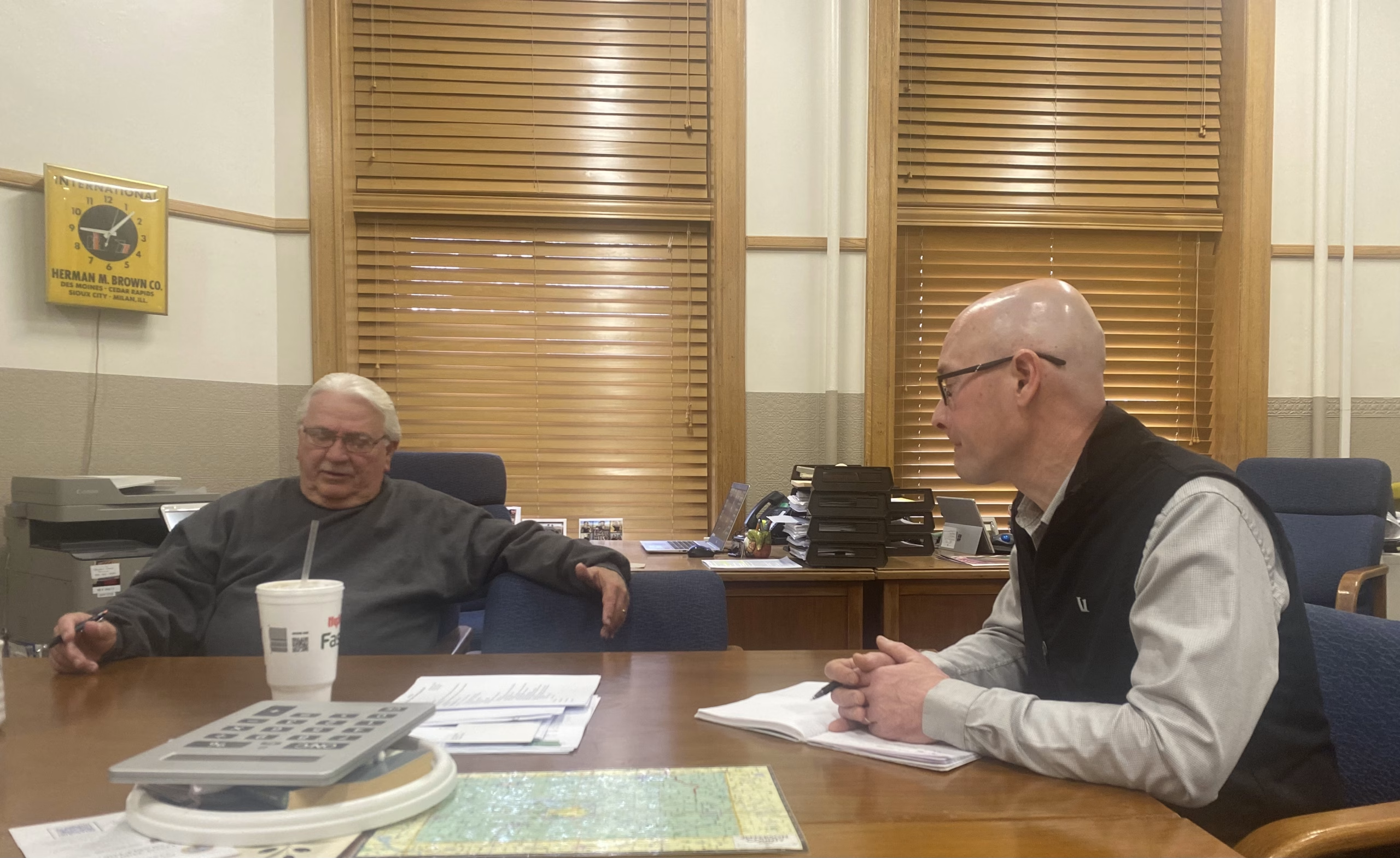
Liberty Communications General Manager Andy Meader appeared before the board for the second consecutive meeting to discuss the project and address coverage questions. Liberty inherited the agreement after purchasing Natel Broadband in 2023. The original contract, signed in September 2022, totaled approximately $775,000, with about $500,000 allocated for wireless equipment, towers, and fiber infrastructure.


Meader reported earlier this month that phases two and three of the project were completed by the end of 2025. Supervisors requested that he return with service maps showing where wireless internet is now available across the county. Meader provided updated coverage information and maps at Monday’s meeting.
The project focused primarily on serving residents outside city limits. About 60 percent of Jefferson County’s population lives within Fairfield, while the remaining 40 percent live in rural areas targeted by the expansion. Meader estimated Liberty can reach roughly 95 percent of the county overall, but acknowledged that reaching 90 percent of rural households is more difficult due to terrain, elevation, and property restrictions.
Supervisor Lee Dimmitt questioned whether residents who want service are truly able to access it, noting he has heard from constituents who either cannot get internet or previously had service that is no longer available. Though he voted to approve the project, Dimmitt said the original intent of the board was to serve rural residents without reliable internet access.
“All I’m asking is, are they able to access the service for three-quarters of a million dollars?” Dimmitt said, adding that the goal was to serve residents like Dennis Lewiston, who spoke during the meeting.
Lewiston, who lives near the Van Buren County line on 270th Street, said he has spotty internet service from another provider and was unable to obtain service from Van Buren County because he resides in Jefferson County. Dimmitt referenced Lewiston as an example of the type of rural resident the project was designed to help.
Meader said Liberty has made every effort to serve rural residents where service is technically possible. He detailed several challenges encountered during the project, including a Libertyville-area issue that required Liberty to construct its own tower after losing access to a planned signal route. He also said four customers had previously been served by routing signals through another customer’s service, an arrangement Liberty does not typically use and has been working to correct.
Liberty has installed 20 individual towers across the county. Fiber optic lines connect to the towers, with fixed wireless service delivered to homes. Tower installations typically cost between $1,500 and $2,500 each. Meader said approximately $100,000 in ARPA funds were set aside to subsidize tower construction, and a significant portion of that funding remains available for additional installations.
Supervisor Joe Ledger abstained from the final vote, citing concerns that some households still lack access. Supervisors Susie Drish and Dimmitt voted in favor of accepting the project as complete.
Ledger said he appreciated Meader’s willingness to appear before the board but remained concerned that not all residents received service.
“I am concerned about some households not getting the services that they want,” Ledger said. “The way I interpreted the agreement, they were to provide every household with internet.”
Meader emphasized that Liberty met its contractual obligations and said the project allowed the company to offer service to rural residents at lower costs than would otherwise be possible. While the ARPA-funded project is now considered complete, supervisors encouraged Liberty to continue expanding access where feasible using remaining funds.
The board’s decision marks the conclusion of a major rural connectivity initiative, though questions about service gaps and accessibility for all rural residents remain an ongoing concern.