




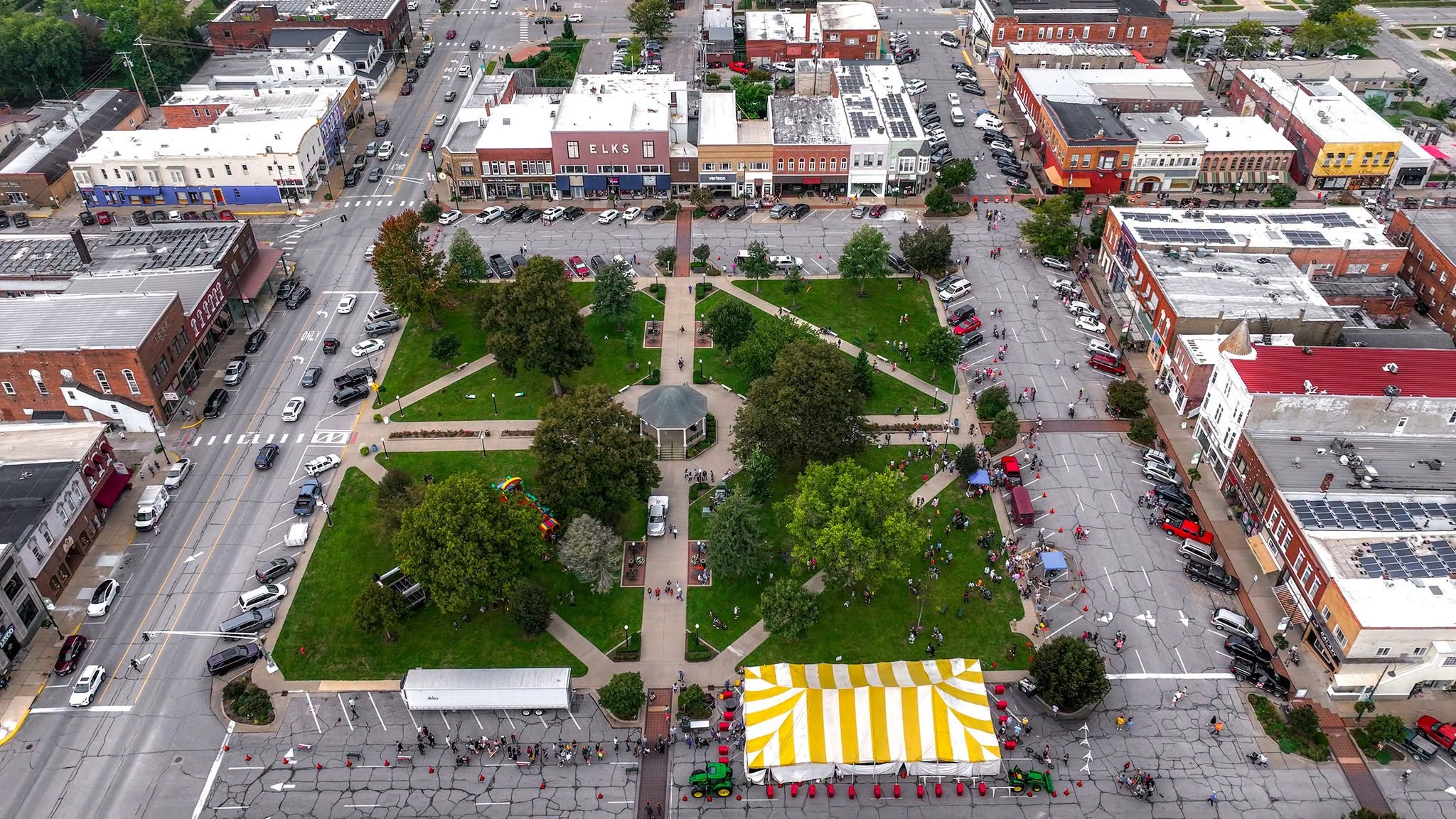
The Fairfield City Council voted unanimously Monday, September 28th to hire French-Reneker Associates for $6,900 to develop conceptual estimates and sketches for converting downtown streets from one-way to two-way traffic, with deliverables expected within 30 days.
The move represents a meaningful step forward on a project that has been discussed for years — longer than some current council members have been on the council. Mayor Connie Boyer explained why the conversation has been revived now. The recent replacement of the traffic signal at Burlington and Main Street brought the issue back to the forefront, she said, forcing the question of whether to keep things as they are or plan ahead for a conversion. “This was the beginning of it, just timing wise,” Boyer said at the meeting. “And then the next light of course is Burlington and Court — that has to be considered too. Is that a four-way light? Is it no light? That’s where we’re starting the conversation again.”


Marcus Clark, a professional engineer with French-Reneker Associates, walked the council through the proposed approach at the start of the discussion. The agreement calls for developing sketches and estimates for the conversion in three phases based on available aerial photogrammetry. Phase one would cover traffic signal improvements and grinding and painting all blocks except for Court Street from Burlington Street to Washington Street, which was set aside because additional traffic study would be needed to analyze what improvements would be required at that intersection. Phase two would address Burlington Street and Court Street pedestrian improvements and grinding and painting South Court Street from Burlington Street to Washington Street. Phase three would involve an overlay and node improvements for all eight blocks. The firm intends to submit the sketches and cost estimates within 30 days of receiving authorization to commence work.
Council member Matthew Rowe noted the project has been on the agenda for longer than he has been on the council and asked for a brief summary of the benefits and rationale for the change. “I’ve got some constituents who are strongly in favor and some are strongly opposed,” Rowe said. Mayor Boyer acknowledged the project has a long history and that it has drawn mixed reactions in the past. “In previous times, I will say I’ve had negative comments, and at that time it was like $100,000 to change things — but I think that was bare minimum because it depends on how big the scope you’re talking about, and this was several years ago,” Boyer said. She opened the floor for council members to share their views.
Council member Paul Gandy, who presented the case for moving forward, said the two-way conversion has consistently been identified as a priority by those most invested in downtown’s future. “Main Street Fairfield, when they did their assessment of Fairfield downtown in 2024, one of their top priorities is that we engage in two-way street restoration,” Gandy said at the meeting. “They see it as very important to revitalizing downtown in terms of being able to attract visitors, visitors who stay, visitors who will shop, visitors who are not just driving through town.” He said the Convention and Visitors Bureau and downtown merchants have also expressed support for the change over the years. “My experience in talking with various constituents downtown and business people around town that it makes all the sense to have this sort of thing implemented.”
Council member Bob Ferguson said those most qualified to have an informed opinion tend to be unified on the issue. “My experience is that there is a unanimity of opinion by the people who actually are the most qualified to have an informed opinion. This makes a huge difference,” Ferguson said at the meeting. He acknowledged that resistance to change is natural but encouraged proactive engagement. “People will tend to want to keep things the way they are — that’s just the way we are as human beings. But what I would suggest for all of us is that if we hear people say, ‘Well, now we really want our one-way streets’ — ask them why and then do a little bit of research. Go have coffee with them. Show them research. I think it’s incumbent on us to not just get feedback from constituents, but if on something that is in my view vital to the vitality of downtown, that we take a very proactive stance.” Ferguson added that no one has yet come to him specifically arguing for keeping the one-way streets.
The $6,900 agreement with French-Reneker Associates was approved unanimously 5-0. The conceptual estimates and sketches will inform further council discussions on the scope and cost of a potential conversion.