




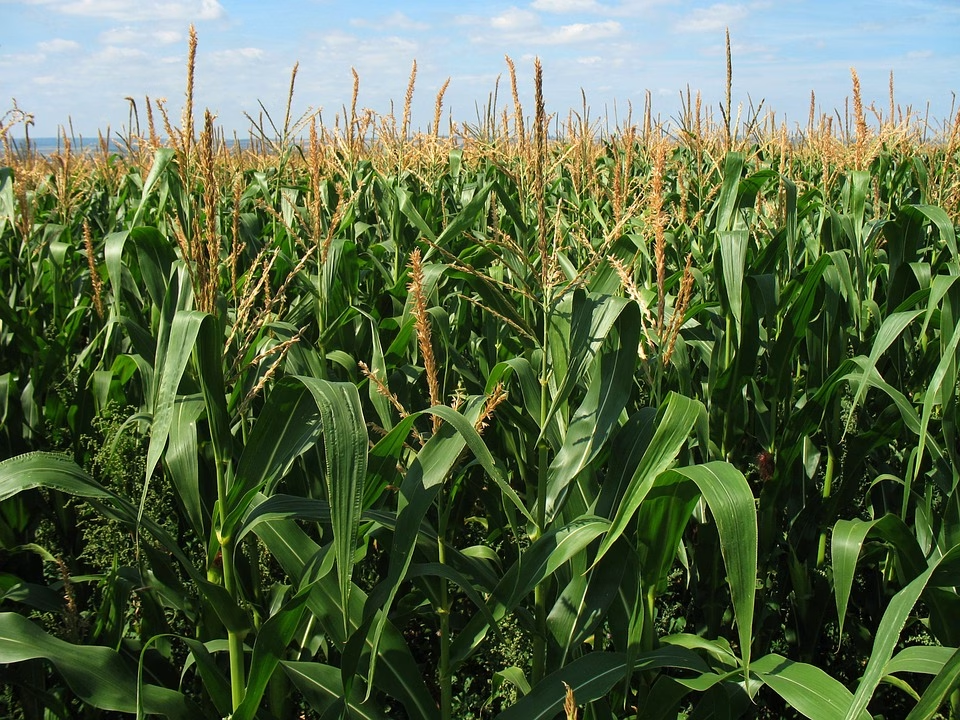
A northwest Iowa sheriff says deputies have recently responded to collisions at rural intersections where the height of corn is obscuring the view of approaching vehicles.
Sioux County Sheriff Nate Huizenga has advice for drivers who can’t see cross traffic because corn stalks are in the way. “The safest thing you can do is treat them as stop signs,” he says.


Some motorists on gravel roads watch for a plume of dust as a sign that another vehicle is approaching, but Huizenga says that method is not always reliable. “There are some days it might rain,” Huizenga says, “or a car might be going slow enough that the dust is blowing it in a different direction and you can’t see it.”
Gravel road speed limits are 55 miles per hour during the day and 50 at night, but the sheriff says those are maximum limits that aren’t necessarily safe under certain conditions. “Going through an intersection faster than what you should isn’t really going to save you much time,” Huizenga says, “but it could cost you a lot.”
Under good growing conditions, a corn stalk will be about eight feet tall by midsummer and some are in the 12 foot range, which is as high as a one-story building. According to the Iowa DOT, there are nearly 20,000 intersections on Iowa roads that do not have any stop or yield signs. That accounts for about 12% of all intersections in the state. In 2020, there were over 400 crashes at unconstrolled intersections.