

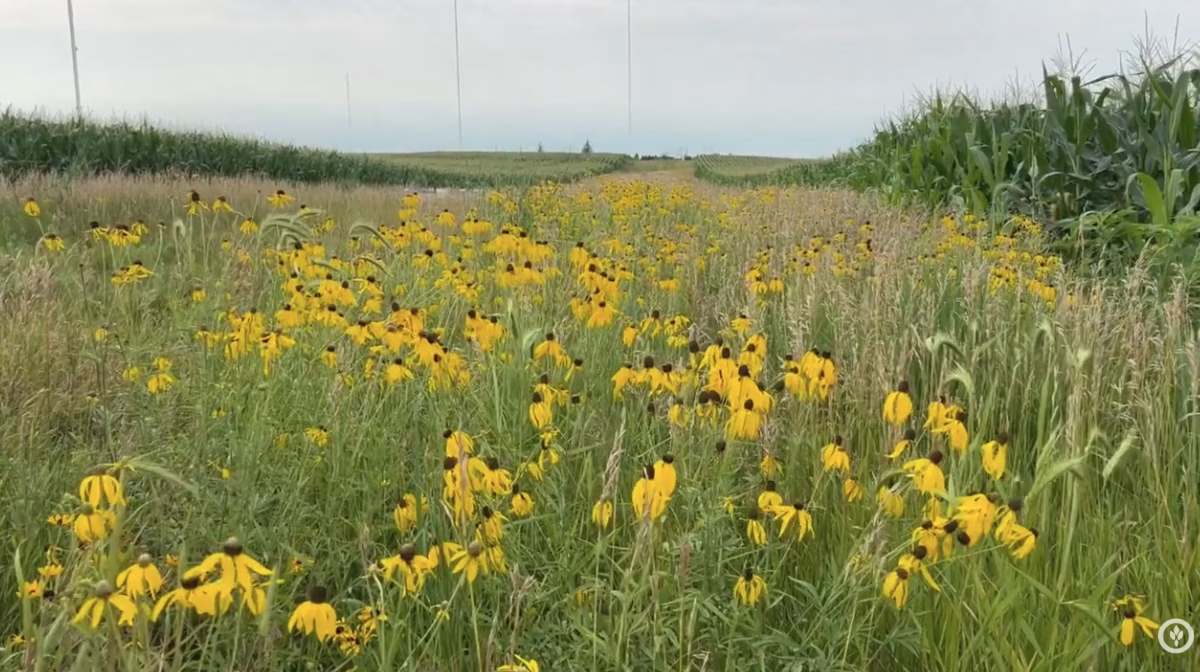
An expert on prairie reconstruction says expanding the use of native species in agricultural landscapes could help boost soil health while improving water quality.
“You’re just adding that organic matter back in,” said Judd McCullum with Iowa-based Hoksey Native Seeds. “You can see year upon year the effect that has on the dirt.”


McCullum says prairie can be a powerful tool for improving water quality. He tells Brownfield that the stems of native grasses slow runoff, allowing water to soak into the soil instead of flowing across the surface.
“It’s crazy how much water that living soil will hold and retain,” he said. “With the cover on top, you don’t lose it in dry years. It can be profound to see it in person.”
McCullum says he’s encouraged to see states like Iowa institute a prairie strips program.
Iowa State University’s STRIPS Project aims to help farmers make small conservation changes without compromising ag productivity. ISU says the program ensures conservation and agriculture can work hand-in-hand to create resilient, sustainable landscapes for future generations.
“That prairie strips program is really important,” McCullum said. “It’s just another means of connecting those larger chunks of habitat and allowing things to move around and be healthier. If it can be incorporated into somebody’s land, it probably should be.”
Iowa State University research shows that by converting 10% of a crop-field to diverse, native perennial vegetation, farmers and landowners can reduce sediment movement off their field by 95% and total phosphorous and nitrogen lost through runoff by 90% and 85%, respectively.