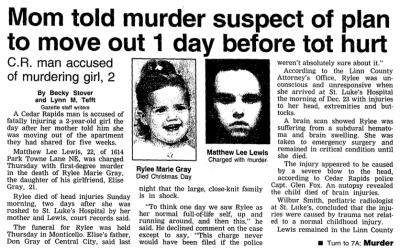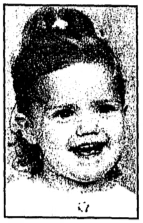






Rylee Marie Gray was just two years old when she was rushed to a Cedar Rapids hospital on the morning of Dec. 23, 1994, unconscious and suffering from severe injuries. Doctors quickly determined the toddler had a subdural hematoma and significant brain swelling, injuries they believed were caused by violent trauma rather than an accident. Despite emergency surgery that removed roughly 10 percent of her brain in an effort to save her life, she died two days later on Christmas Day. (The Gazette, Dec. 30, 1994; Nov. 16, 1995).
Medical experts who later testified in court described her injuries as consistent with both violent shaking and blunt force trauma, suggesting her head had been struck against something or that she had been thrown down. Physicians told jurors the damage was extensive and not typical of normal childhood falls. (The Gazette, Nov. 16, 1995).


Investigators arrested Matthew Lewis, the short-term boyfriend of Rylee’s mother, Elise Gray, and charged him with first-degree murder. Prosecutors argued the fatal injury likely occurred during a brief window — possibly as short as 20 to 30 minutes — when Lewis was alone with the child while her mother went to a store. The prosecution’s case relied heavily on medical testimony aimed at narrowing down that timeline. (The Gazette, Nov. 16, 1995; Nov. 15, 1995).
The defense challenged that claim, calling its own experts to argue that pinpointing the exact moment of injury was medically impossible. Defense attorneys also attempted to shift suspicion toward Gray, scrutinizing her parenting, her statements to investigators, and inconsistencies in her timeline. (The Gazette, Nov. 15, 1995).
Testimony during the trial painted a complicated picture of the weeks before Rylee’s death. Lewis had entered the child’s life only about a month earlier after meeting Gray at a bar, and the pair moved in together almost immediately. Family members said Gray had recently told Lewis she planned to move out, and tensions between them had grown. (The Gazette, Dec. 30, 1994).
Doctors, police, and relatives all agreed on one point: Rylee had suffered abuse. The central question for jurors was not whether the child had been murdered, but who was responsible. After hearing the evidence and conflicting expert opinions, a Linn County jury ultimately acquitted Lewis of the charge.