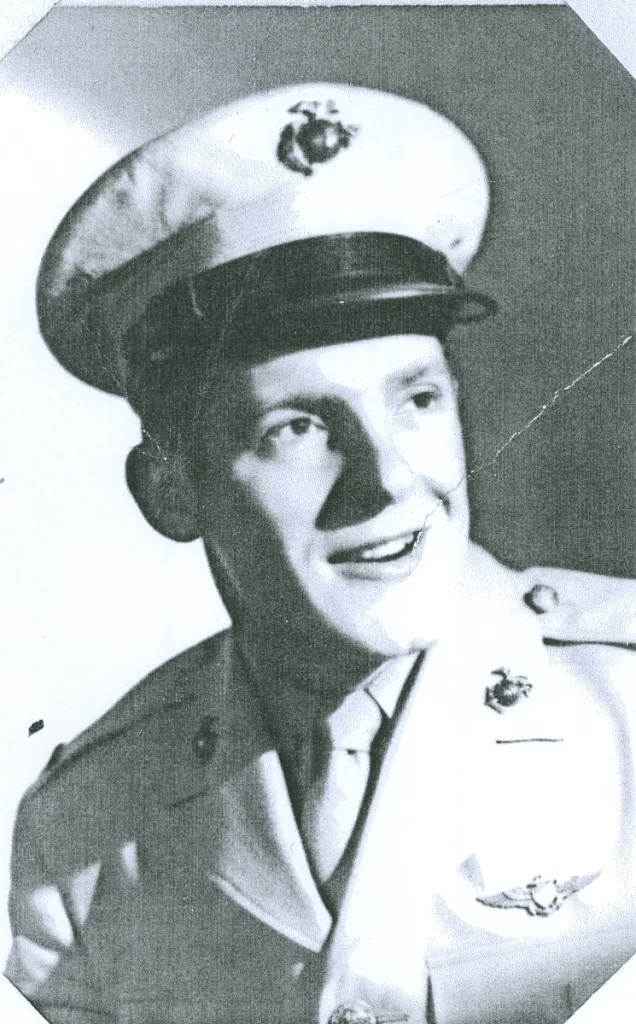






Thomas Donald Odenbaugh was born on October 2, 1926, and spent his early years along the Des Moines River in Ottumwa, the seat of Wapello County. Bright and driven, he graduated from Ottumwa High School at just 17 years old. That same ambition carried him to Iowa State College in Ames in the fall of 1943, where he began studying mechanical engineering.
Not long after arriving on campus, Odenbaugh felt a stronger pull toward service. With his parents’ permission, he sought to enlist, eventually joining the military in late 1944 after waiting for placement in the Naval Air Corps. He served through the final months of World War II and remained on active duty until 1948, when he entered the reserves and returned to Iowa State to continue his education.


As Cold War tensions escalated and the United States became involved in the Korean conflict, Odenbaugh was called back to active duty. He was deployed to Korea and assigned to VMO-6, a Marine Observation Squadron. In late September 1950, he boarded an HO3S-1 Sikorsky helicopter at Kimpo Air Base to serve as an aerial observer on a reconnaissance mission north of Seoul.
During the flight, enemy fire struck the helicopter, forcing it down. Intense fighting in the area prevented rescue teams from reaching the crash site for several days. Later reports from local civilians suggested that Odenbaugh may have been captured, but no confirmed evidence of imprisonment—or of his remains—was ever found.
Thomas Donald Odenbaugh is one of approximately 8,000 American service members listed as Prisoners of War or Missing in Action from the Korean War who were never returned or fully accounted for. His sacrifice has not been forgotten. He is honored at Iowa State University’s Gold Star Hall in Memorial Hall in Ames, where his name stands as a lasting reminder of a life cut short in service to his country.