



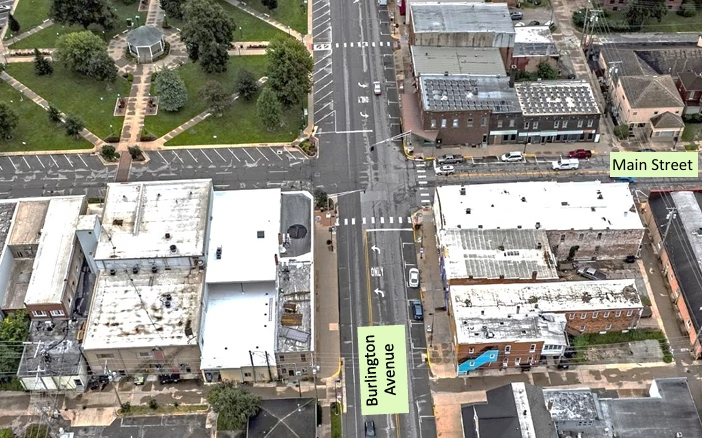
The Fairfield City Council unanimously authorized the submission of an Urban-State Traffic Engineering Program (U-STEP) application for major safety and traffic signal improvements at the intersection of Main Street and Burlington Avenue (Iowa Highway 1).
The $953,000 project aims to address long-standing safety concerns at one of the four 90-degree turns in Iowa Highway 1 and the gateway to Fairfield’s Central Business District.


Project Funding
The city has assembled funding from multiple sources to complete the comprehensive improvements:
- Traffic Safety Improvement Program (TSIP): $212,630 (already approved)
- Urban-State Traffic Engineering Program (U-STEP): $500,000 (requested)
- City Local Option Sales Tax (LOST): $200,000
- City Sidewalk Fund: $50,000
The total available funding of $962,630 exceeds the estimated project cost of $953,000, which breaks down to $580,000 for traffic signal improvements and $373,000 for pedestrian improvements.
Safety Concerns Drive Action
The intersection has been identified as a high-priority safety location through multiple studies over the past decade. A 2024 vehicle-pedestrian crash that seriously injured a child forced the community to confront the need for immediate improvements.
Between 2020 and 2024, the intersection experienced nine crashes, including one suspected serious injury crash and one suspected minor injury crash. The remaining seven were property damage only crashes.
Public Works Director and City Engineer Melanie Carlson submitted the application to Iowa Department of Transportation District Engineer Bob Younie on February 10, 2026.
Proposed Improvements
The project includes comprehensive safety and traffic signal upgrades designed to improve both pedestrian and vehicle safety.
Pedestrian Safety Improvements:
- Adding crosswalks to the north and east sides of the intersection
- Installing curb bump-outs at each corner to shorten crossing distances and improve pedestrian visibility
- Adding pedestrian countdown timers
- Installing pedestrian push buttons with the possibility of a leading pedestrian interval
- Providing ADA-compliant curb ramps
Traffic Signal Improvements:
- Replacing existing traffic and pedestrian signals
- Installing signal heads with 12-inch lenses and retroreflective backplates
- Replacing signal poles and bases
- Installing LED signal heads to reduce energy consumption
- Replacing cabinet equipment to allow for future modified intersection configurations
- Installing new vehicle detection components
- Preparing infrastructure for potential future two-way street conversion
Existing Conditions
The intersection currently consists of two-way traffic in the east/west direction along Burlington Avenue, with Main Street including only northbound traffic away from the intersection. Highway 1 includes the south and west legs of the intersection.
The existing traffic signals are at least 50 years old and have exceeded their useful life. In the past two years, the intersection lost power three times, with only two of those instances being weather-related. The existing poles also create clear zone and line-of-sight issues due to the proximity of surrounding buildings.
Current pedestrian signals on the west leg have been a frequent source of complaints. The north/south pedestrian phase provides only five seconds of walk time followed by a 14-second flashing countdown, which falls short of Manual on Uniform Traffic Control Devices (MUTCD) standards by at least two seconds of walk time and one second of flashing countdown.
Multiple Studies Support Improvements
The project draws on recommendations from multiple comprehensive studies conducted over the past decade:
- Iowa Living Roadways Community Visioning (2015) by Flenker Land Architecture Consultants
- Healthy Hometown Walkability Assessment (2019) by Wellmark
- Local Road Safety Plan (2020) by Kimley Horn – Fairfield was selected as one of the first seven cities to participate in the Iowa DOT’s Local Road Safety Program due to its high percentage of fatal and serious injury crashes involving pedestrians and bicycles
- City of Fairfield Traffic and Safety TEAP Study (2022) by HR Green
All studies identified the Main and Burlington intersection as requiring significant improvements to meet current safety standards.
Future Two-Way Street Conversion
While the City of Fairfield has not formally approved converting downtown one-way streets to two-way streets, the council continues to explore concepts and funding for the conversion. The proposed project includes preparing for two-way north/south traffic by installing the signal base and conduit necessary to accommodate that future change.
The city’s central business district is located in a nine-block area surrounding Central Park. Many streets were designated as one-way in the early 1960s to efficiently move vehicle traffic, but the city has discussed reverting to two-way streets for nearly a decade as part of efforts to revitalize downtown and provide a more pedestrian and visitor-friendly environment.
Traffic forecasts from the 2022 TEAP study suggest that converting to two-way streets would dramatically improve the level of service for east/west traffic at Main and Burlington by providing drivers with four additional routes to access downtown.
Project Timeline
If U-STEP funding is confirmed, the city expects to follow this timeline:
- April 2026: Receive TSIP Funding Agreement
- November 2026: Complete final design
- December 15, 2026: Project letting
- Fall 2027: Project completion
Design work is being completed by French-Reneker-Associates.
Traffic Volume
Annual average daily traffic (AADT) volumes show significant usage of the intersection. Peak traffic volumes were documented in a 2022 TEAP study using data collected on April 6, 2021.
Pedestrian counts during peak hours showed 15 pedestrians crossing east/west and 19 crossing north/south during the evening peak between 4:30 and 5:45 p.m.
The current traffic signal operates on a 70-second cycle with 38 seconds allocated to east/west traffic and 32 seconds for northbound traffic, providing a level of service C with a maximum delay of 26.9 seconds on the eastbound leg during the PM peak.
Community Impact
The northeast corner of the intersection is occupied by Fairfield’s Central Park, while the remaining three corners consist of commercial and retail buildings built up to the property line. The intersection serves as a critical connection point for residents and visitors accessing downtown shops, restaurants, City Hall, the library, and other community amenities.
The city believes the proposed improvements will strike a needed balance between preserving the Central Business District’s historic character and implementing modern safety recommendations that will protect both pedestrians and motorists for decades to come.