




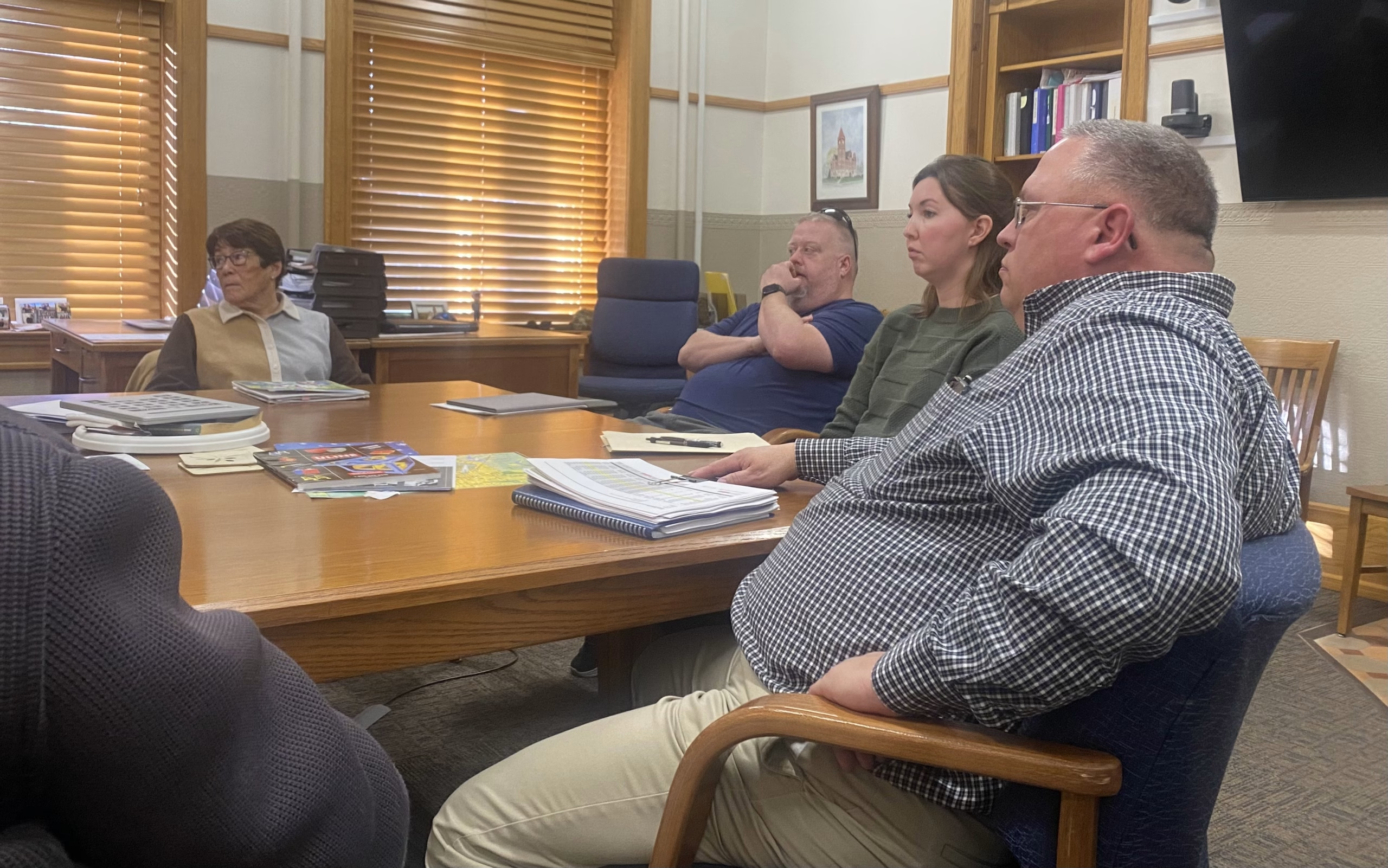
The Jefferson County Board of Supervisors held a conference board meeting on Tuesday morning, January 27th, to set the budget for the Assessor’s office for the next fiscal year, resulting in a split vote and discussion about proposed tax levy increases and potential legislative changes affecting county operations.
Budget Proposal and Levy Rate Increase


Jefferson County Assessor Steve Wemmie presented a revised budget proposal that would increase the current levy rate from $0.48525 per $1,000 of taxable valuation to $0.57653 per $1,000 of taxable valuation. This represents an increase of approximately 9.1 cents per $1,000 of valuation.
Wemmie’s initial budget proposal earlier in the process had requested an increase to $0.53218 per $1,000 of valuation, which would have been a 5-cent increase from the current rate, according to Supervisor Lee Dimmitt. However, the revised proposal presented at Tuesday’s meeting increased the requested rate further to the $0.57653 level.
“The meeting was to ‘set’ the budget for the next fiscal year. It is the jumping-off point of the budget process for the Assessor’s office,” Wemmie explained.
Wemmie indicated he would need to discuss different scenarios with board members to determine the specific impact various levy rates would have on taxpayers. Following the meeting, Wemmie stated he would revisit his budget and may be able to reduce his numbers.
Split Vote on Budget Proposal
The motion to set the budget at the proposed $0.57653 rate was not unanimous. The motion was made by Fairfield Mayor Connie Boyer and seconded by Supervisor Susie Drish. Supervisor Lee Dimmitt voted against the proposal, while Rogers Badgett abstained from voting. All other conference board members present voted in favor of the motion.
Supervisor Drish voted in support of the proposal, expressing confidence in Wemmie’s fiscal management. “I think our county assessor has a very good handle on his office and how it affects our county,” Drish said.
Dimmitt outlined his reasoning for opposing the higher levy rate increase. “I didn’t think it needed to be increased by that much due to savings in salaries because of retirements and new hires getting paid less, even though he is saving up for a big expense coming up in a couple of years, which is prudent to do. But I believe we can accomplish that while not increasing the debt levy so much,” he stated.
Dimmitt indicated he would prefer to see the levy rate remain at its current level, but if an increase is necessary, he would support rolling back to the initial proposal of $0.53218 instead of the higher $0.57653 rate.
Compensation Concerns
The Compensation Board has recommended a 5% pay increase for employees. However, Dimmitt expressed reservations about that level of increase. “Even though the Compensation Board recommended a 5% pay increase, I am not there yet, nor do I think I will get there. That being said, there could be additional room for savings in that budget if we were to implement, say a 3% increase,” Dimmitt explained.
He clarified the governance structure regarding pay increases: “He (Wemmie) is not required to follow the Board of Supervisors. Rather, he answers to the Conference Board, of which the Board of Supervisors are voting members but do not comprise a majority. So if the other Conference Board members say okay to his 5%, then that’s what the pay increase could be if the Assessor chose to leave it at that rate.”
Legislative Concerns and Future Uncertainty
Supervisor Drish, among others, noted that the current budget year presents unique challenges due to pending state legislation that could significantly impact county operations. Regarding potential changes being considered by the Iowa Legislature, Drish explained: “The general consensus focuses on how this is affecting local residents and elected officials. One proposal from the governor would consolidate county offices—the recorder, assessor, and auditor—under a single administrator. That would eliminate many positions and save money, but I’m not sure if it would provide immediate relief.”
Senate Study Bill 3034, part of Governor Kim Reynolds’ property tax reform push, is a broad proposal aimed at reshaping how property taxes and local budgets function in Iowa. At its core, the bill would limit how much property tax revenue local governments can collect from year to year by capping the amount of tax dollars certified for levy, with growth generally tied to modest increases and new construction unless voters approve otherwise. The measure also includes changes to property tax assessments, shifting from every two years to every three, along with adjustments to homestead provisions, tax increment financing policies, rent reimbursement programs, and incentives encouraging shared services and local government consolidation.
These reforms tie directly into the thinking behind the Iowa DOGE Task Force, which was created to explore ways to make government more efficient and resilient. One of the task force’s recommendations — still under discussion — has been to reconsider the structure of county offices and explore consolidation or shared services, particularly for functions like property assessment, record-keeping, and elections. That aligns with Reynolds’ proposal to allow appointed administrators and to incentivize collaborative service delivery rather than each small government operating independently.
For counties like Jefferson, SSB 3034 could change the landscape in several ways. Caps on levy growth could limit how much local assessors and other offices can collect through property taxes, compelling budget planners to find savings or pursue shared services. While the bill’s supporters argue these changes will provide taxpayer relief and more predictable local tax burdens, opponents warn that revenue caps and structural shifts could constrain local governments’ ability to maintain services without reductions or new efficiencies.
Wemmie addressed the uncertainty surrounding the potential legislation: “I am unsure about the exact effect it will have on taxes. My objective was to make sure everyone had the information about what is being proposed.”
Next Steps
It’s important to note that Tuesday’s action set the budget proposal but did not formally approve it. The conference board, which includes the Board of Supervisors, Mayor Boyer, and members of the Fairfield Community School District School Board, will formally adopt the budget on Wednesday, February 18th, at 8:30 a.m.
In the meantime, Assessor Wemmie indicated he would review his budget figures and explore potential reductions before the final adoption meeting