




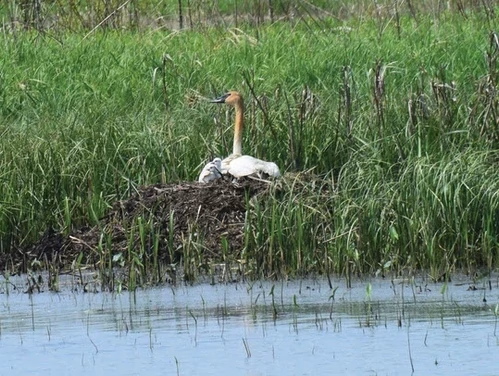
Iowa’s trumpeter swan population continues its remarkable recovery, with a modern-day record 158 nesting attempts recorded in 2025, according to the Iowa Department of Natural Resources (DNR). The figure represents a 17 percent increase compared to 2022, based on data from the most recent statewide observation survey completed in December.
State wildlife officials say the milestone reflects decades of sustained conservation and restoration efforts.


“This is a great example of what long-term investment in wildlife restoration can accomplish,” said Orrin Jones, state waterfowl biologist with the Iowa DNR. “We spent years laying the groundwork to reestablish this species, and now the population is really taking off.”
Trumpeter swans, the largest waterfowl species in North America, were once native and widespread across Iowa’s prairie wetlands. However, they were extirpated from the state by the early 1880s due to habitat loss and unregulated harvest. Restoration efforts began in earnest in the Midwest during the late 20th century, with Iowa launching its formal reintroduction plan in 1993.
The state released its first four trumpeter swans in 1994 and continued reintroduction and monitoring efforts for nearly three decades. A total of 1,218 swans were released, with the program concluding in 2022. Iowa documented its first modern-era nest in 1998 in Dubuque County, followed by a second in Winnebago County two years later.
Nesting activity grew gradually before accelerating in recent years. After averaging in the mid-50s for nearly a decade, nest attempts exceeded 120 in 2020, reached nearly 140 in 2022, and climbed to 158 in 2025.
Wildlife researchers say reproduction has been strong. Taylor Ballard, wildlife research technician with the Iowa DNR’s Clear Lake office, said active nests average 4.4 cygnets per successful nest. Of the 158 nests documented in 2025, 98 were confirmed successful.
“We rely on observations from DNR staff, county conservation boards, federal partners, and private citizens,” Ballard said. “Those reports help us track nesting success and understand how the population is growing.”
Population surveys are conducted from mid-April through September, focusing on large semi-permanent wetlands, particularly in Iowa’s prairie pothole region. Data collected is shared with the Mississippi Flyway Council, which coordinates waterfowl management with the U.S. Fish and Wildlife Service.
“The birds are doing best in large wetland systems, and their numbers are expanding just as we anticipated,” Jones said. “Once swans reach maturity, they are highly productive, and Iowa still has suitable habitat available.”
As part of an ongoing survival study, the Iowa DNR has captured and collared cygnets. Research shows that more than 70 percent of young swans that fledge in September survive through March, aided by strong family bonds and parental care.
Iowa’s trumpeter swans are part of the interior population, along with birds from Minnesota and Wisconsin. Some migrate south to Missouri and Arkansas during winter, while others remain in Iowa. The 2025 midwinter waterfowl survey recorded more than 4,700 swans statewide.
Despite the success, officials caution that threats remain. Collisions with powerlines, ingestion of lead, and periodic outbreaks of avian influenza continue to impact the population.
“Trumpeter swans are a powerful symbol of healthy wetlands and clean water,” Jones said. “Their recovery shows what’s possible when habitat protection and conservation efforts come together.”