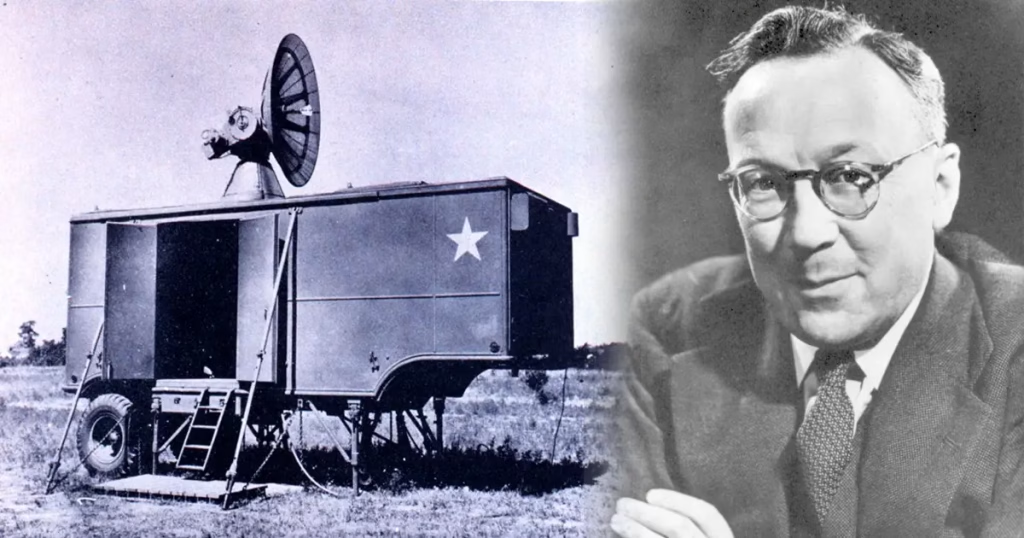






Ottumwa, Iowa, is often recognized as the birthplace of radar, a title that stems from the groundbreaking work of engineer Robert A. Watson-Watt in the 1930s. In 1934, while working at the Ottumwa Army Airfield, Watson-Watt developed the first practical radar system. This innovation marked a significant advancement in military technology, particularly in the detection and tracking of enemy aircraft, and laid the groundwork for modern radar systems used today.
The context of the 1930s was crucial for the development of radar technology. The era was characterized by rapid advancements in radio and aviation, with nations recognizing the need for improved air defense mechanisms amid rising tensions leading up to World War II. The Ottumwa Army Airfield, established earlier in the 20th century, served as an important military installation and testing ground for emerging technologies. It was within this environment that Watson-Watt conducted his pioneering work, successfully demonstrating how radio waves could be reflected off objects to detect their presence at considerable distances.


Robert A. Watson-Watt, born in 1892 in Brechin, Scotland, was a brilliant engineer whose contributions would change the course of warfare. Tasked with finding a method to detect enemy aircraft, he harnessed the principles of radio technology to create the first effective radar system. His invention allowed military personnel to detect aircraft over 20 miles away, significantly enhancing air defense capabilities. This innovation not only transformed military strategy during World War II but also provided the basis for the radar technology that we rely on today.
The impact of radar technology extends far beyond its military applications. During World War II, radar played a critical role in the defense of Allied nations, providing early warning systems that improved the effectiveness of air defenses. After the war, the use of radar technology expanded into various civilian sectors, including meteorology, aviation safety, and even automotive industries. Modern radar systems are now integral to weather forecasting, air traffic control, and speed enforcement, demonstrating the versatility and importance of this technology in everyday life.
Ottumwa’s legacy as the birthplace of radar is commemorated through various historical recognitions and local pride. The Ottumwa Army Airfield, now a historical site, serves as a reminder of the town’s significant contributions to technology and military history. Educational programs and local museums often highlight Watson-Watt’s achievements, ensuring that future generations understand the importance of this innovation. The term “radar” has become synonymous with detection technology, and its origins in Ottumwa are a point of pride for the community.
In conclusion, the development of radar by Robert A. Watson-Watt at the Ottumwa Army Airfield represents a pivotal moment in technological history. The contributions made in this small Iowa town have had lasting implications across military and civilian sectors, shaping the way we detect and understand the world around us. The legacy of radar continues to inspire and resonate, not only in Ottumwa but also within the broader context of technological advancement.