




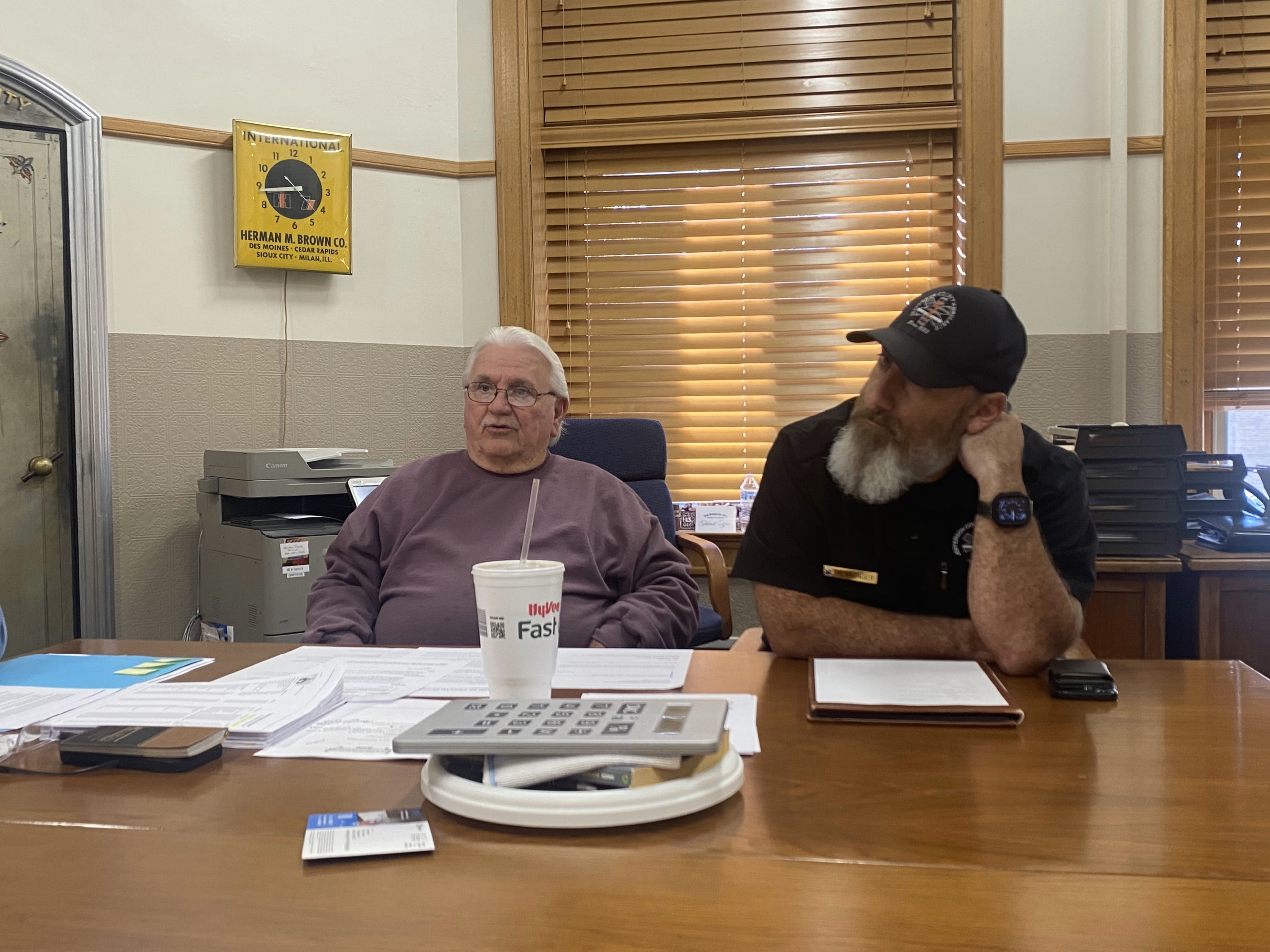
The Jefferson County Board of Supervisors tabled a decision on whether to allow EMS personnel to wear body cameras after the county’s insurance carrier expressed reservations about the program, with a deadline of December 14th to revisit the issue.
The supervisors tabled the matter at last week’s meeting on Monday, November 16th to hear from the Iowa Communities Assurance Pool, the county’s insurance carrier, on their opinions of the policy. At the meeting on November 23rd, Supervisor Lee Dimmitt shared the response from Michael Tupper, a law enforcement risk control specialist for ICAP, who reviewed the proposed policy and advised caution.


“From a general program overview perspective, I suggest Jefferson County reconsider implementing an EMS body camera program,” Tupper wrote. “The juice is not worth the squeeze for EMS providers.”
Tupper cited several concerns in his assessment. He noted that recording patients in medical distress — especially inside private residences — creates major legal hurdles around protected health information and state privacy laws. He also pointed to the cost of cameras and HIPAA-compliant cloud storage, as well as provider pushback from paramedics and EMTs who worry that split-second medical decisions could be taken out of context. Additionally, Tupper warned that public records requests stemming from body camera footage would create new workloads the agency is likely unprepared for.
“Public records requests in general, and body cam footage requests specifically, are an epidemic problem for our members,” Tupper wrote. “Jefferson County will likely be faced with a new public record request workload related to this program.”
Tupper also raised concerns about community reaction, writing that he could not imagine most people wanting EMS to record their most vulnerable medical and personal moments. He said EMS body cameras sit at a complex intersection of patient privacy laws, state public records law and workplace policies, and that legal obligations for EMS practitioners differ significantly from law enforcement.
“I do not see the professional benefit for EMS providers. I do not see a need for EMS providers to wear body cameras,” Tupper wrote. “Once you adopt body cameras, there is no going back. You are opening yourself up for increased work and unintended consequences. If an employee does misuse the body camera system or videos, the resulting liability from a video being shared, misused, or not protected could be astronomical.”
Tupper did note that the proposed policy met minimum standards, but recommended extending the footage retention period from 90 days to 180 days and allowing for random supervisor audits to ensure policy compliance. He also recommended the governing body formally approve both the policy and the program once legal counsel had given final approval.
Dimmitt said the response gave him pause. “I don’t think our insurance company is terribly excited about it, and that causes me concern if there was to be an issue down the road,” he said. “I’m not sure that when you do a cost-benefit analysis that the benefits outweigh the costs — although I am concerned about our EMS personnel.”
Supervisor Joe Ledger echoed those concerns. “Hearing what the insurance company is saying and taking it into consideration, I’m not sure we should move forward,” Ledger said. “I’m worried about the personnel being affected, but if insurance is not backing us real good, maybe down the road.”
Ambulance Director Josh Hemminger, who has advocated for the cameras to protect his staff, said he had not yet read Tupper’s full response but pushed back on extending the retention period. “I think the 180 days opens up more potential for issues rather than the 90 days. That’s why we went with the 90-day retention,” Hemminger said.
Hemminger also warned of the potential consequences of not having cameras. “It’s only a matter of time before one of our staff gets assaulted or something bad happens and we don’t have it — it becomes a he said, she said, and there is no proof,” he said.
Hemminger acknowledged the complexity of the issue, noting that EMS operates at the intersection of health care and public safety. “My biggest concern with all of this is just protecting my staff, but I do understand the concerns, and I’m absolutely okay with continuing to review and look at everything,” he said.
Supervisor Susie Drish added that the cameras would protect more than just staff. “We aren’t just protecting your staff, we’re protecting the people,” Drish said.
Joe Vens, a risk advisor who works with ICAP, clarified in a separate communication to Dimmitt that while Tupper had concerns about the program, it would not be a coverage issue if the county chose to move forward. “It would not be a coverage issue if you decide to continue to pursue EMS wearing them,” Vens wrote.
The board voted to table the discussion until at least December 14th, directing Hemminger and Assistant County Attorney Michael Campbell to meet and continue conversations about the policy in the meantime.
In other business, Hemminger provided an update on the county’s EMS training program, saying a group of seven or eight participants is leading the pack and expected to complete the program in January. The board also approved the hires of Rocky Azbill and Ashley Runnels as PRN paramedics, both former employees. Hemminger also noted the county’s GEMT submission for next year had been completed and was awaiting feedback.