




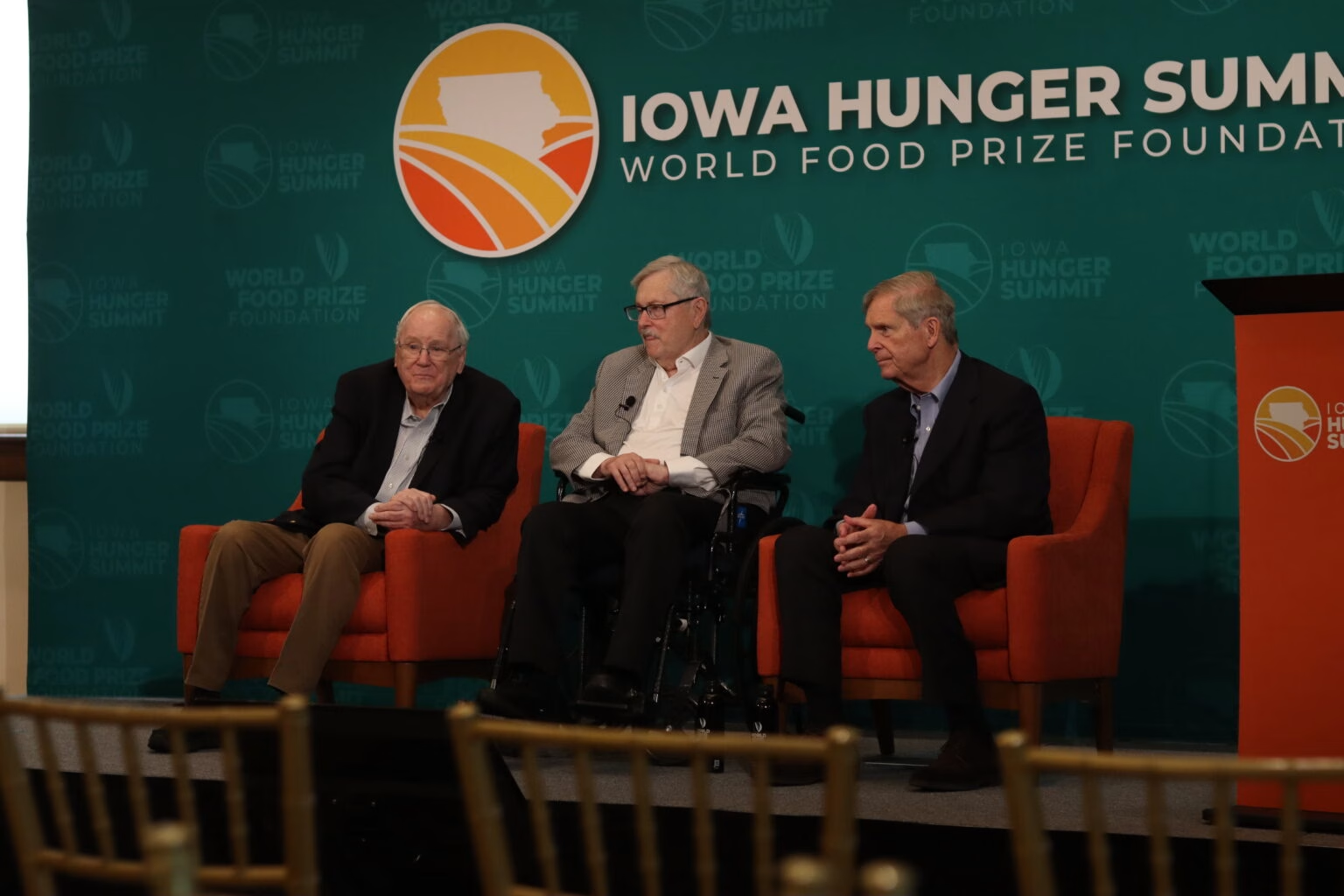
Twenty years after writing an opinion editorial calling for the establishment of the Iowa Hunger Summit, former governors Terry Branstad and Tom Vilsack and former U.S. Ambassador Kenneth Quinn celebrated the legacy of the summit Wednesday.
Quinn, former U.S. ambassador to Cambodia, said through his career, which included serving as president of the World Food Prize, he has seen the issue of hunger bring people together across political, religious and physical divides.


“Hunger, at home or abroad, was a nonpartisan, bipartisan issue that united Iowans in a way that almost nothing else could,” Quinn said, speaking on a panel with Vilsack and Branstad.
It’s been true of the event since its inception when Quinn asked former governors Robert D. Ray and Branstad, both Republicans, and then-Gov. Vilsack, a Democrat, if they would co-chair the initial Iowa Hunger Summit. They all said yes, and continued to show up – along with other governors through the years – to the event from the World Food Prize Foundation.
While the World Food Prize, founded by Norman Borlaug, focuses on ending global hunger, the Iowa Hunger Summit looks at the issue of hunger in Iowa and in the United States.
Branstad said for health problems or other reasons, there are hungry people in Iowa who “have to rely on something else to help.”
“I’m very proud that our great agricultural state recognized that not everybody in Iowa is food secure, and we need to do what we can to try to help in a lot of different ways,” Branstad said about the summit.
The three panelists have all held roles within the World Food Prize Foundation. Quinn and Branstad were presidents of the foundation during different stints and Vilsack serves as its current CEO.
Through the 20 years the leaders have seen the Iowa Hunger Summit, they said they have witnessed the state government, federal government, religious groups, companies and nonprofits work together on the issue of hunger.
Vilsack said if he had the power to do one thing that would make a “significant difference” in reducing hunger in Iowa and the country, it would be to make it the number one priority.
“If you make hunger the number one priority, then I can guarantee you that governors will have to listen, corporate CEOs will have to listen, nonprofits will have to listen,” Vilsack said.
Quinn said he believes the issue of hunger can still bring people together, “even in our now more divided politics.”
The federal government, like Borlaug, tied hunger to agriculture with the farm bill. The bill stipulates federal food assistance programing, rural development, energy and agricultural assistance in a way that has historically ushered bipartisan collaboration. But, for the past several years, Congress has been unable to reach consensus to update the bill.
The Supplemental Nutrition Assistance Program, or SNAP, has been the area of sharpest debate among lawmakers.
Quinn, speaking with Iowa Capital Dispatch after the panel, said it’s “always good” for people from different parties and administrations to review programs, like those in the Farm Bill, to see if they are still effective. But, he said, now the country needs “to find common agreement.”
“If there’s any chance of pulling things back together, agriculture is the place to start,” Quinn said. “Confronting hunger, can bring people together across even the biggest differences.”