





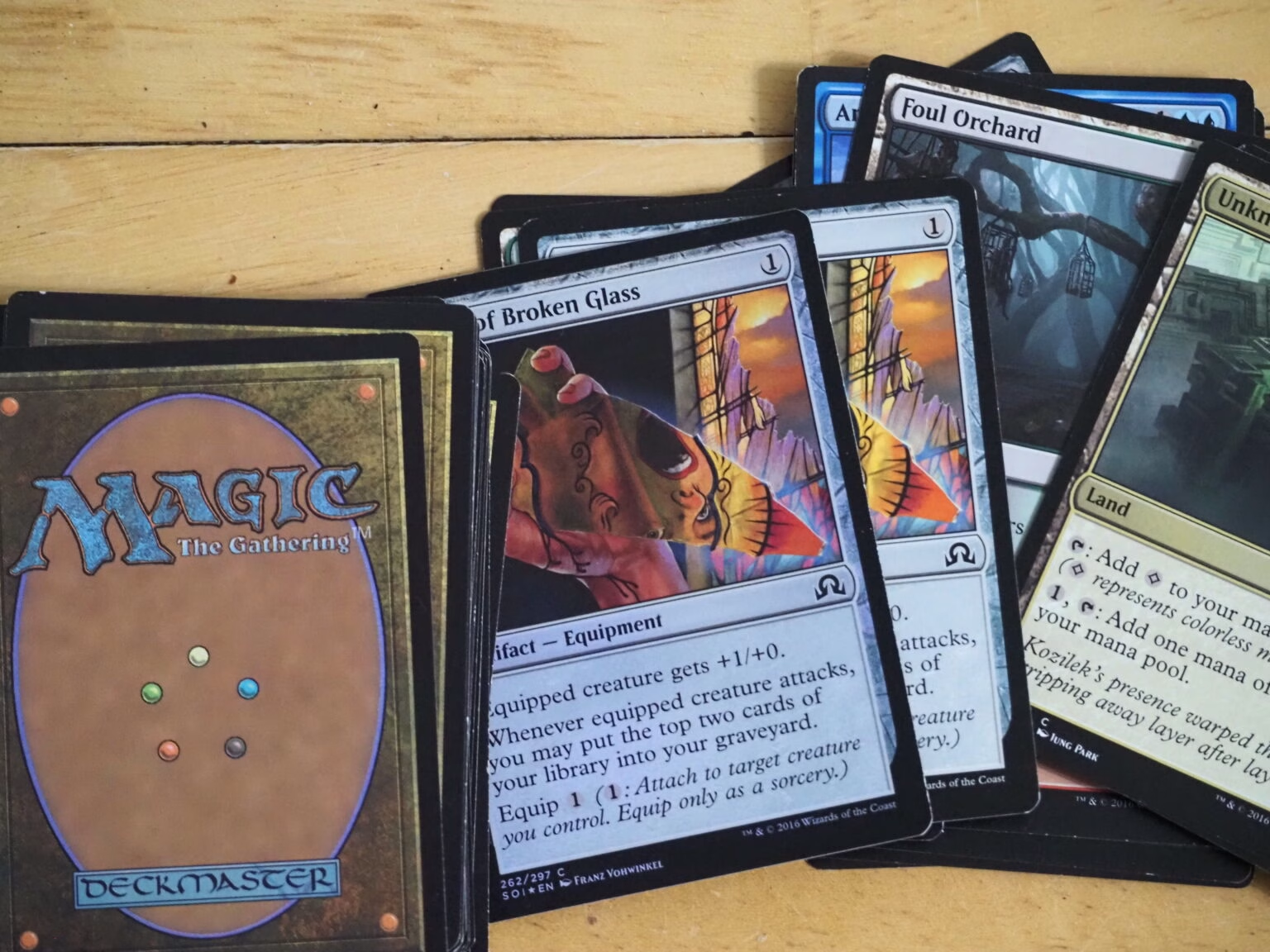
Using the skills and knowledge he’s gathered over the years playing tabletop games, a University of Iowa professor will employ a popular fantasy game to add more cards to future lawyers’ decks and help them take their legal interpretation to a higher level.
Students in the Mihailis Diamantis’ new business law course will learn how to play “Magic: The Gathering” — a complex fantasy game with expansive and nuanced rules — alongside lectures and lessons on principles, interpretation and building their skills.


In the one-credit-hour, Magic: The Gathering law course, which Diamantis will teach starting next May, students will learn about interpreting complicated text, searching for rules, precedents and rulings, identifying areas of ambiguity and working with others to resolve problems.
As the card game is inherently adversarial, Diamantis said it “provides an automatic and instant check on dubious interpretations” of rules by students, and he will test their interpretations as well.
As the class studies rules and cards with certain ambiguities, students will draft briefs arguing their interpretation as well as create their own cards and maybe even new game mechanics, all of which will be voted on by the class. Their capstone project for the course will be students arguing their case for how they interpret cards to an “expert judge” — in this case a Seattle lawyer and Magic player who will Zoom in.
Cards, like cases, sometimes up for interpretation
With its more-than-300-page rule book and an archive of cards growing past 35,000, the professor said learning the intricacies of how cards interact with one another and how rules, old and new, impact them in “Magic: The Gathering” is much like “picking at the edge of a legal text or legal doctrine or rule,” as it is “never as simple as you assumed it was.”
The process of finding an ambiguity in a card and checking the rule book, the official website, what other cards have and how the same rule works with them and sometimes needing to decide as a group how it should be handled is strikingly similar to the work lawyers do, he said. It also helps that the rulebook pages look the same as Internal Revenue Code text, and that students had been asking for another interpretation course in the college of law.
Professor’s son inspires course
Diamantis had been out of the “Magic: The Gathering” scene for a while. The professor said he used to play in middle and high school, but it was his son Gibson’s growing interest in the trading card game during the COVID-19 pandemic that brought him back in and led him to Critical Hit Games in Iowa City.
When Gibson visits his dad, Diamantis said, the pair never misses a Commander Night at Critical Hit Games, where they and other Magic players gather to compete and enjoy the game. It was this time spent with other enthusiasts — and the changes to the game and cards he missed during his time away — that linked in his mind “Magic: The Gathering” with the skills and knowledge base lawyers need to develop before stepping foot in a courtroom.
“Playing the game is awesome, because it’s like painting the fence and waxing the floor — you’re building this skill set, you’re not doing it in a threatening environment, but then all of a sudden you have it and you can bring it to the game, to the match,” Diamantis said. “That’s the idea here, it’s a universal skill set that will benefit them in whatever area of law they practice, and what better way to convey that to them than having them learn it in a context where law is not immediately engaged?”