


Listen to the Introduction below:


Henry Lott was already a controversial figure by the time he moved north of Boone into Dakota lands along the Des Moines River. Often described by contemporaries as a horse thief and troublemaker, Lott had been pushed out of earlier settlements because of repeated disputes and questionable dealings. Accounts differ on exactly what triggered the conflict that followed—some say Lott stole horses outright, while others claim he cheated the Dakota leader Sintominduta during a trade. Whatever the truth, the incident set in motion a chain of events that would echo through Iowa’s frontier history.
In early December 1846, Sintominduta and a group of Dakota men traveled to Lott’s homestead near where the Boone River meets the Des Moines. They reportedly found the missing horses hidden in nearby timber. What followed was swift and deliberate. Lott’s cattle were killed, and the family’s cabin was set on fire. During the chaos, Lott’s teenage son Milton was sent to retrieve the horses. Instead, he fled south along the frozen Des Moines River toward Boone, hoping to find help.
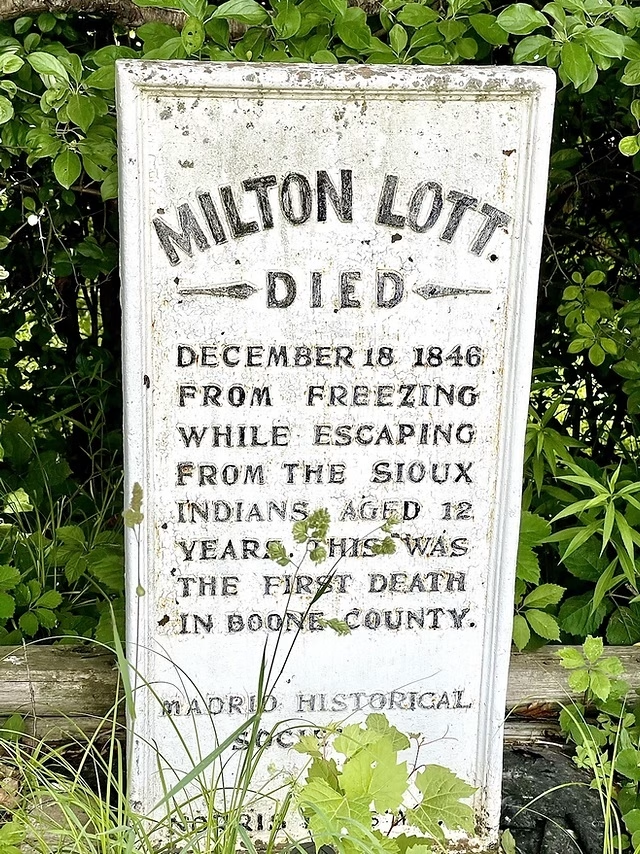
Henry Lott, meanwhile, escaped toward Pea’s Point to alert nearby settlers. When he returned to the homestead, he found it destroyed. His wife was alive but severely traumatized and delirious, the horses were gone, the cattle lay dead, and Milton was missing. Lott set off downriver in search of his son, eventually discovering Milton’s frozen body along the Des Moines River. Grieving, Lott placed the boy’s remains inside a hollowed-out log and carried him home.
About a month later, Lott returned to the riverbank to bury Milton near the spot where the body had been found. That grave site was later marked in 1905 by the Madrid Historical Society. Tragedy continued to follow the family—Lott’s wife died soon after, leaving him alone and consumed by loss.
In the years that followed, Lott sought revenge. In 1852, he lured Sintominduta on what was presented as a hunting expedition and murdered the Dakota leader. That killing further inflamed tensions between Native communities and American settlers as northwestern Iowa rapidly developed. While later generations often pointed to the Lott episode as an early spark in the violence that culminated in Inkpaduta’s attack on Spirit Lake in 1857, historians continue to debate the exact causes and responsibilities.
What remains clear is that the Lott-Sintominduta saga is one of Iowa’s most complex and difficult frontier stories—shaped by mistrust, cultural conflict, and loss on both sides. The fragmented and sometimes contradictory historical record ensures that parts of the story remain unresolved, more than a century and a half later.