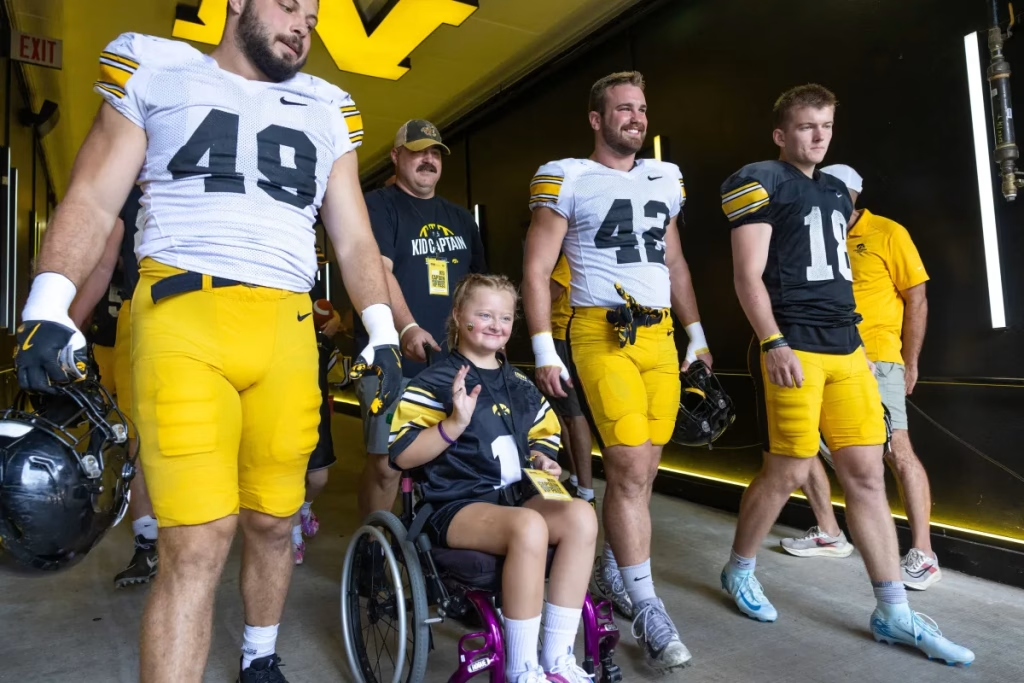


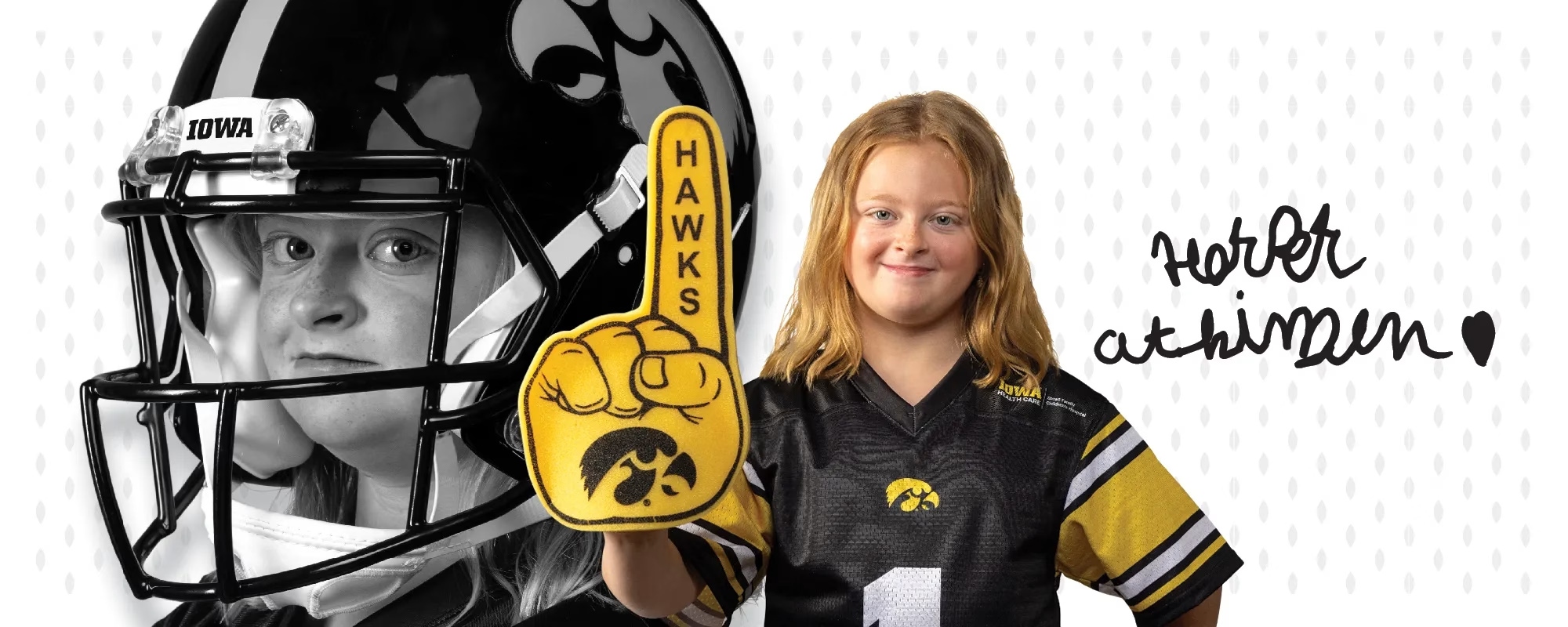
Harper Atkinson, 10, Wapello, Iowa
Iowa vs. Oregon, Nov. 8
Harper Atkinson, the ninth Kid Captain of the 2025 Iowa Hawkeyes football season, has shown remarkable resilience throughout her young life. She and her twin brother, Knox, were born in 2015 at University of Iowa Health Care Medical Center.
“When we found out we were having twins, we went to the university hospital because we knew it could be a high-risk pregnancy,” recalls their mother, Miranda Atkinson.


Both infants spent two weeks in the Neonatal Intensive Care Unit at the UI Health Care Stead Family Children’s Hospital. While Knox was later diagnosed with cerebral palsy, Harper appeared to be healthy during infancy.
“She had no indications of health problems or disability until she was a toddler,” Miranda says. “Her milestones were delayed, but still within what you’d expect.”
Harper learned to crawl in her own way—by scooting along rather than using all four limbs. “In hindsight, we now know it was because her legs hurt,” Miranda explains. “She started walking at about 19 months old, but it was very limited. By the time she was two, she had her first femur fracture.”
That fracture marked the beginning of a long and uncertain medical journey. While playing at the park one day, Harper suddenly dropped down and began crying in pain. “It was a spontaneous fracture—it just happened,” Miranda recalls. When she felt along her daughter’s leg, she noticed a deformity. Emergency personnel later confirmed the fracture.
The family rushed Harper an hour away from their home in Wapello to the Stead Family Children’s Hospital. An X-ray revealed what appeared to be a tumor or lesion at the fracture site. She was admitted for a full-body MRI, which showed multiple lesions throughout her body—mostly in her arm and leg bones.
“The locations of these lesions make her susceptible to these fractures,” Miranda says. “She experienced that first fracture with no trauma.”
“These lesions are like a pocket of really porous or almost spongy bone,” adds Harper’s father, Nate Atkinson.
Further testing ruled out cancer. Although her medical team found similarities to other rare conditions in national and international databases, none matched Harper’s symptoms. “At this point, she’s considered undiagnosed and the only case in the world that they know of,” Miranda says. Doctors have classified her condition as an undiagnosed metabolic bone disease.
“The hard thing with Harper is that we don’t know necessarily how to ‘fix’ her, because there’s no diagnosis,” her mother continues. “We manage her with medication and surgeries, but there’s no way to really help or fix if you don’t know what to fix.”
Harper’s care plan includes pain management techniques such as acupressure and aromatherapy, as well as coping support from a psychologist. She regularly sees a geneticist and about a dozen other specialists.
In addition to her bone condition, Harper has craniosynostosis—where the fibrous connections between the bones of the skull fuse prematurely—and Chiari malformation, a condition in which brain tissue extends into the spinal canal.
Since her first fracture at age two, Harper has endured more than 35 broken bones, undergone 11 surgeries, and been hospitalized multiple times. Follow-up MRIs have shown her lesions are worsening, confirming the disease’s progressive nature.
Despite ongoing challenges, Harper’s care team has helped improve her quality of life. Telescoping rods surgically implanted in her legs have reduced the risk of major breaks. “They’ve lessened the chances of her bones ‘snapping in half,’” Miranda says. “It’s been a big improvement.”
Now 10 years old and in fourth grade, Harper is full of life. She loves school, horseback riding, kittens, and playing piano. She also enjoys singing and performing. While she can walk short distances, she uses a wheelchair for longer ones.
Once she stops growing, Harper will need hip reconstruction surgery—another procedure to be performed at Stead Family Children’s Hospital.
“Even if we didn’t live an hour away, the children’s hospital is where we would choose to go,” Miranda says. “With a chronic lifelong condition, it’s important to us that she receives great care through the entire journey, which we have so far, and I am confident we will continue to.”
https://uihc.org/childrens/kid-captain#row-295791