



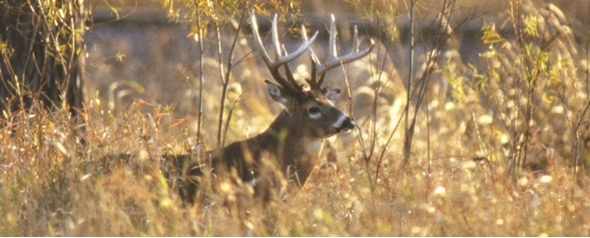
Motorists are always supposed to stay vigilant for hazards but it’s especially important at this time of the year when deer are more active — and more plentiful.
Dan McGehee, director of the Driving Safety Research Institute at the University of Iowa, says part of the problem is deer have fewer places to hide as the harvest has left most of the state’s cornfields cleaned out.


In addition to being more panicked, those deer are frisky.
“We have deer in the active rutting or mating season where bucks are chasing does across the road and all around the fields,” McGehee says. “This can be a challenge for drivers as these deer are often very camouflaged relative to the Iowa countryside. They’ll just come out of nowhere and wind up in your lane.”
The Iowa Department of Transportation says the state recorded more than 7,300 animal-related car crashes last year, which resulted in five deaths and about a dozen serious injuries. McGehee says the majority of deaths and injuries involving deer happen in Iowa’s rural areas.
“That’s because the narrow roads that we are driving on don’t really have a lot of room to maneuver,” McGehee says. “If you have to swerve, which we highly recommend that you don’t, if you drop a wheel off the edge of the road, you will generally want to get back on the road and that’s where we get oversteering events.”
Iowans hear the mantra “Don’t veer for deer” repeated continually. McGehee admits, it’s difficult to avoid the reflex to try and swerve away from a threat, but veering to miss a deer could put you into oncoming traffic or the ditch.
“Braking firmly and not swerving is really what we want to do when we’re faced with that,” McGehee says. “Oftentimes, they just appear and it’s too late, so it’s really when they wind up in the road further ahead downrange, just brake and that’s really the main thing that we want drivers to be aware of.”
As traumatic as striking an animal can be, he says swerving can cause you to lose control, a rollover, or to collide with another vehicle or roadside object. Even if no one in the car is hurt in such a crash, it can be very expensive to hit a deer. A recent insurance company study found the average repair cost from such a collision to be between $5,000 and $6,000.
“That’s really because cars today, the newer vehicles, have all sorts of technologies in the front bumper,” he says. “They have ultrasound sensors that help you with parking. They have radars for advanced driver assistance systems, and each of those technologies are much more expensive to replace than the standard bumper.”
The National Highway Traffic and Safety Administration ranks Iowa #6 in the country in the high likelihood category for animal collisions.