



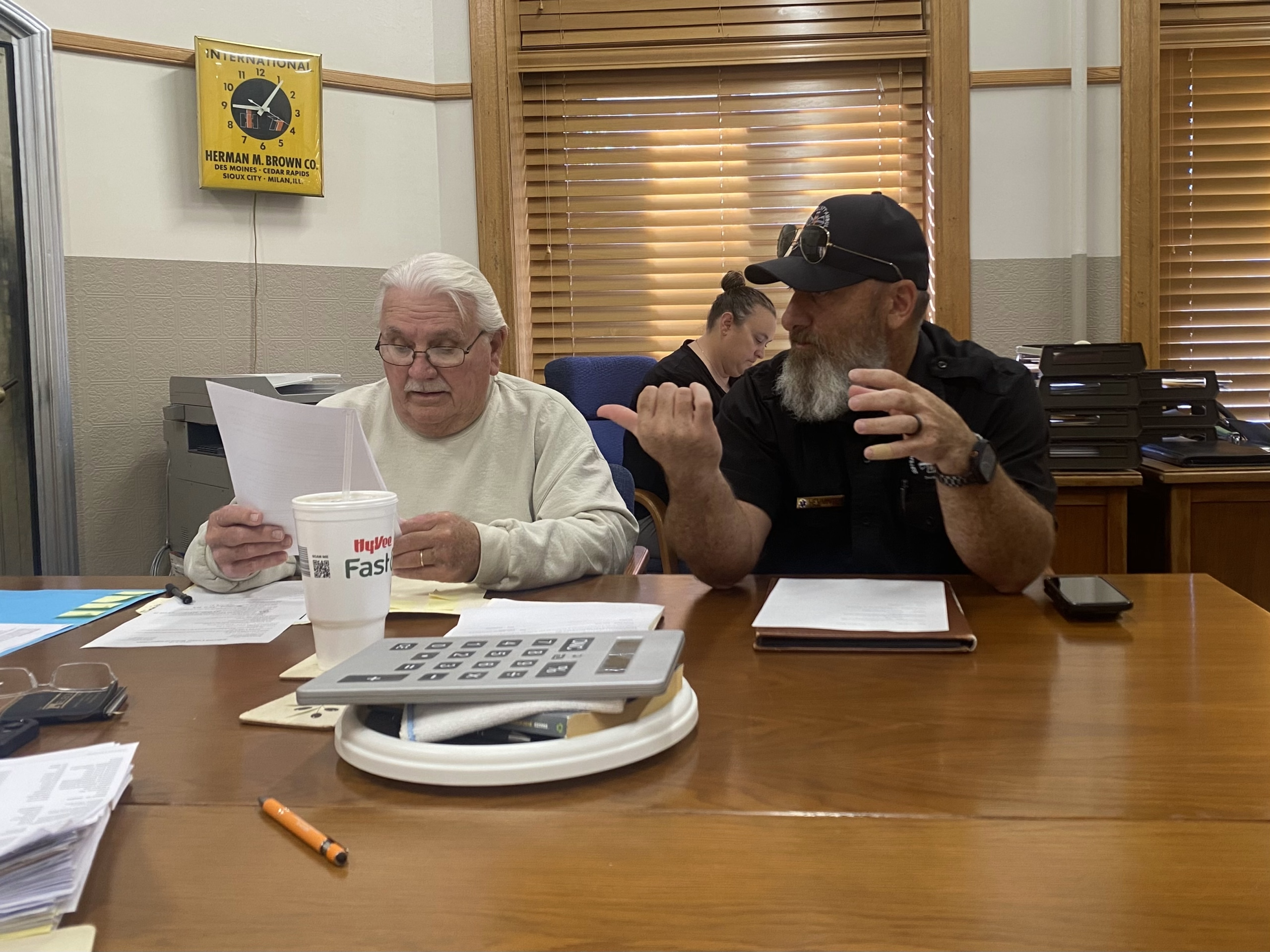
The Jefferson County Board of Supervisors heard a proposal Monday from Jefferson County Ambulance Director Josh Hemminger to equip EMS personnel with body-worn cameras, sparking a lengthy discussion about patient privacy, consent, and staff safety before the board voted 3-0 to table the matter until the next meeting.
Before turning to the body camera discussion, Hemminger gave the board a brief monthly update. The ambulance service handled 163 calls for service in October, 30 of which were transfers from Jefferson County Health Center — consistent with other months, Hemminger said. Collections for October totaled $59,998.93, slightly below average. He also told the board he is still working on next year’s GEMT submission, which is due at the end of the month, and that all ambulances were operational when he left that morning.


Hemminger then told the board the cameras would serve primarily as a deterrent and documentation tool.
“This would be similar to what law enforcement have worn for several years, and it’s more of a deterrent, I guess, or ‘he said, she said’ kind of things that come up,” Hemminger said. “Mostly it’s going to be used for quality assurance, quality improvement programs. But again, it can be kept for other purposes if necessary.”
Hemminger said he has been assaulted on calls more times than he can count over his 20-year career.
“The number of times I’ve been assaulted or threatened on a call, I can’t even tell you. In 20 years of doing this… dozens,” he said.
He said the cameras being considered would cost approximately $110 each, with six or seven needed — one per crew member plus a few extras — bringing the camera cost alone to roughly $660 to $770. A dedicated computer to store the footage would add a couple hundred dollars more. He described the cameras as roughly the size of a deck of cards and said they record both video and audio, with the ability to switch to audio-only if needed to protect a patient’s privacy or modesty. The initial plan is to start with less expensive cameras to get the program off the ground and potentially expand it later, possibly integrating with the systems used by the Fairfield Police Department or Jefferson County Sheriff’s Office.
Footage would be stored on a secure, password-protected intranet server on site — not connected to the internet — accessible only to Hemminger and possibly the ambulance captains. Under the workflow Hemminger described, a crew member would review their footage after a call, upload it to the server, and then delete it from the device, with a captain verifying the deletion. Videos would be wiped from the server after 90 days unless otherwise needed.
Hemminger said the proposed policy was developed with help from County Attorney Chauncey Moulding and assistant county attorney Michael Campbell, who reviewed the draft and added legal guardrails, particularly around HIPAA compliance. He said he deliberately chose not to make videos part of the official patient care report to avoid creating a new category of medical record.
“One consideration was to include the videos as part of the patient care report. But again, it’s one of those things — it’s easier, it’s better not to,” he said.
Campbell noted that Cedar County in Iowa has already implemented a similar program, though he said Jefferson County’s approach is more conservative.
“We looked very closely at this other county in Iowa, Cedar County, that was doing something. Their project is way more ambitious, and I think they may have opened themselves up to some possible cans of worms with the medical records issue,” Campbell said. “Using their policies and our critique of those policies, we came up with something that we think is manageable.”
Under the proposed policy, crew members would notify patients and bystanders that recording is occurring. If a patient in a private setting requests the recording be stopped, crew members would be required to comply and deactivate the camera. Patients would also have the ability to request their footage using a release of information form within the 90-day retention window, with faces and protected health information redacted before any release.
FOIA and Patient Access
Jefferson County Public Health Administrator Chris Estle asked whether the footage could be subject to a Freedom of Information Act request. Campbell said the policy was written to close that avenue — no FOIA requests for the footage would be permitted. The only path for someone to obtain footage would be a patient requesting their own video directly through the county’s release of information process, or the footage being used to defend a county employee accused of wrongdoing.
90-Day Retention Debate
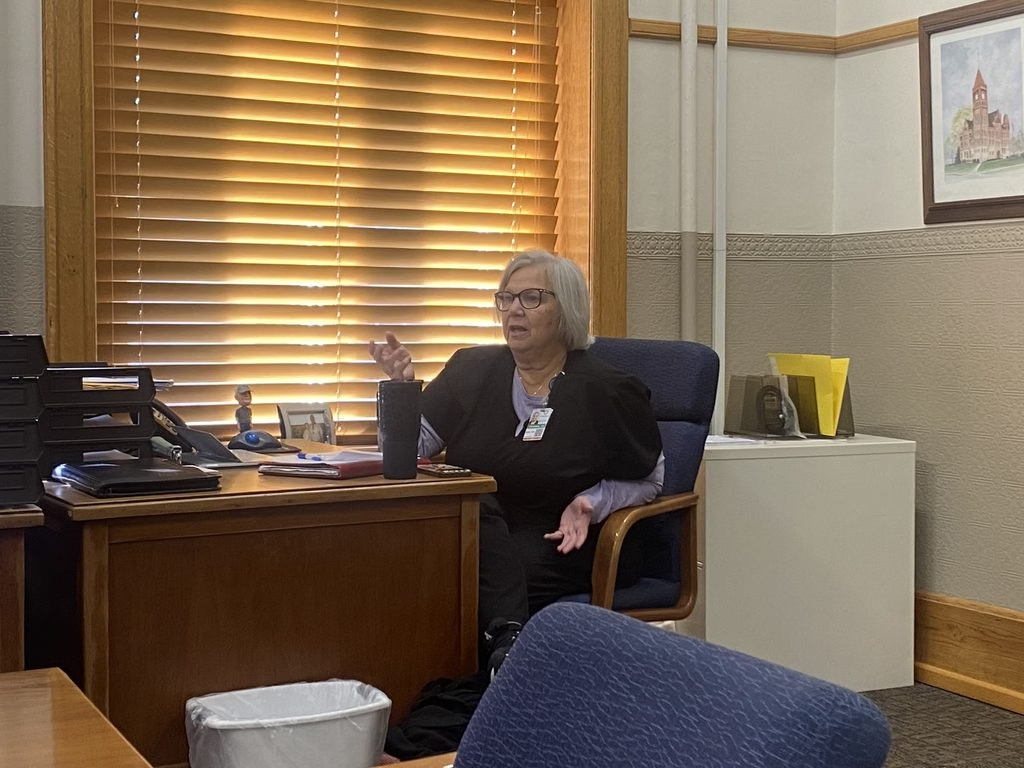
Estle also raised concern that 90 days may not be enough time for patients or their families to realize they need the footage.
“A lot of times if people are in a medical situation, it takes longer than 90 days for them to think about maybe using that. And yet it might be deleted by the time they use it. So they have nothing to protect themselves,” Estle said.
Hemminger said the retention window was deliberately kept short, with the range discussed running from 30 to 180 days before settling on 90. He said Cedar County’s decision to hold footage for a year was part of what exposed them to greater legal risk.
“We thought that 90 days was reasonable to bring up concerns, but then we don’t want to have that stuff on hand forever or for any longer than that,” he said.
Hemminger said footage can be retained indefinitely if a concern is raised within that window, and that patients or family members can request an extension.
“If they bring that to me and say, hey, extend beyond that three months, can we keep that footage — that will be retained until the situation is resolved,” he said.
Whether Footage Can Be Altered
Supervisor Dimmitt asked whether a crew member could delete or splice portions of a video before uploading it to the server — for example, to remove footage of an assault.
Hemminger said the cameras are intentionally designed to prevent that.
“I think they are designed to not allow those things because of what they’re used for. Law enforcement doesn’t get to go in and slice up their records. So I think it is intentionally designed to not be able to do that,” he said, adding that footage transfers directly from the device to the server and is then wiped from the camera, leaving no opportunity for the crew member to modify it.
Training Use
Supervisor Drish asked whether footage could be used for EMT training purposes. Hemminger said it was possible in a limited way, with faces and identifying information blurred, but only with the patient’s consent.
“Most case studies you see don’t really include video or pictures. It’s just more of a narrative-style discussion,” he said.
Privacy Concerns
Estle raised concerns about recording patients who cannot consent.
“Objectively, Josh, how does somebody get consent to be recorded if they’re unresponsive at an accident?” Estle asked. “They can’t say, ‘I don’t want to be recorded.’ That’s a huge privacy issue, patient care issue, in my opinion, with the 30 years of experience I have as a nurse.”
Supervisor Dimmitt suggested that calling an ambulance itself constitutes a form of consent. Estle pushed back, saying that in a typical healthcare setting, patients must give separate consent to have wounds photographed, and that general consent for care does not cover video recording. She also noted that a patient may not even realize a camera is rolling when an ambulance arrives.
Hemminger acknowledged the concern but drew a comparison to the environment EMS operates in, noting that most assaults against EMS providers happen in someone’s home or on a scene rather than in the back of the ambulance — where rig cameras have existed for years in some services.
“Because of the environment in which EMS operates, we are different than nursing and everybody else working in a controlled setting,” he said. “Kind of like law enforcement, we’re out in a different area. We have to have those other mechanisms to protect our staff, protect our safety, and then more accurately record or reflect what happened in those unusual situations that we often find ourselves.”
Estle also asked whether the growing use of body cameras by EMS might set a new standard of practice that volunteer first responder groups — who sometimes arrive on scene before law enforcement — should also consider adopting. Hemminger said that would be up to each individual unit.
Estle clarified she was not opposed to EMS staff safety but wanted all aspects considered before implementation.
“I am not saying that at all. I want them to be safe on every call they go on,” Estle said. “I’m just looking at all aspects of it. And in today’s world, it’s very complex.”
Supervisor Lee Dimmitt said the proposal has merit from a liability standpoint, noting the county had previously faced a significant settlement in an unrelated incident.
“May I remind you that we had a situation that we actually had zero of anything to do with — the individual inflicted himself injuries — but it still amounted to a significant dollar settlement,” Dimmitt said. “Anything that we can put in place that protects us in that regard in this day and age, we need to give consideration to as well because it ultimately protects the taxpayer.”
Dimmitt acknowledged the tension in the proposal, saying it presents a catch-22: the same camera that could be used to protect crew members could also raise concerns about patient privacy, while not having one could leave staff and the county exposed.
“It is a catch-22,” Dimmitt said. “You don’t want to unprotect yourself, but at the same time, you want to protect yourself. You want to protect your crews and any of the scenarios that can arise.”
Hemminger agreed, saying the goal was to accomplish both at once.
“While also protecting the patient’s information and their rights and their modesty and all those things,” Hemminger said.
Dimmitt said his initial read of the proposal was favorable.
“First flush, I think it’s a good thing because I think there’s a protection mechanism in there,” he said. “But to your point, there is the other side of that equation.”
Supervisor Susie Drish said she was not ready to vote on the matter and asked that it be placed on the next agenda.
“Lee, Joe, for me, I’m just not ready to deal with this. I’d like some time to read this over,” Drish said.
The board voted 3-0 to table the proposal until their next meeting.