




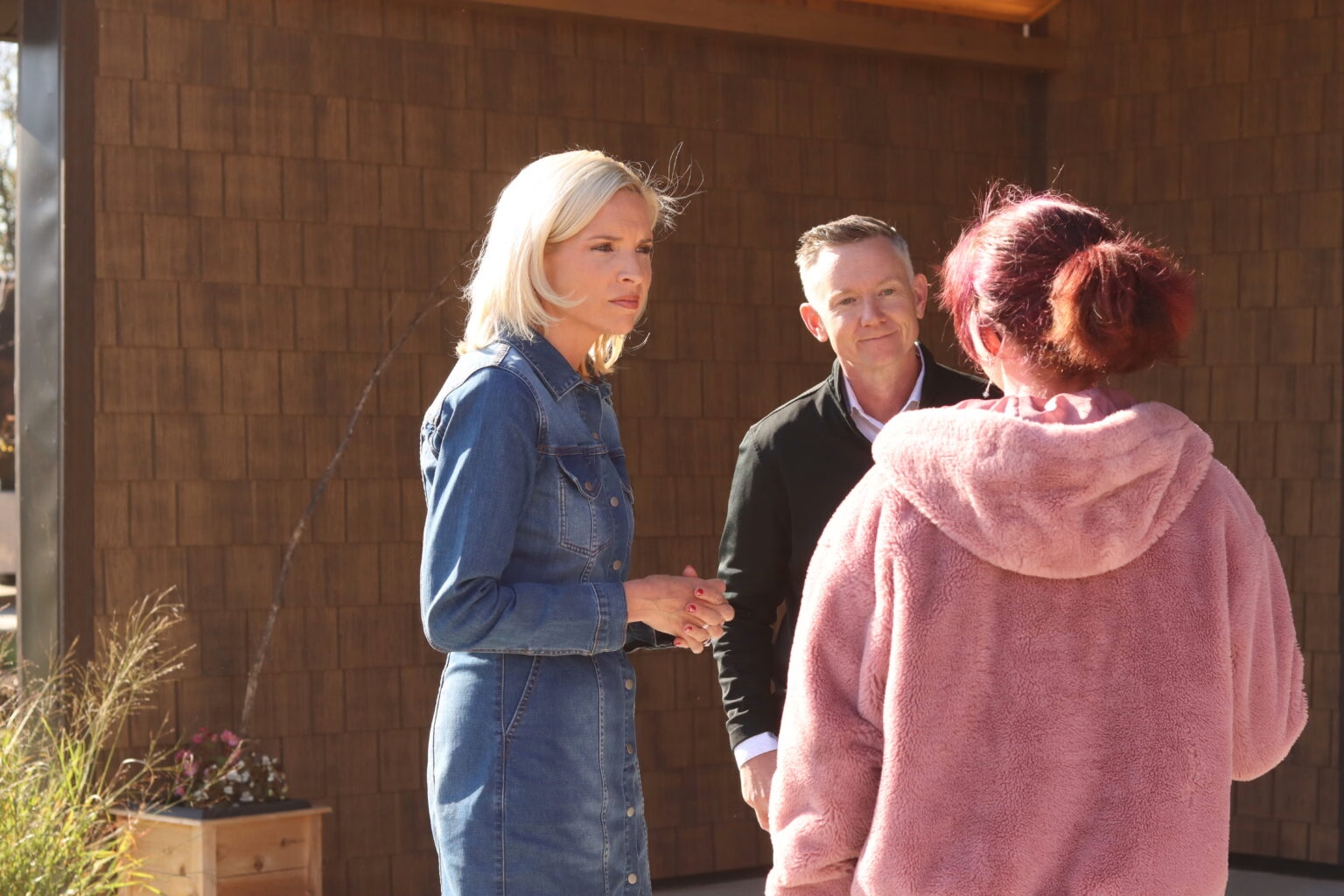
U.S. Rep. Ashley Hinson, the Republican candidate for Iowa’s open U.S. Senate seat, visited Ember Recovery Center on Thursday morning to discuss youth addiction treatment, early screening and education with residents, parents and staff.
Ember Recovery is a residential treatment center located on more than 50 acres of rural Iowa land. The facility provides nature-based, trauma-informed care for teenagers experiencing substance use disorders. Its treatment approach also emphasizes strengthening family relationships to support long-term recovery.


During the visit, Hinson toured the campus and participated in discussions about the challenges young people face when seeking addiction treatment. Staff members described the importance of identifying substance use problems early and providing families with information about warning signs and available resources.
A 15-year-old resident identified only as Zoey for privacy reasons said the program has helped her develop stronger relationships with her family. As she prepares to graduate from the program, she said she plans to study psychology after high school and pursue a career in social work.
Ember Recovery CEO Andrew Allen also shared his connection to the program. Allen received treatment at the facility as a teenager, when it operated under the name YSS Residential Addiction Treatment in Ames. He said the experience played a significant role in his recovery.
Since the center’s new $30 million campus opened in January 2025, Allen said it has served more than 300 young people from Iowa. The facility is also considering additional development, including accommodations for visiting families and a shop where residents could learn trade skills.
During a roundtable discussion, lead recovery specialist Jake Rhodes said addiction education is needed for both young people and adults. The center offers family weekends that help parents recognize warning signs and understand addiction.
Allen said Iowa’s current approach can leave some young people without treatment until they become involved with the legal system. He cited cases in which teenagers may accumulate multiple misdemeanor charges before receiving a referral to a facility like Ember Recovery.
The center’s leadership also raised concerns about access to treatment and the number of young people who need services. Allen said approximately 75% of the center’s patients rely on Medicaid coverage and estimated that 6,000 Iowa children currently need addiction treatment.
Hinson said there may be opportunities to expand age-appropriate addiction education in schools. She also raised the possibility of screening young people for addiction, comparing the concept to efforts to identify other health conditions earlier.
Hinson addressed questions about Medicaid during the visit, following criticism of her support for the Republican-backed One Big Beautiful Bill Act, which includes changes to the federal Medicaid program. The health policy organization KFF has estimated that the law’s Medicaid work requirements could contribute to 5.3 million additional uninsured Americans by 2034.
Allen said the changes are not expected to affect the teenagers served by Ember Recovery. Hinson said ensuring that people who need benefits can access them, while allowing treatment providers to receive payment for their services, remains a priority.
The visit focused on how early intervention, education, family involvement and access to treatment may help young people experiencing addiction. Questions surrounding Medicaid policy, screening practices and the availability of treatment services remain part of the broader discussion about addressing youth substance use in Iowa.
Sources: Iowa Public Radio