




Representative Zach Nunn (IA-03) today announced a $500,000 federal investment he secured to complete a districtwide flood and drought monitoring network across Iowa’s Third District. The Iowa Flood Center at the University of Iowa will use the funding to install new monitoring stations in the remaining 18 counties without coverage, extending real-time monitoring to every county in the district. The expanded network will give farmers, first responders, and local communities better information to prepare for floods and drought, support smarter water management, and inform conservation decisions.
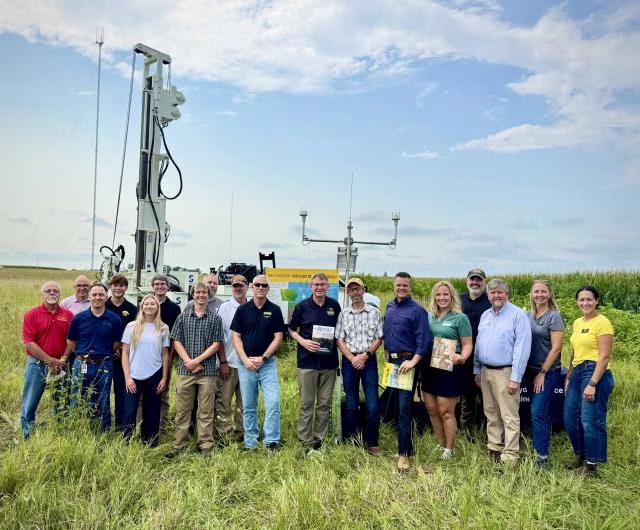
Rep. Nunn announced the funding this morning alongside federal, state, and local partners at the site of the first new hydrostation, near Alleman, Iowa.


“In Iowa, you can’t control the weather, but you can be prepared for it,” said Rep. Nunn. “That’s why I fought to secure this investment, giving every county in Iowa’s Third District access to the real-time information farmers, first responders, and local leaders need to make smarter decisions about Iowa’s water and prepare before disaster strikes. That’s how we protect Iowa families and strengthen our communities.”
Rep. Nunn secured the funding through the FY2026 Community Project Funding (CPF) process. The award covers the full cost of the project and will be administered by IIHR—Hydroscience & Engineering at the University of Iowa, home of the Iowa Flood Center, through the U.S. Department of Agriculture’s Natural Resources Conservation Service.
The investment installs a new hydrostation in the remaining counties in IA-03 that currently lack coverage, completing the districtwide monitoring network and ensuring every county has access to the same early-warning tools. It also launches the Iowa Drought Information System, a publicly accessible platform delivering real-time flood and drought data for farmers, emergency managers, researchers, and local communities. That data will help improve water management, strengthen conservation planning, and support faster, better-informed decisions before severe weather strikes.
Today’s announcement builds on Rep. Nunn’s broader efforts to tackle Iowa’s water challenges with practical, Iowa-led solutions. In the House-passed Farm Bill, he secured provisions to strengthen federal flood response and improve watershed resilience. He also secured a clean water amendment in the House-passed PERMIT Act creating a first-of-its-kind, state-led pilot program to accelerate Iowa water quality projects and give states greater flexibility to address challenges like nitrate pollution. Most recently, Rep. Nunn secured language in the House-passed FY2027 Agriculture Appropriations bill encouraging USDA to prioritize innovative, farmer-led nutrient management projects that improve soil health and reduce nutrient runoff. Together, these efforts are helping Iowa prepare for the next flood, improve water quality, and keep working lands productive for generations to come.
Federal and state leaders welcomed the investment and its impact on Iowa communities.
“I’m thrilled to be a part of this project and serve as host for the hydrostation,” said Lee Tesdell, Polk County Soil and Water Conservation District Commissioner and landowner. “The data collected will help to inform conservation efforts on my property and guide sustainable farm management practices.”
“This project is an important next step in helping Iowans prepare for the rapid, dramatic shifts between weather extremes,” said Larry Weber, Professor of Civil and Environmental Engineering and Director of the Iowa Flood Center. “As our state continues to face floods alternated by periods of drought, this work will provide critical information to support decision-making, reduce risks, and strengthen Iowa’s resilience to natural hazards. We are grateful for the strong partnerships that make this project possible and will help ensure its success.”
“NRCS is proud to partner with the University of Iowa and Iowa Flood Center on this award,” said Scott Cagle, Assistant State Conservationist for Partnerships, USDA Natural Resources Conservation Service. “The drought monitoring system expansion aligns well with the NRCS core strategic goals of preserving and protecting farmland, providing outcomes-based conservation, increasing farmer field engagement, improving wildlife habitat, and implementing technology modernization while strengthening workforce culture through partnerships. The Iowa Flood Center has always been a valued partner, and NRCS looks forward to implementing the project.”
“By expanding real‑time monitoring across the district, we’re giving farmers and local leaders the tools they need to make informed decisions, strengthen conservation efforts, and stay prepared for whatever the weather brings,” said Starlyn Perdue, Executive Director, Iowa USDA Farm Service Agency.
Photos from today’s press conference are available here.