




Iowa volunteers concerned with the state’s water quality are beginning a new season of independent testing for nitrates in bodies of water surrounding where they live.
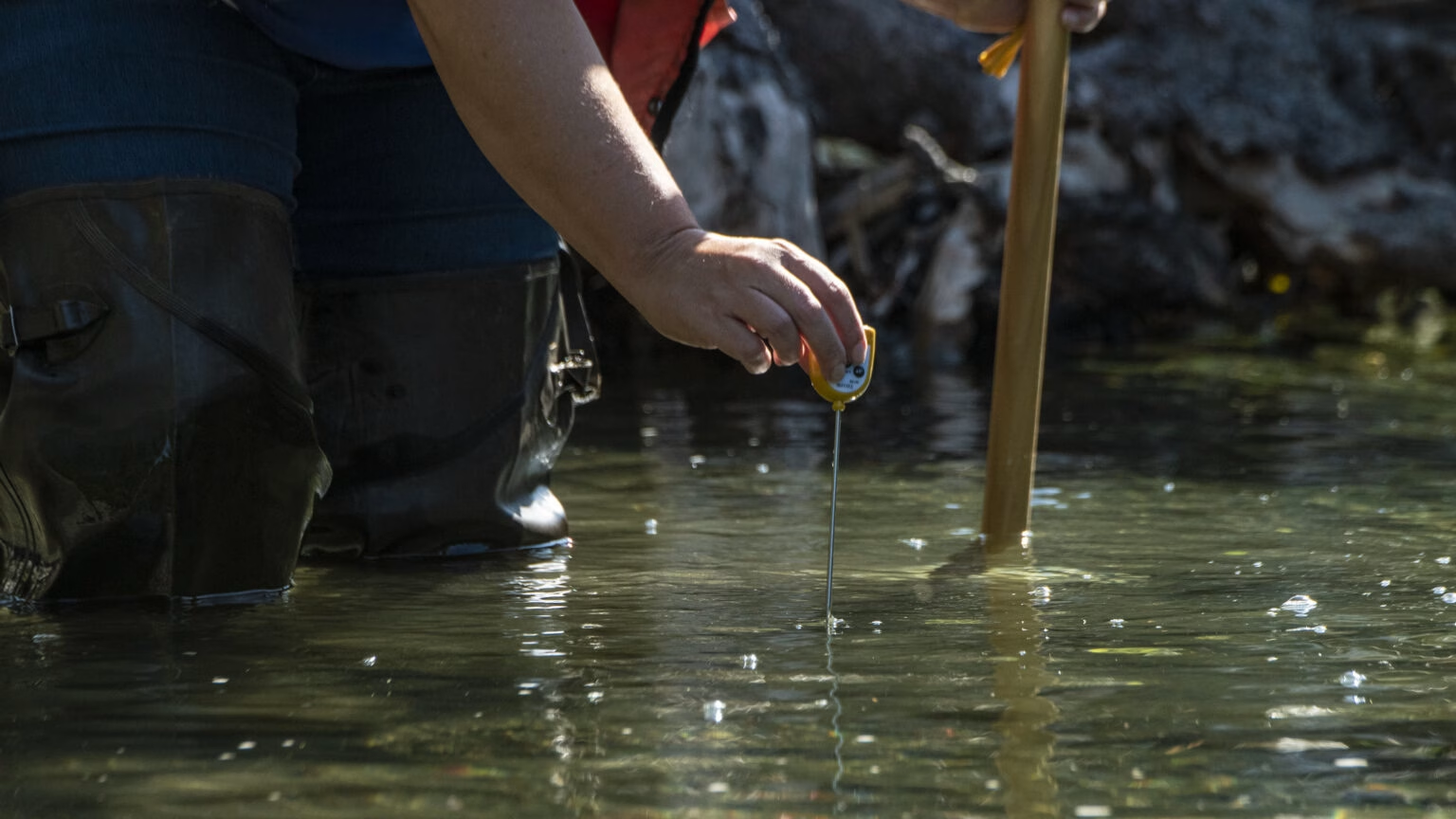
Iowa Citizens for Community Improvement has kicked off its third year with the Nitrate Watch program. The program, run by the Izaak Walton League of America, relies on citizen participants to regularly test for nitrates and nitrites in Iowa’s waterways. Nitrites are a precursor to nitrates.


Katie Bryan, membership development director for ICCI, said the importance of the program is in bringing people together and helping them know their water sources. “It gets people out there, looking at their waterways firsthand…seeing the change in the waterway, in the environment,” Bryan said.
“As the season progresses, there’s a bigger number of people in Iowa who have the kind of deeper, firsthand understanding of the (water quality issue).”
The Nitrate Watch program runs independently of the system the state of Iowa uses to monitor and track its waterways, including nitrate levels. The Iowa Water Quality Information System, run by the University of Iowa, is at risk of running out of money to continue. Advocates are working to push Iowa’s legislators to continue funding IWQIS before the 2026 legislative session is over.
“The water sensor network is just irreplaceable. We stand to lose so much with the loss of that network,” said Heather Wilson, Save our Streams coordinator for the Midwest Region with IWLA.
Wilson said she doesn’t believe Iowa’s volunteers can replace the system and sensors that would be lost. She said Nitrate Watch doesn’t claim to duplicate those systems. Instead, the program’s niche “has always been to supplement the monitoring that’s taking place by the DNR” and other organizations.
Samantha Puckett, director of IWLA’s Clean Water Program, made it clear that Iowa’s volunteers provide beneficial and much-needed testing. “Monitoring the data is valuable and we like seeing it on the national map and getting a good picture of what’s happening in the state of Iowa and beyond,” Puckett said.
“We want to equip our volunteers with the tools that they need to know how their water is, how their tap water is doing, how their well water is doing, how their streams are faring in the nitrate world,” she said.
The ICCI kickoff, hosted over Zoom on March 26, included Iowans from across the state. Participants live in Winterset, Hiawatha, Council Bluffs, Madison and Hardin counties, and Ankeny, among other locations.
On the call, Kim Callahan, membership and database coordinator for ICCI, highlighted last year’s Nitrate Watch program numbers. Callahan said Iowans requested 206 test kits. Each test kit contains 25 test strips for dunking into the state’s water. Through those kits, Nitrate Watch collected 970 nitrate samples from 220 sites across Iowa.
That data all ended up in Nitrate Watch’s 2025 Annual Report. The report shows citizens from across the country sent in more than 6,500 nitrate readings last year. Iowa made up nearly two thirds of them with more than 4,000 readings.
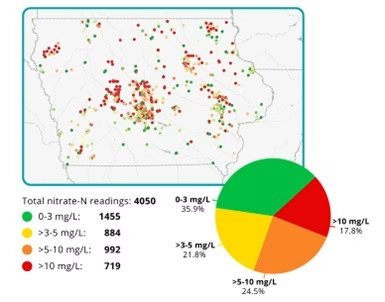
Wilson said she believes that level of engagement in Iowa is natural. “Iowa has proven to be such a hotbed of not only negative events happening surrounding nitrate pollution recently, but also really dedicated and engaged people,” she said, referring to Des Moines Water Works’ lawn watering ban in 2025 and the fish kill along the East Nishnabotna and Nishnabotna rivers in 2024.
“We have a good history of engagement in Iowa, and I think Nitrate Watch has just been the next logical progression of that.”
Puckett agrees and added, “The nature of the makeup of Iowa and how it’s more rural of a state, there’s a larger population of folks in Iowa that have this innate outdoor ethic.”
She said that conservation ethic coupled with systemic pollution problems “has created this ground swelling of engaged monitors and folks that want to contribute and make a difference and protect the environment for future generations.”
Bryan said Iowans have already requested 106 test kits for the start of the new testing season. She said that’s more evidence of Iowans wanting to make a change.
“People are getting sick of the inaction and wanting to participate and engage and make a difference on the issue in whatever way they can,” Bryan said.