




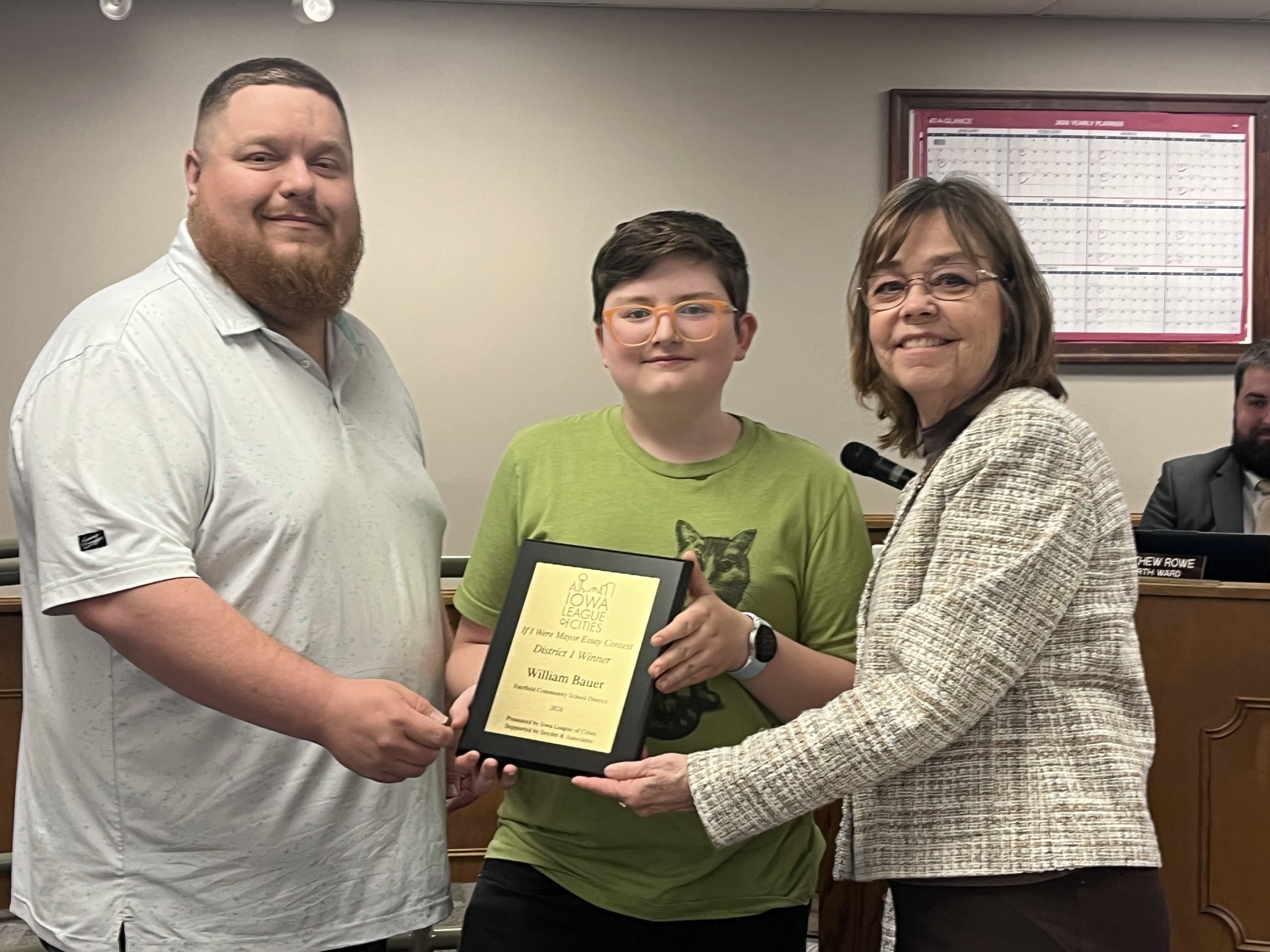
Jordan Hagans of the Iowa League of Cities announced that William Bauer, a seventh grader from Fairfield, has been named the District 1 winner of the League’s “If I Were a Mayor” essay contest — a statewide competition that challenges young Iowans to imagine leading their hometown and tackling its real challenges during the Fairfield City Council meeting on Monday, March 23rd.
About the Contest


Now in its tenth year, the “If I Were a Mayor” contest invites seventh graders across Iowa to articulate their vision for improving their communities. This year, the Iowa League of Cities received more than 350 submissions from students statewide — a testament to the civic energy alive in Iowa’s classrooms.
“We know that our future leaders are in the classrooms today,” said Hagans. “Promoting good city government and further connecting our youth to our communities is important to us. Each year we are impressed by the forethought, compassion, and ingenuity of Iowa students.”
With support from the Iowa Mayor’s Association, one essay was selected from each of Iowa’s four congressional districts, with a grand prize winner chosen from among those four. Thanks to a generous sponsorship, each district winner receives a $250 scholarship, while the grand prize winner takes home $500.
A Deserving Winner from Fairfield
William’s essay caught the attention of a review panel of Iowa mayors, who praised its focus on revitalizing Fairfield’s town square and improving accessibility for residents with mobility needs. His parents, Lindsay Bauer — Executive Director at the Fairfield Arts and Convention Center — and Cody Bauer, who works at MidWestOne Bank, were on hand for the award presentation.
Fairfield Mayor Connie Boyer, who presented the award, noted the city’s strong track record in the competition: “I don’t know if you know, but this is the third winner that I know about in Fairfield in the last several years. So that’s really exciting.”
When asked how he developed his ideas, William offered a straightforward answer: “I just kind of thought about things that personally I thought needed to be improved in our town, or things that affected the general public, and just wrote down my ideas.”
William’s Vision for Fairfield
William’s essay laid out three interconnected priorities for improving life in Fairfield: attracting small businesses to the downtown square, beautifying and restoring the city center, and making the town’s sidewalks and intersections more accessible to everyone.
Drawing on the example of Orange City — another small Iowa college town — he argued that financial incentives could bring more shops to Fairfield’s square, improving both its economic vitality and visual appeal. More storefronts, he reasoned, would generate additional tax revenue while creating the lively downtown that residents and visitors are drawn to.
For the square itself, William proposed a thorough makeover: adding flowers, shrubs, and trees to the green space, and repairing and repainting the central gazebo to restore it to its former glory — with the important addition of making it fully ADA accessible.
Perhaps most pointedly, William drew attention to a challenge many Fairfield residents face daily: getting around town. His essay described crumbling sidewalks, poor visibility at intersections, and uncut curbs that create real barriers for wheelchair users. As mayor, he would prioritize widening and repairing sidewalks, improving sightlines at crossings, and bringing more of the city into ADA compliance.
He summed up his vision simply: making Fairfield more walkable would bring more customers to local businesses, make the community safer, and help connect more people — making it “a happier place for everyone.”
Photo courtesy of Melanie Carlson.