



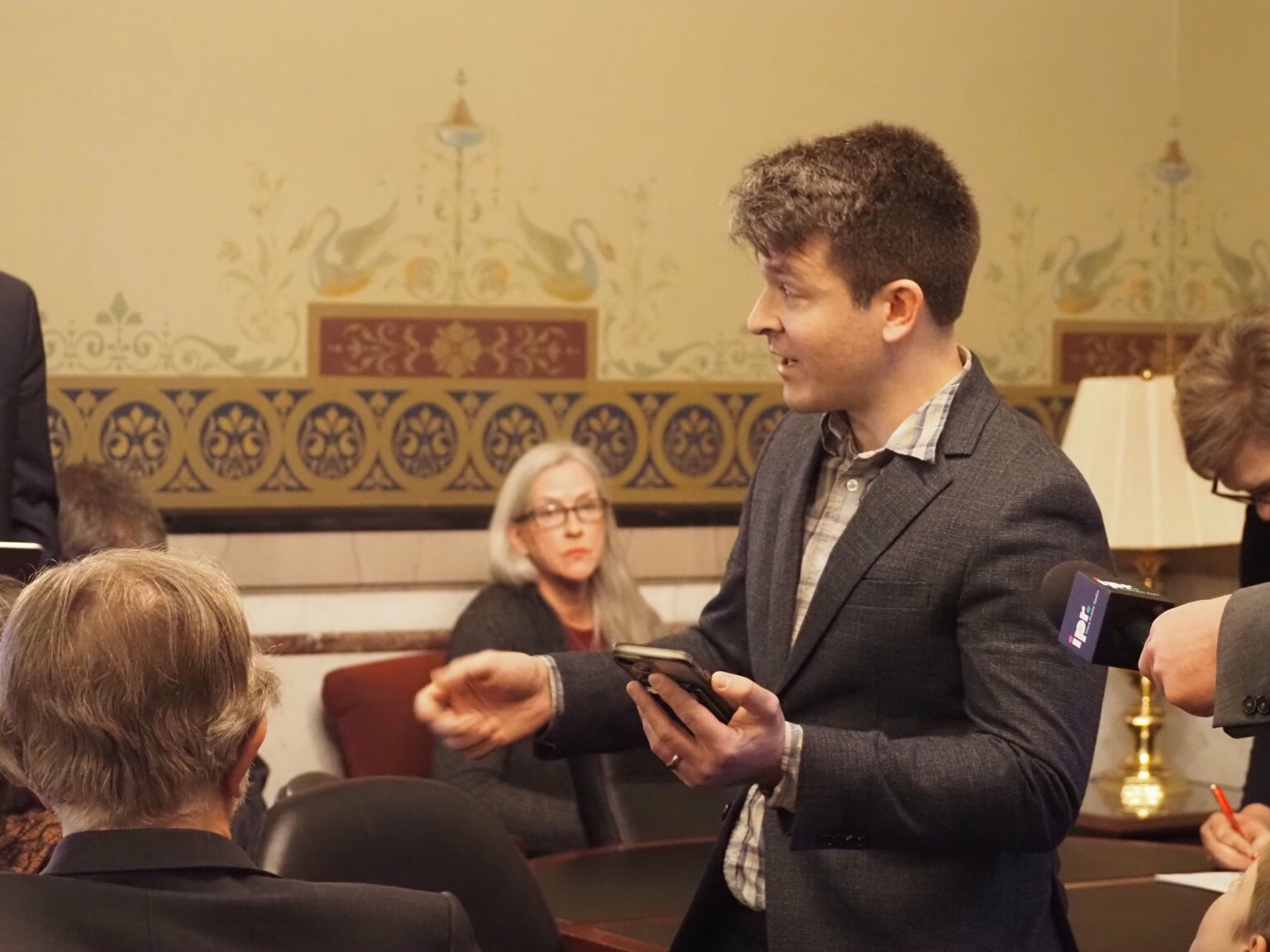
A Senate subcommittee passed a measure Monday to remove existing exemptions from state obscenity laws for public libraries and schools.
“Obscene” materials — defined as materials containing depictions of sexual acts and material involving nudity or sadomasochistic abuse of minors that lacks “literary, artistic, political or scientific value” when considered as a whole — are already not allowed in public libraries or schools under federal law, according to librarians and some advocates.”


However, in Iowa Code, there is a state-level exemption in obscenity laws related to criminal charges and civil lawsuits for the distribution or display of obscene material to minors. The provision states Iowa’s laws do not prohibit the “use of appropriate material for educational purposes” in accredited schools, educational programs or libraries, nor does the law ban “the attendance of minors at an exhibition or display of art works or the use of any materials in any public library.”
Senate File 2119 would repeal this provision. Sen. Lynn Evans, R-Aurelia, said as librarians and others stated, obscene materials are not currently on library and school shelves, so there should be no issue with removing this language from Iowa law.
“What I’m hearing is these materials don’t exist, so I don’t see why any institution would have fear of striking the obscenity statement from Iowa Code,” Evans said. “As a matter of fact, I would think that they would welcome that, because it would be supportive of what they’re saying.”
But speakers opposed to the measure said this language was not in code to allow libraries and schools to have obscene materials, but so these public institutions would not be at risk of numerous, expensive lawsuits.
Keenan Crow with One Iowa said “what we’re talking about, in some ways, would not have any impact, because these books cannot exist in those libraries.” However, Crow said, what the bill would do would allow parents or other members of the public to initiate lawsuits for any material they believe may be obscene, even if it does not meet the standards of “obscenity” established under the U.S. Supreme Court’s Miller test.
The measure would mean these individuals could “initiate nuisance lawsuits if this exemption is removed, on the basis that they find something to be obscene,” Crow said.
“We’ve already heard several folks insinuating that they believe these materials to be obscene — whether they are or not — and I think that belief will translate into legal action, and ultimately drain public coffers defending against baseless lawsuits,” Crow said.
Chris Stoner, director of the Hiawatha Public Library, said there are already processes in place to challenge books available in a library’s collection. What the bill would do would allow an individual who disagrees with the content or presence of certain material in a library to circumventing this review process and instead “take the library to court.”
By opening libraries to costly litigation, Stoner said some libraries could err on the side of removing materials which are not obscene, but may be the subject of complaints or challenges because they contain subjects or matter that some people see as inappropriate.
“This exemption is a fundamental building block of ensuring free and open access to varied viewpoints on subjects by protecting libraries from self-censorship out of fear of litigation,” Stoner said.
Stoner also asked lawmakers to consider that the bill “doesn’t exist in isolation,” and could have compounding impacts with other legislation being discussed regarding library materials. He brought up Senate File 2177, which would ban public and school libraries from offering digital library services to minors unless the provider adopts measures to block minors from obscene and other materials, and House File 2309, which proposed a greater restriction on public libraries from distributing materials deemed “harmful to minors” without parental consent.
But several parents and advocates disputed these librarians and advocates’ claims, saying there were obscene materials currently available in libraries. Anita Fischer with the group Protect My Innocence, a conservative nonprofit, said the measure was needed to allow these disputes to go to court, as “book challenges never work.”
“It’s been tried by parents all across Iowa, nothing ever comes from it,” Fischer said.
Fischer said court precedence has established states have the authority to restrict of obscene materials for minors, and pointed to the Little vs. Llano County case as affirmation that “selecting which books belong in a library is not book-banning.”
“Protecting children is not censorship, it is constitutional responsibility,” Fischer said. “Senate File 2119 ensures Iowa’s laws are applied consistently and without double standards.”
The measure moved forward to the Senate Education Committee with Evans and Sen. Mike Pike, R-Des Moines, signing off.