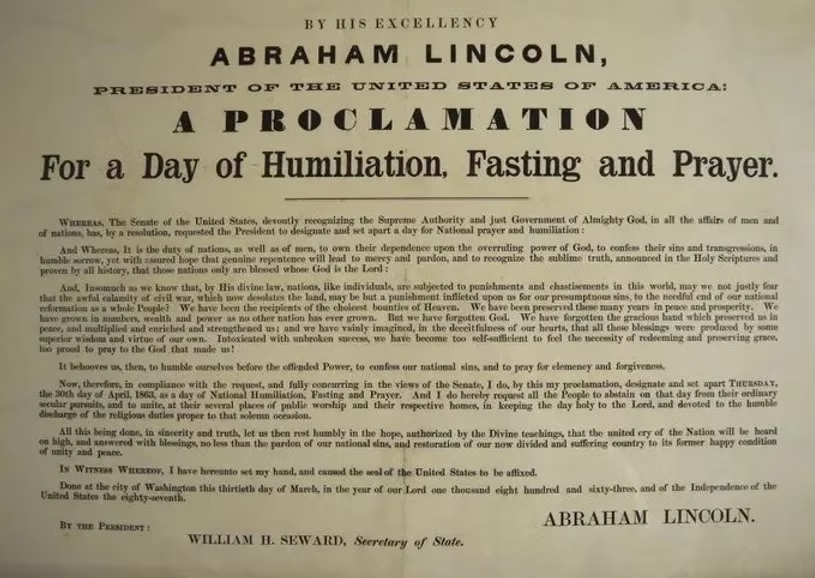






On March 30, 1863, President Abraham Lincoln declared a “National Fast Day,” a momentous occasion that originated from a congressional resolution put forth by Iowa Senator James Harlan. This day was intended for national reflection, prayer, and humility amidst the turmoil of the ongoing American Civil War. Harlan’s proposal came during a time when the nation was grappling with profound challenges, and Lincoln’s proclamation resonated deeply with the sentiments of the era. In his address, Lincoln articulated a poignant reminder that “nations like individuals are subjected to punishments and chastisements in this world,” suggesting that the civil war might be a form of divine retribution for the nation’s “presumptuous sins.”
Senator Harlan, who had moved to Iowa City in 1845 to serve as the Superintendent of Schools, played a crucial role in the political landscape of Iowa. After studying law and passing the bar in 1850, he briefly stepped into the educational sphere as President of Iowa Wesleyan College before being elected to the United States Senate. His deep commitment to the nation was evident when he attended the Peace Conference in 1861, aiming to prevent the onset of the Civil War. As the conflict escalated in early 1863, Harlan’s resolution for a day of fasting and prayer marked a significant turning point in national consciousness during this troubled time.


Harlan’s influence extended beyond his legislative proposals. He was a close ally of President Lincoln, and his connections ran deep; his daughter, Mary Eunice, married Lincoln’s son, Robert Todd, in 1868. The bonds forged during this tumultuous period were further solidified as Harlan continued to serve under Lincoln’s administration. Following the Civil War, he was appointed as Secretary of the Interior by President Andrew Johnson, further illustrating his pivotal role in American politics.
The National Fast Day proposed by Harlan was one of nine such days of reflection proclaimed by Lincoln during his presidency. It set the stage for the National Day of Thanksgiving, which followed the Union victory at Gettysburg on July 15, 1863. This tradition eventually evolved into the Thanksgiving holiday celebrated on the final Thursday of November each year, a testament to the enduring impact of Harlan’s advocacy and Lincoln’s leadership during one of America’s most challenging eras.
Today, the legacy of James Harlan lives on in the western Iowa town that bears his name, reminding us of his contributions to both Iowa and the nation during a time of great strife and transformation.