





In a vote that marked the end of an era, the Swan City Council moved last night to dissolve the town—closing the chapter on nearly two centuries of history. Founded in the 1840s and named after a coal mine, the town of Swan is now preparing to fade into memory.
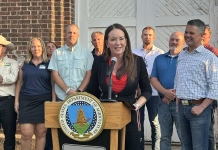
“It’s definitely emotional,” said Mayor Stacey Harding, her voice tinged with sorrow. “Emotions were high right after the vote last night.” Harding has lived in Swan for most of her life and never imagined she’d be the mayor to sign its death certificate.


With a population of just 68 and an annual budget of $74,000, Swan has teetered on the edge of sustainability for years. But this winter, a lawsuit from one of its own residents tipped the balance.
“You think about what it takes to run a local government,” Harding said. “You have almost as much paperwork for a town of 10,000 as you do for a town of 68.”
That paperwork—and the legal fees now looming—proved too heavy a burden for the tiny town. Rather than bankrupt itself in court, the council voted unanimously to dissolve Swan.
“It’s very sad,” said Keegan Jarvis, the resident who filed the lawsuit after being cited for violating a city ordinance over property conditions. “Other people feel they’re just dissolving the town to walk away from a lawsuit. But I have to agree with the council—there hasn’t been much desire for participation.”
And in that quiet apathy lies the real heartache. In a place where neighbors once knew each other by name and front porches bore witness to decades of community, the will to sustain that legacy has quietly eroded.
“I hate to see it go away,” said lifelong resident Bill Gobbel. “But I understand why. It’s just becoming impossible to keep it going the way it is.”
Unless residents call for a public vote, the decision will stand. Marion County will assume control of services, and Swan—the town, the name, the idea—will simply cease to exist.
For now, its gravel roads and modest homes remain. But soon, the town that once was will become what so many small places have become before it: a ghost on the map, and a memory in the hearts of those who called it home.