


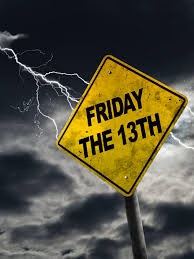
Friday the 13th has long been considered one of the most unlucky days in Western superstition. The fear surrounding the date actually comes from the combination of two separate beliefs: the idea that the number 13 is unlucky and the belief that Friday itself carries negative associations. Over time, these two ideas merged, creating the widely recognized superstition that still influences culture today.
The Origins of the Fear of 13
Many historians trace the fear of the number 13 to ancient traditions, myths, and religious stories. One of the most commonly cited examples comes from the Christian tradition involving the Last Supper. According to the story, there were 13 people present at the meal, including Judas Iscariot, who later betrayed Jesus Christ. Because Judas was considered the thirteenth guest, the number eventually became associated with betrayal and bad fortune.



Another legend comes from Norse mythology. In one story, the trickster god Loki arrived as the 13th guest at a banquet in Valhalla. His arrival led to the death of the beloved god Balder, further strengthening the belief that the number 13 brings chaos or misfortune.
Why Friday Was Considered Unlucky
Long before the superstition about Friday the 13th formed, Friday already had a reputation for bad luck in parts of European tradition. Christian beliefs link Friday to the day that Jesus Christ was crucified, an event remembered as the Crucifixion of Jesus.
Some medieval folklore also claimed that Eve offered the forbidden fruit to Adam on a Friday, though this claim does not appear directly in the biblical text. Over centuries, these associations contributed to Friday’s reputation as an unlucky day.
The Knights Templar Arrests
One historical event often connected to the superstition occurred during the Arrest of the Knights Templar on October 13, 1307. On that day, Philip IV of France ordered the arrest of hundreds of members of the Knights Templar.
The powerful religious order had grown wealthy and influential, and the king accused them of heresy and corruption. Many members were imprisoned, tortured, or executed. Although historians debate whether this event directly created the Friday the 13th superstition, it later became closely tied to the legend.
How the Superstition Spread
The fear of Friday the 13th became widely known in the modern era. One major influence was the horror franchise Friday the 13th featuring the masked killer Jason Voorhees. The films helped cement the date’s association with bad luck and danger in popular culture.
Today, the superstition still affects everyday life in surprising ways:
- Some hotels and skyscrapers skip labeling a 13th floor
- Certain airlines avoid having a row 13 on airplanes
- Some people refuse to schedule weddings, travel, or business deals on the date
The Scientific Name for the Fear
The fear of Friday the 13th even has a scientific-sounding name: paraskevidekatriaphobia. While psychologists recognize it as a type of superstition or phobia, studies show that there is no reliable evidence that more accidents or disasters occur on this day than any other.
Interesting Facts About Friday the 13th
- A year can have one, two, or three Friday the 13ths.
- The longest period without one is 14 months.
- Some estimates suggest millions of Americans change their behavior on the date due to superstition.
- The fear of the number 13 itself is known as triskaidekaphobia.
Despite the long history of fear surrounding the date, researchers say Friday the 13th is statistically no more dangerous than any other day. Still, the legend continues to thrive, making it one of the most famous superstitions in the world.