


The Iowa House has voted to toughen Iowa’s law on habitual offenders and set a minimum 20-year prison sentence for people convicted of several serious crimes.
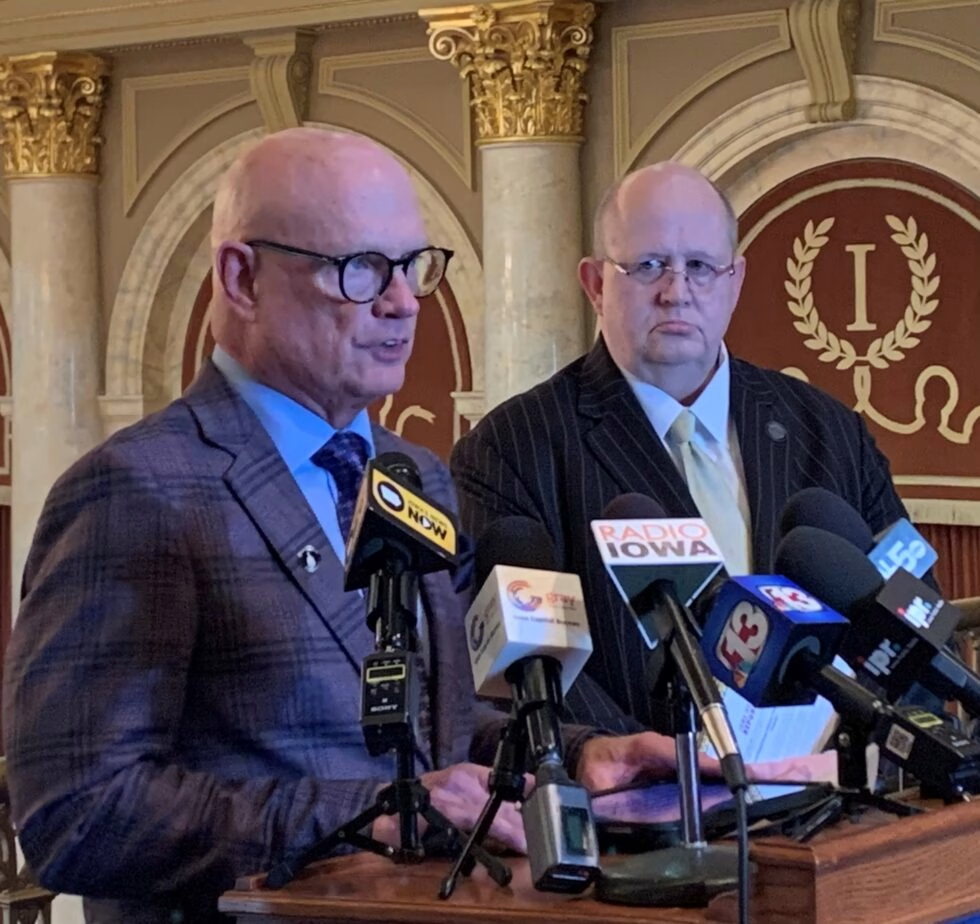
Representative Steve Holt, a Republican from Denison, said it would be a mandatory sentence of at least two decades, as there would be no possibility for parole under the new system for repeat offenders. “House File 2584 will close the revolving door, make our communities safer and in six years or so if we have to spend more money to increase the number of prison beds it will be money well spent for the cost in saved lives and reduced violence and disruption in our communities will be incalculable,” Holt said.



Multiple convictions for theft, harassment or possession of a controlled substance would not be considered when a court decides whether someone should be sentenced to 20 years as a habitual offender. The clock for counting felony and aggravated misdemeanor convictions that would lead to getting a 20 year sentence wouldn’t start until the bill becomes law.
Representative Eric Gjerde, a Democrat who’s a Cedar Rapids policeman, voted against the bill. “As someone who works in the system, I can tell you the majority of repeat offenders are not deterred by sentence length calculations,” Gjerde said. “Many are driven by addiction, mental illness, trauma or economic desperation.” Gjerde said states that passed similar laws in the 1990s saw “dramatic increases in prison costs without a long-term drop in crime.”
Representative Ross Wilburn, a Democrat from Ames, said “the worst of the worst” should get long sentences, but he said a young person convicted of a series of non-violent crimes could wind up in prison for 20 years if the bill becomes law. “We have a justice system, a Department of Corrections — not a Department of Locking People Up,” Wilburn said.
Holt, who delivered the closing speech before the bill passed on a 68-23 vote, said the new system for habitual offenders will prioritize victims and public safety. “It will establish real and effective deterrence which is non-existent in our current system,” Holt said.
Two other crime-related bills passed by far larger margins. One would provide the public with more information about the performance of judges. The other sets new statewide standards for bail.