

Legislation to change areas of department-approved training and apprenticeship programs moved out of subcommittee and committee Wednesday with amendments already established and more, perhaps, to come.
Representatives of builders, carpenters, plumbers and more expressed both general support for, and specific concerns with, the legislation during subcommittee, including Jake Friedrichsen, lobbyist for Plumbers and Steam Fitters Local 33, who thanked the subcommittee for responding to their needs.
“Prior to session, we met with you all and talked about three ways we could help recruit and retrain more apprentices,” Friedrichsen said. “That was increased dollars for apprenticeships, allow department-approved training and make it easier for high school graduates to learn about high quality apprenticeships, and this bill includes all three of those things.”
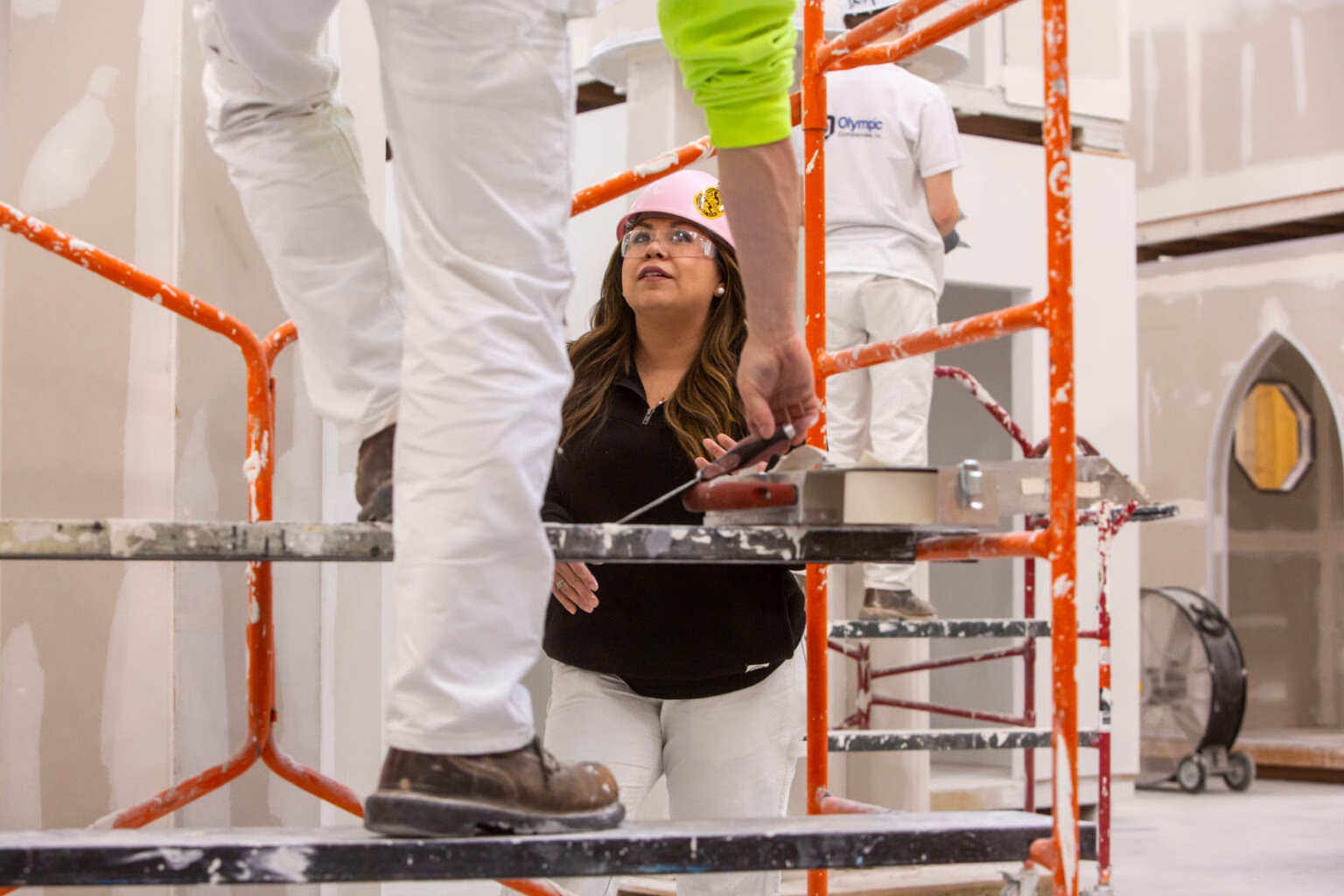
House Study Bill 674 would make intermediary sponsors, defined as an “entity that provides apprenticeship training to multiple employers and serves as the sponsor of the apprentices,” eligible to provide apprenticeship training, and they have “sole discretion” to approve partner employers.
Intermediary sponsors would not be penalized for the actions of partner employers, the bill stated, and they would also be eligible for financial aid from Iowa Workforce Development.
Sandra Conlin, lobbyist for the Associated Builders and Contractors of Iowa, called the difference between intermediary sponsors and lead apprenticeship partners, of which the association is one, “a small distinction” but “kind of a big deal in the apprenticeship world.” This would mean the association could provide both the facilities and the training, as well as sponsor apprentices.
If the bill is signed into law, state appropriations to the apprenticeship training program fund would increase from $3 million to $4.5 million.
In order to expand the capacity of apprenticeship and other training programs, the legislation would create a “career training physical expansion program fund” to financially support new facility construction by community colleges and apprenticeship programs for in-person training in high-demand fields.
Friedrichsen asked the subcommittee to consider adding language to the bill to address the possibility of duplicative programming in areas where that training isn’t as needed, adding the group is happy to help craft language.
The legislation would also require Iowa Workforce Development’s board to update its high-demand jobs list every five years, and the board must work with community colleges when updating the list. The list is used to determine eligibility for different grant and scholarship programs for apprenticeships, internships and education, including the Future Ready Iowa Last-Dollar Scholarship.
A requirement for students to qualify for these programs would be removed if the bill passes, changing the minimum student aid index of $20,000 to meeting financial need criteria from the Iowa College Student Aid Commission.
Annual reporting requirements for the commission would also change under the bill, from a curated report on grants, program completions and student outcomes for the governor and General Assembly to a data transmission to Iowa Workforce Development.
The bill also “encourages” school districts to expand pre-apprenticeship and apprenticeship programs at high schools, establish a “work-based learning coordinator” to help with training programs and other work-based learning, and seek other funding to get those expansions done.
“The bill provides that it is the intent of the general assembly that school districts implement these provisions no later than the school year beginning July 1, 2028,” the bill explanation stated.
Rep. Taylor Collins, R-Mediapolis, chaired the bill’s subcommittee and introduced an amendment to the full Iowa House Higher Education Committee to “rewrite” language in the bill relating to the Iowa Office of Apprenticeship and add a “clarifying change” to the department-approved training portion, with the amendment stating “an individual who filed a claim for benefits … is limited to one week of such benefits in a twelve-month period of time.
Rep. Heather Matson, D-Ankeny, who also sat on the subcommittee, said one concern she had with the amendment was the limiting language, a worry brought up during the subcommittee meeting before the amendment’s introduction. She proposed going back to the bill’s original language, as well as adding a definition of “material breach” as it relates to penalties for employer partners or apprenticeship sponsors.
Iowa State Building and Construction Trades lobbyist Jon Murphy gave the example of iron workers, who need “at least two weeks” to complete their training program where others can get theirs done in one, with others echoing the sentiment for electrical workers and other areas of work.
It’s “incredibly important” that the state does what it can to support apprenticeships and the trades, Matson said, and she recommended her colleagues vote for the amended bill with the thought of more changes coming in the future.
Collins acknowledged in the committee meeting “there may need to be some changes” as the bill goes through the legislative process, and thanked the stakeholders who helped it take shape. With subcommittee and committee approval, the bill will become eligible for debate on the Iowa House floor.
“I think this is a positive step forward to really prioritize Iowa’s workforce and really make the trades great again,” Collins said.