

The Mount Pleasant City Council is considering an ordinance that would regulate outdoor animal feeding within city limits. The proposal received its second reading at the council’s January 14th meeting and has generated substantial community discussion about balancing animal welfare concerns with practical management of stray and wild animal populations.
Details of the Proposed Ordinance


The measure would prohibit intentionally placing or distributing food and edible materials for animals in outdoor areas throughout the city. This applies to both private property—including yards, porches, patios, and vacant lots—and public spaces such as parks and city-owned land.
Permitted activities under the proposal:
- Pet feeding: Residents may continue feeding their own pets outdoors if animals are secured on a leash or within an enclosed run, with food removed once the pet finishes eating.
- Wildlife feeders: Bird and squirrel feeders would remain permissible when maintained in sanitary condition, with bird feeders required to be elevated above ground.
Enforcement approach: The city has designed a progressive enforcement system to encourage compliance. Residents would receive three formal warnings before facing any financial penalties. Police Chief Lyle Murray indicated that subsequent violations would likely result in a civil penalty of approximately $50, though a final amount has not been determined.
City’s Perspective on the Measure
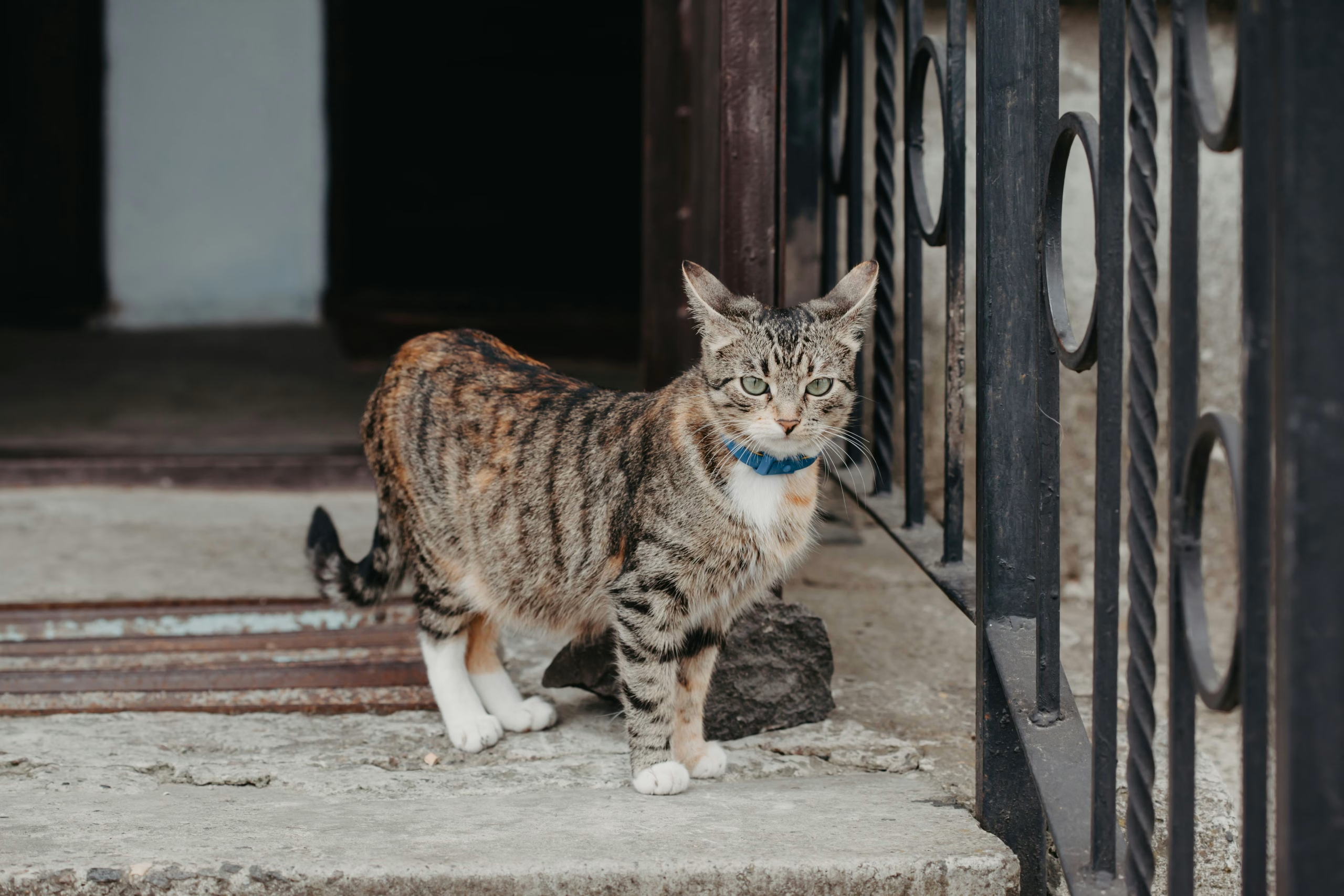
Municipal officials view the ordinance as addressing several interconnected challenges. Chief Murray explained that outdoor feeding sustains stray cat colonies and supports breeding, contributing to population growth in residential areas.
Additionally, food left outside attracts wildlife including raccoons, skunks, and opossums. Beyond potential property damage, these animals—with the exception of opossums—can carry rabies, presenting public health considerations.
Chief Murray also clarified that current city regulations already address this issue to some extent. Under existing code, residents who feed or shelter an animal for three consecutive days become its legal “owner,” making them responsible for compliance with ordinances that prohibit cats from roaming on others’ property without permission or proper identification tags.
Community Response and Alternative Approaches
The proposal has prompted significant civic engagement, including a Change.org petition that has collected over 240 signatures opposing the measure. Community members have raised several thoughtful concerns about the ordinance’s approach:
- Effectiveness questions: Some residents question whether restricting feeding addresses the underlying issue of reproduction and population growth.
- Implementation challenges: Distinguishing between stray animals and outdoor pets may prove difficult in practice, potentially leading to inconsistent application.
- Resource allocation: Community members have suggested that staff time and funding might yield better results if directed toward preventive measures.
- Alternative solutions: Many residents advocate for expanded investment in spay and neuter programs, which they argue produce measurable, long-term population reductions.
Common Ground: Support for TNR Programs
Despite differing views on the feeding ordinance, there is widespread agreement on the value of Trap-Neuter-Return (TNR) initiatives. Mount Pleasant currently partners with All God’s Creatures, a local animal shelter, to manage community cat populations through sterilization and vaccination programs. Community advocates are encouraging the city to consider expanding these evidence-based approaches as a primary strategy for addressing stray animal populations.
Next Steps
The ordinance requires a third and final reading before becoming official city policy. The ongoing dialogue between city officials and residents reflects the community’s shared interest in finding effective, sustainable solutions for managing stray and wild animal populations while respecting diverse perspectives on animal welfare and municipal governance.