


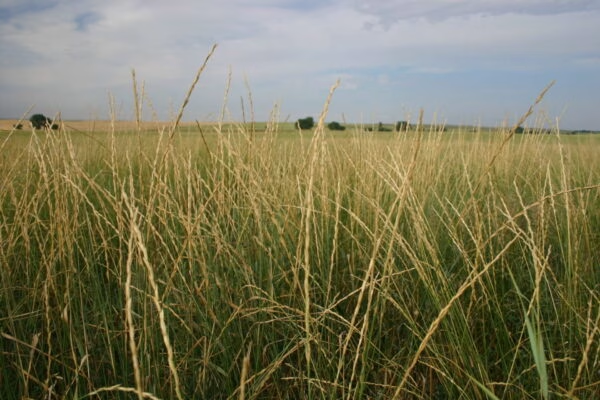
Corn leaders say removing land from production is a 1980s farm crisis strategy that shouldn’t be repeated.
“We are in an absolute real farm crisis, we need demand.”


Executive Director of the Iowa Renewable Fuels Association Monte Shaw says the aftermath of taking millions of acres out of production is not an experience he wants to relive.
“When those people and the earnings left, what happened to Main Street?” he recalls. “Boarded up. What happened to the churches? Shut down. Schools consolidated. The tax base is decimated. That is not our vision for the future.”
Ag economist David Miller with Decision Innovation Solutions says land retirement into the USDA’s Conservation Reserve Program in South Central Iowa serves as an example of how fast rural economies could see the impacts.
“Then, in about four or five years, you lost about two-thirds of your ag workers in that four-county area, the agribusiness people,” he shares. “You lost machinery dealers. “You lost input suppliers, etcetera.”
Northeast Iowa farmer and president of the Iowa Corn Growers Association Mark Mueller tells Brownfield he’d love to diversify into other commodities, but the infrastructure and economics don’t support the transition.
“We grow corn and soybeans and the animals that eat those things because economic forces push us to do those things that make the most money,” he says. “Believe me, I’d like to raise other crops. I do raise a little bit of alfalfa, but there’s not a big market for that.”
During a call with reporters this week, farm leaders shared results of a study exploring options to create new corn demand and continue to urge immediate action to pass E15 legislation as a lifeline for farmers.